

Here’s the thing: treating ecommerce SEO like any other kind of SEO is one of the most common—and most expensive—mistakes you can make. A generalist agency might be great at getting traffic to your blog, but an ecommerce SEO agency lives and breathes the technical details that actually drive sales. We're talking about things like taming faceted navigation and making sure thousands of product pages get properly indexed and ranked.
Why Generic SEO Fails Ecommerce Stores

An online store isn't just a website; it’s a whole different beast. The massive scale and technical complexity demand a specialist's touch, and a one-size-fits-all SEO strategy just won't cut it. Your success doesn't hang on ranking for a handful of keywords—it depends on getting thousands of SKUs and dozens of categories visible to the right people.
A standard SEO plan usually glosses over the unique headaches that come with ecommerce platforms. These are the issues that keep store owners up at night:
- Complex Site Architecture: Juggling the relationships between thousands of product pages, categories, and subcategories is a minefield. Get it wrong, and you're buried in duplicate content and indexing problems.
- Faceted Navigation: Those handy product filters for size, color, or brand? They can create an absolute SEO nightmare, spawning millions of near-duplicate URLs that wreck your ranking potential if not managed by an expert.
- Inventory Fluctuations: Products are constantly going in and out of stock. A specialist knows precisely how to handle these temporary pages without tanking your link equity or showing customers a dreaded 404 error.
General SEO vs Ecommerce SEO Key Differences
To really see why specialization matters, here’s a quick breakdown. It becomes pretty clear why you can't just hire any SEO agency for an online store.
| Focus Area | General SEO Approach | Ecommerce SEO Specialization |
|---|---|---|
| Primary Goal | Brand awareness, lead generation | Direct sales, revenue growth |
| Site Structure | Simple pages (Home, About, Services) | Complex product/category hierarchies |
| Keyword Intent | Focus on informational keywords ("how to…") | Prioritizes transactional keywords ("buy…") |
| Technical SEO | Basic on-page and off-page fixes | Manages faceted search, canonicals, schema |
| Content Strategy | Blog posts, guides, whitepapers | Optimized product/category pages, buying guides |
| Success Metric | Traffic, keyword rankings | Conversion rate, revenue, ROI |
At the end of the day, an ecommerce specialist is wired to think about revenue first. A generalist often isn't.
It's All About Transactional Intent
General SEO often chases informational keywords to build authority. That's fine, but an SEO agency for ecommerce laser-focuses on keywords with high transactional intent—the exact phrases people type when their credit card is practically in their hand. The whole game shifts from chasing broad traffic to attracting qualified visitors who are ready to buy.
The numbers don't lie. A staggering 23.6% of all ecommerce orders come directly from organic search, so getting this right is non-negotiable. When you consider that over 90% of online experiences start with a search engine, the opportunity cost of a weak strategy becomes painfully clear.
Your online store isn't just a website; it's a dynamic, multi-layered retail environment. It requires an SEO strategy built to handle massive scale, constant change, and the specific technical hurdles that come with selling products online.
Looking Beyond Keywords to Conversions
A top-tier ecommerce agency sees the bigger picture. They move beyond simple rankings and obsess over the entire customer journey. They know that a winning strategy means optimizing everything from the layout of your category pages to the technical nitty-gritty of product schema markup.
The goal is simple: when a potential customer lands on your site, they should find what they need and check out with zero friction.
Choosing the wrong partner is like leaving cash on the table. A generic agency simply won't have the chops to conduct a proper ecommerce SEO audit. And that audit is the critical first step to finding all the platform-specific issues holding your store back from its true potential.
What Sets a Great Ecommerce SEO Agency Apart?
Before you even start looking for a partner, you need a clear picture of what separates the best from the rest. A truly great SEO agency for ecommerce doesn't just promise more traffic. They talk about revenue, conversions, and your bottom line. They live and breathe platforms like Shopify or Magento and have the real-world case studies to back it up.
When you're reviewing those case studies, don't get distracted by vanity metrics. A top-tier partner will be eager to walk you through their entire strategic process. They'll explain why they made certain moves and how those actions translated into real business growth, like a higher Average Order Value (AOV) or a drop in cart abandonment rates.
They Look Beyond Surface-Level Metrics
One of the biggest red flags I see is an agency that only talks about keyword rankings and organic traffic. Yes, those numbers matter, but they're just two pieces of a much bigger puzzle. An expert partner is obsessed with the KPIs that actually make you money.
They should be digging into and reporting on metrics like:
- Conversion Rate Optimization (CRO): What specific tests are they running to turn more browsers into buyers?
- Customer Lifetime Value (CLV): How are they using SEO to bring customers back for repeat purchases?
- Return on Ad Spend (ROAS): How is their organic strategy making your paid campaigns more efficient and profitable?
- Category Page Performance: Which product lines are driving the most revenue, and how can that success be replicated?
This relentless focus on business outcomes is what separates a simple service provider from a true growth partner. They don't just get you to the top of Google; they make sure the right kind of traffic shows up, ready to buy.
A great ecommerce agency ties every single SEO action back to a specific business outcome. Their reports don't just show you what they did; they show you why it actually matters to your revenue.
Platform-Specific Expertise Is Non-Negotiable
An agency that calls itself an ecommerce expert but doesn't have deep, hands-on experience with your specific platform is a huge risk. A team that genuinely knows Shopify inside and out, for example, understands its unique quirks—from wrestling with app integrations to optimizing Liquid code for faster load times.
These experts know that technical SEO is the foundation of any successful ecommerce strategy. A generic agency might miss critical details, like the nuances of proper image optimization for web performance, which can make or break page speed and user experience.
How to Spot the Red Flags
Knowing what to avoid is just as important as knowing what to look for. Be skeptical of any agency making wild promises or pushing a vague, one-size-fits-all strategy.
Keep an eye out for these classic warning signs:
- Guaranteed Rankings: This is an old-school sales tactic. No one can guarantee a #1 spot on Google, and anyone who says they can isn't being honest.
- "Secret" Proprietary Methods: A trustworthy partner should be an open book about their strategies. They should be able to clearly explain their approach to authority building, including the specifics of link building for ecommerce sites.
- Vague Reporting: If their reports are confusing or only show you top-level numbers without any context, it’s a big red flag. They might be trying to hide poor performance behind a wall of data.
Finding the right partner means you’re not just hiring a vendor; you’re investing in a team that will grow alongside your business. The best agencies have strong client portfolios, deep experience, and are always adapting to new trends. This is the kind of forward-thinking mindset you need to win.
How to Properly Vet Potential Agencies
Alright, you've got your shortlist. Now for the most critical part: putting these agencies under the microscope. A slick website and a polished sales pitch are easy to come by, but you need to figure out if they actually have the chops to grow your store.
Think of this vetting process as your ultimate safeguard against a bad partnership. Don’t just take their homepage case studies at face value—it's time to dig in and see what's really under the hood.
A great case study won't just flash impressive final numbers. It'll tell a story. It should walk you through the problems they diagnosed, the exact strategies they put in place, and how they tracked success beyond a simple jump in traffic.
Look for Real Ecommerce Experience
When you’re looking at their past work, you're not just scanning for pretty charts. You’re hunting for hard evidence that they’ve untangled messy ecommerce SEO problems before—the kind of problems you’re facing right now.
- Platform-Specific Examples: Do they showcase work on your platform, like Shopify, Magento, or BigCommerce? This is huge. It proves they get the technical quirks you deal with daily.
- Scale and Complexity: Have they worked with stores your size or bigger? There’s a world of difference between optimizing a site with 500 products and one with 50,000.
- Revenue-Focused Metrics: Are they talking about revenue, conversion rates, and average order value? Or are they stuck on vanity metrics like rankings and traffic? Real ecommerce experts talk about business impact.
If their case studies feel vague or light on these specifics, that's a red flag. It might mean they don't have the deep experience a true SEO agency for ecommerce needs.
A top-tier agency doesn't just show you "before and after" traffic charts. They walk you through the strategic decisions they made to solve real business challenges, like improving crawl efficiency for a massive product catalog or fixing widespread duplicate content issues from faceted search.
Ask the Right Questions on Discovery Calls
Your calls with potential agencies are your chance to test their knowledge in real time. Don't waste it on generic questions that get you canned answers. You need to come armed with specific, scenario-based questions that reveal how they actually think.
Instead of a softball like, "What's your process?" get into the weeds. Try asking, "Walk me through your technical audit process for a Shopify site with 50,000 product pages and heavy filter usage." Their answer will tell you everything you need to know about their technical depth.
To get your gears turning, you can even use resources like this comprehensive Shopify SEO checklist to help formulate pointed questions about their platform-specific knowledge.
Here are a few more to get you started:
- How would you approach international SEO for a store selling in multiple countries with different currencies?
- What’s your game plan for handling thousands of products that are constantly going in and out of stock?
- Tell me about a time a strategy didn’t go as expected. How did you pivot, and how did you communicate that to the client?
You’re listening for answers that are confident, specific, and clearly based on hands-on experience, not theory.
Conduct Thorough Reference Checks
Finally, whatever you do, don't skip the reference checks. And don't just ask their past clients if they were "happy." You need to dig for the real story about what it’s like to work with them day-in and day-out.
Get on the phone and ask their references about:
- Communication: Was the team responsive and proactive? Or did you have to chase them for updates?
- Adaptability: How did they react when Google rolled out an algorithm update or when your business priorities suddenly shifted?
- Reporting: Were their reports actually useful? Did they connect SEO performance directly to your business goals, or was it just a data dump?
This last step provides the unfiltered truth. It helps you understand what kind of partner they’ll really be and ensures you’re choosing an agency that can truly help you grow.
Decoding Agency Pricing and Proposals
Let's talk money. Hiring an SEO agency is a big investment, and sifting through proposals can feel like trying to compare apples and oranges. Getting a handle on how agencies structure their pricing is the first, most crucial step to making a smart decision for your ecommerce business.
Most of the time, you'll see a monthly retainer. This is a set fee you pay each month for ongoing work—things like technical SEO monitoring, creating new content, and building links. It’s the go-to model for businesses that are in it for the long haul and want steady, sustainable growth.
Then there's project-based pricing. This is perfect if you have a specific, one-off job in mind. Maybe you need a deep-dive technical SEO audit before a site redesign, or perhaps you're launching a new product line and need a focused content campaign to get the word out.
This infographic gives a great visual breakdown of how these different SEO pricing models typically flow.
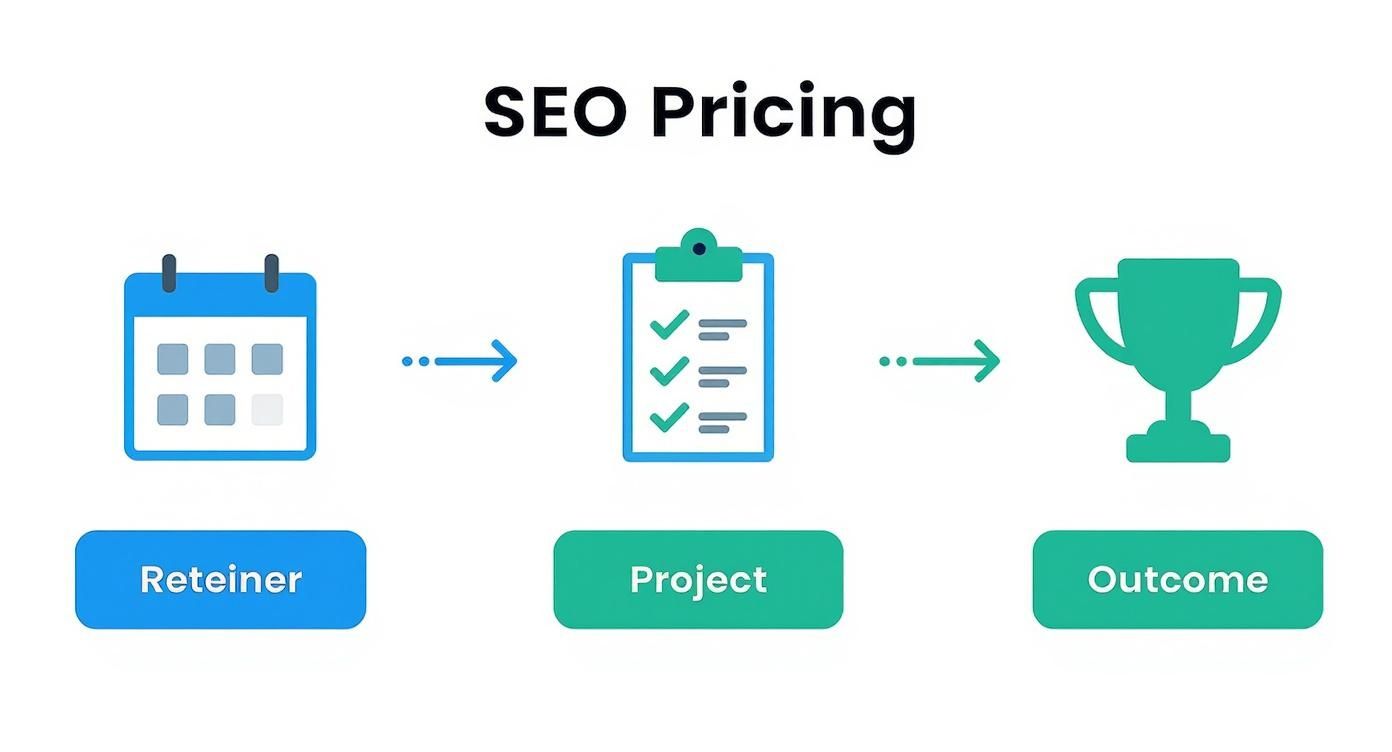
As you can see, while retainers and projects are the most common, the end game is always about getting a real return. That's why you're starting to see more performance-based models pop up.
Comparing SEO Agency Pricing Models
Here's a quick overview of the most common payment structures you'll encounter. Understanding the pros and cons of each will help you figure out what makes the most sense for your budget and goals.
| Model Type | Best For | Potential Drawback |
|---|---|---|
| Monthly Retainer | Businesses seeking consistent, long-term SEO growth and a dedicated partner. | Can feel like a big commitment if your cash flow is unpredictable. |
| Project-Based | Companies with a specific, one-time need, like a site audit or a content sprint. | Doesn't provide ongoing support or address new issues that arise later. |
| Hourly Consulting | Teams that need strategic guidance or specialized expertise on an as-needed basis. | Costs can quickly add up if you require a lot of support. |
| Performance-Based | Businesses that want to directly tie their investment to specific outcomes like sales or leads. | Can be complex to set up and track, and the agency may focus only on the easiest wins. |
Ultimately, there's no single "best" model. The right one depends entirely on your store's current needs, your long-term ambitions, and your comfort level with different payment arrangements.
What a Strong Proposal Actually Looks Like
A solid proposal from an SEO agency for ecommerce is much more than just a price tag—it’s a blueprint for your growth. It should spell out every deliverable and clearly connect each task back to your business goals. If you see vague promises like "increase website traffic," that's a huge red flag.
You want a detailed Scope of Work (SOW) that covers the essentials:
- Initial Audit Findings: A clear summary of the biggest technical, content, and backlink issues they found on your site.
- Keyword Strategy: A smart plan explaining which transactional and informational keywords they'll target and, most importantly, why.
- Technical SEO Roadmap: A prioritized to-do list, covering everything from implementing schema markup to boosting your site speed.
- Content and Link Building Plan: Specifics on the kinds of content they plan to create and their strategy for earning backlinks from reputable sites.
A transparent proposal will also be upfront about costs. It should clearly define what’s covered in the retainer and what might cost extra, like a major website migration.
A great proposal doesn't just list services; it presents a customized growth plan. It should demonstrate a deep understanding of your specific ecommerce challenges and outline a clear, measurable path to achieving a positive return on investment.
Comparing Offers and Making the Final Call
When you have a few proposals in hand, resist the urge to just compare the monthly fees. You have to look at the value. An agency charging $5,000 per month with a detailed plan to increase your key category page revenue by 20% is a much better investment than a $2,500 proposal that only talks about getting more traffic.
The global SEO market is a behemoth, valued at around USD 74.9 billion, and pricing models are constantly evolving. Retainers still make up the bulk of spending at 62.5%, but we're seeing a definite shift toward outcome-based contracts. This shows that businesses are demanding more accountability and clear performance metrics. You can dig into more data on these evolving market trends to see how the industry is changing.
At the end of the day, the right choice is the agency whose proposal truly aligns with your growth goals and gives you a transparent, believable roadmap for getting there.
Setting Your New Partnership Up for Success

So, you’ve signed the contract. A lot of people see this as the finish line, but it’s really the starting block. The first few weeks with your new seo agency for ecommerce are absolutely critical—they set the tone for the entire relationship.
The goal is to move from signing to strategy as smoothly as possible. This means giving your new partners everything they need to hit the ground running. If you make them chase you for every password and piece of data, you’re just creating delays and starting things off on the wrong foot.
Prepare Your Kickoff Toolkit
Before you even jump on that first official call, get your house in order. Pull together everything the agency will need to really dig into your business. Trust me, being proactive here can shave weeks off their initial discovery and audit process. It also shows them you're serious and organized.
Here’s a quick checklist of what you should have ready to go:
- Access Credentials: Get them set up with access to your Google Analytics, Google Search Console, and the backend of your ecommerce platform (like Shopify or BigCommerce).
- Historical Data: Dust off any old SEO audits, performance reports, or even just your own notes on past campaigns. What worked? What bombed? Share it all.
- Marketing & Sales Calendar: Give them a peek at your upcoming product launches, planned promotions, and big seasonal sales. Context is king.
A great partnership is built on transparency and preparation. When you hand over the keys with all the context upfront, you kill the guesswork and free up your agency to start adding value from day one.
Aligning on Goals and Communication
Once the agency has access, it's time to build a roadmap for the first 90 days. This shouldn't be something they just present to you; it needs to be a shared plan that you create together. This document should spell out the initial priorities, what they'll deliver, and exactly how you'll both measure success.
Right away, you need to figure out your communication rhythm. Are you doing weekly check-in calls? Is there a shared Slack channel for quick questions? Who’s the main point of contact on your team and theirs? Nailing this down early prevents a ton of confusion later.
Finally, agree on the Key Performance Indicators (KPIs) that actually move the needle for your business. Don't just settle for vague goals like "more traffic."
Focus on metrics that directly tie to revenue:
- Organic revenue for your most important product categories
- The conversion rate from organic search traffic
- Rankings for those high-value, "ready-to-buy" keywords
Getting this clarity ensures you're all pulling in the same direction. A great agency will also look for quick wins. For example, they might suggest practical conversion tactics like embedding a countdown timer on your website to boost sales to improve purchase rates right away.
Got Questions? Here’s What Most Store Owners Ask Before Hiring an SEO Agency
You’ve done the research, you've sat through the pitches, and now you’re on the verge of picking your SEO partner. This is usually when a few last-minute, nagging questions pop up. It’s completely normal, and getting straight answers is key to moving forward with confidence.
Let's cut through the noise and tackle the big questions that come up right before you sign that contract.
How Long Does This Actually Take to Work?
This is probably the most common question I hear, and for good reason. You need to know when your investment will start paying off.
Let's be realistic: SEO isn't an overnight fix. While you might spot some quick wins and minor ranking bumps in the first couple of months, the real, sustainable growth in organic traffic—and more importantly, revenue—usually takes 6 to 12 months to kick in.
Think of the first 90 days as laying the groundwork. Your new agency will be buried in technical audits, fixing site issues, and hammering out the final strategy. You should start seeing the first real signs of life, like better rankings for important keywords, around the 3-4 month mark. The bigger impact on your sales will follow as all that foundational work starts to build momentum.
What’s a Realistic Budget for Ecommerce SEO?
Ah, the million-dollar question. The honest answer is, "it depends." Your budget really hinges on a few things: how many products you have, how tough your market is, and what exactly you need the agency to do.
For a lot of small to mid-sized online stores, a monthly retainer between $2,500 and $10,000+ is a solid starting point. If you're a larger company or you're fighting for space in a super-crowded niche, you could be looking at retainers north of $20,000.
It's so important to see this as an investment, not just another line item on your expense sheet. A good agency should be able to show you a clear path to a positive return based on your store's data and what's standard for your industry.
Should I Go With a Freelancer or a Full Agency?
The classic freelancer vs. agency dilemma. The right choice really comes down to what you need and what you can manage. A talented freelancer can be a great, budget-friendly option for specific, well-defined tasks—like a one-off technical audit or handling your blog content.
But if you're looking for a complete, end-to-end strategy, an agency almost always wins out. When you hire an seo agency for ecommerce, you're not just getting one person. You're getting an entire team: technical SEO nerds, content strategists, link-building pros, and data analysts all working together. That collective horsepower gives you more bandwidth, a wider range of skills, and the ability to scale up as you grow.
Ready to partner with a team that gets the ins and outs of your online store? E-commerce Dev Group offers specialized Shopify design, development, and SEO services to help you dominate your market. Let's build your growth strategy together.
