

Let's get one thing straight about content marketing and inbound marketing. The simplest way to think about it is this: Content marketing is the fuel, and inbound marketing is the engine.
You can create the best fuel in the world—amazing blog posts, brilliant videos, insightful guides. But without an engine to put it in, you're not going anywhere. That engine is your inbound strategy, the system that attracts customers and guides them on their journey with you.
Decoding Your Marketing Playbook

Picture your ideal customer. They're online, actively searching for a solution to a problem they have right now. They aren't looking for a sales pitch; they're looking for answers and genuine help. This is exactly where the magic of combining content and inbound marketing happens, creating a natural path that can turn a complete stranger into your biggest fan.
This whole approach is the polar opposite of old-school marketing that interrupts people with ads they never asked for. Instead of pushing your message out, you pull people in. The name of the game is building trust and establishing yourself as an authority by consistently delivering value.
The Core Principles
At its heart, this entire system is built on empathy and a desire to be genuinely useful. It's about taking the time to understand your audience's struggles and being the one who shows up with the best solution, wrapped in helpful information. This strategy just plain works because it lines up perfectly with how people actually buy things today.
A few key pieces make this all click:
- Valuable Content: This means creating blog posts, how-to guides, and videos that solve real-world problems for your audience.
- Strategic Distribution: It's about getting that content in front of the right people through channels like Google search and social media, so you're easy to find.
- Customer Relationships: The goal is to build real trust over the long haul, not just chase a one-time sale.
Inbound marketing is a strategic approach that focuses on creating valuable content and experiences tailored to the needs of your audience to build long-term relationships.
Why This Matters More Than Ever
The world has shifted to this customer-first way of thinking, and the numbers don't lie. The content marketing industry is already worth over $400 billion, and it's on track to nearly double by 2028. This explosive growth just goes to show how essential it is for businesses to create helpful, engaging content to not only attract customers but also keep them coming back.
When you weave content marketing and inbound marketing together, you're not just chasing down leads. You're building a sustainable growth machine and a brand that people actively want to connect with. To really dig into this magnetic approach, check out this great resource on What Is Inbound Marketing.
What Is Content Marketing?
Let's cut through the jargon. At its core, content marketing is the art of becoming the go-to expert for your audience. Instead of shouting "buy my stuff," you're creating and sharing genuinely useful information that solves a problem, answers a question, or simply entertains. It's about starting a conversation, not delivering a pitch.
Think of it this way: you're earning your customer's attention, not renting it with an ad. Every how-to video, every in-depth blog post, every case study that shows a real-world win—that's all content marketing. The goal is simple: build rock-solid authority and trust.
It All Starts with Trust
When you consistently give away valuable insights without immediately asking for a sale, something powerful happens. People start to see your brand as a helpful guide, not just another company trying to sell them something. It completely changes the relationship.
This isn't a quick-win tactic; it's a long-term strategy for building a loyal community. And when someone in that community is finally ready to buy, who do you think they'll turn to? The brand that’s already been helping them all along.
"Content marketing is the only marketing left." – Seth Godin
This quote from marketing guru Seth Godin nails it. People are tired of being sold to. They're actively looking for information that helps them make better decisions, and a smart content strategy gives them exactly that.
How This Looks for an E-commerce Store
For an online store, content marketing is so much more than just writing a blog post now and then. It's a whole toolbox you can use to connect with people and, ultimately, drive sales without being pushy.
Here are a few real-world examples:
- A Shopify store selling gourmet coffee beans might create video tutorials on French press techniques, write articles about the unique coffee farms they partner with, and offer a downloadable guide to brewing the perfect cold brew.
- An e-commerce brand selling eco-friendly cleaning products could publish a guide on "10 Simple Swaps for a Zero-Waste Kitchen" or create shareable infographics for social media that explain the benefits of plant-based ingredients.
- A business that sells high-performance running shoes could feature inspiring stories from their customers, develop free marathon training plans, or even host a podcast interviewing professional athletes and coaches.
Each of these examples gives something of real value to a potential customer, creating a positive connection long before they even think about clicking "add to cart." That's the magic of great content marketing: solve your customer's problem first, and the sales will follow.
The Inbound Marketing Flywheel Explained
If content marketing is the fuel, then inbound marketing is the engine that uses that fuel to drive your business forward. Think of it less as a one-off campaign and more as a complete strategy for building real, lasting relationships with customers.
It's the difference between using a megaphone and a magnet. Old-school marketing shouts at everyone, hoping someone pays attention. Inbound marketing acts like a magnet, pulling in people who are already searching for the solutions you provide.
This magnetic pull is best visualized as a flywheel. Forget the traditional sales funnel that ends once a purchase is made. A flywheel is all about building and maintaining momentum, where your happy customers become a driving force that helps you attract new ones.
The Three Stages of the Flywheel
The inbound flywheel is powered by three simple stages, each designed to move people from strangers to your biggest fans. And your content is what makes it all work.
-
Attract: This is the first push. You draw in the right audience with valuable content that solves a problem or answers a question. Think blog posts, helpful social media content, and a smart keyword strategy. You're not selling yet; you're helping.
-
Engage: Once you have their attention, the goal is to build a connection. You start a conversation by offering insights and solutions that speak directly to their needs. This is where personalized interactions and targeted content really shine.
-
Delight: The final stage is all about creating an experience so good that your customers turn into advocates. With outstanding service and support, they're not just satisfied—they're eager to tell others about you.
The magic of the inbound flywheel is that every happy customer adds more energy to the wheel, helping it spin faster and pull in even more people. It creates a powerful, self-sustaining growth loop.
Things like SEO, landing pages, and email marketing are the gears that keep this whole system turning smoothly. The incredible synergy between content marketing and inbound marketing is what generates that unstoppable momentum. Your content gives the flywheel its initial push, and the inbound strategy makes sure it keeps picking up speed.
For example, nurturing leads is a core part of the 'Engage' stage. To learn more, check out our guide on how to write a newsletter that builds and strengthens those crucial customer relationships.
This entire process hinges on being found when and where people are looking. With a staggering 93% of all web traffic starting from a search engine, SEO is the undeniable cornerstone of the 'Attract' stage. It's no wonder that 89% of marketers say SEO is successful for hitting their goals.
Comparing Content vs Inbound Marketing
To really get to the heart of how content marketing and inbound marketing relate, let's think about it like this: Content marketing is the high-octane fuel for your car, and inbound marketing is the entire high-performance engine.
You absolutely need premium fuel (great content) to get anywhere. But without an engine (a smart inbound strategy), that fuel just sits there. On the flip side, even the most powerful engine is useless with an empty tank. They are two different things, but they are completely dependent on each other to create forward motion.
Defining Their Roles
At its core, content marketing is all about creating and sharing valuable stuff. This could be a really helpful blog post, a how-to video, or a compelling infographic. The main goal here is usually to build awareness for your brand, teach your audience something useful, and position yourself as a go-to expert in your field.
Inbound marketing, however, is the big-picture strategic plan. It takes all those fantastic pieces of content and weaves them into a complete system. This system is designed to gently guide a person through their entire journey with your brand—from a complete stranger to a loyal fan.
Think of it this way: Content marketing focuses on crafting the message, while inbound marketing builds the entire delivery system that gets that message to the right person at exactly the right time.
The image below gives a great visual of how two key parts of an inbound strategy—organic SEO (which runs on content) and paid search—stack up when it comes to attracting visitors.
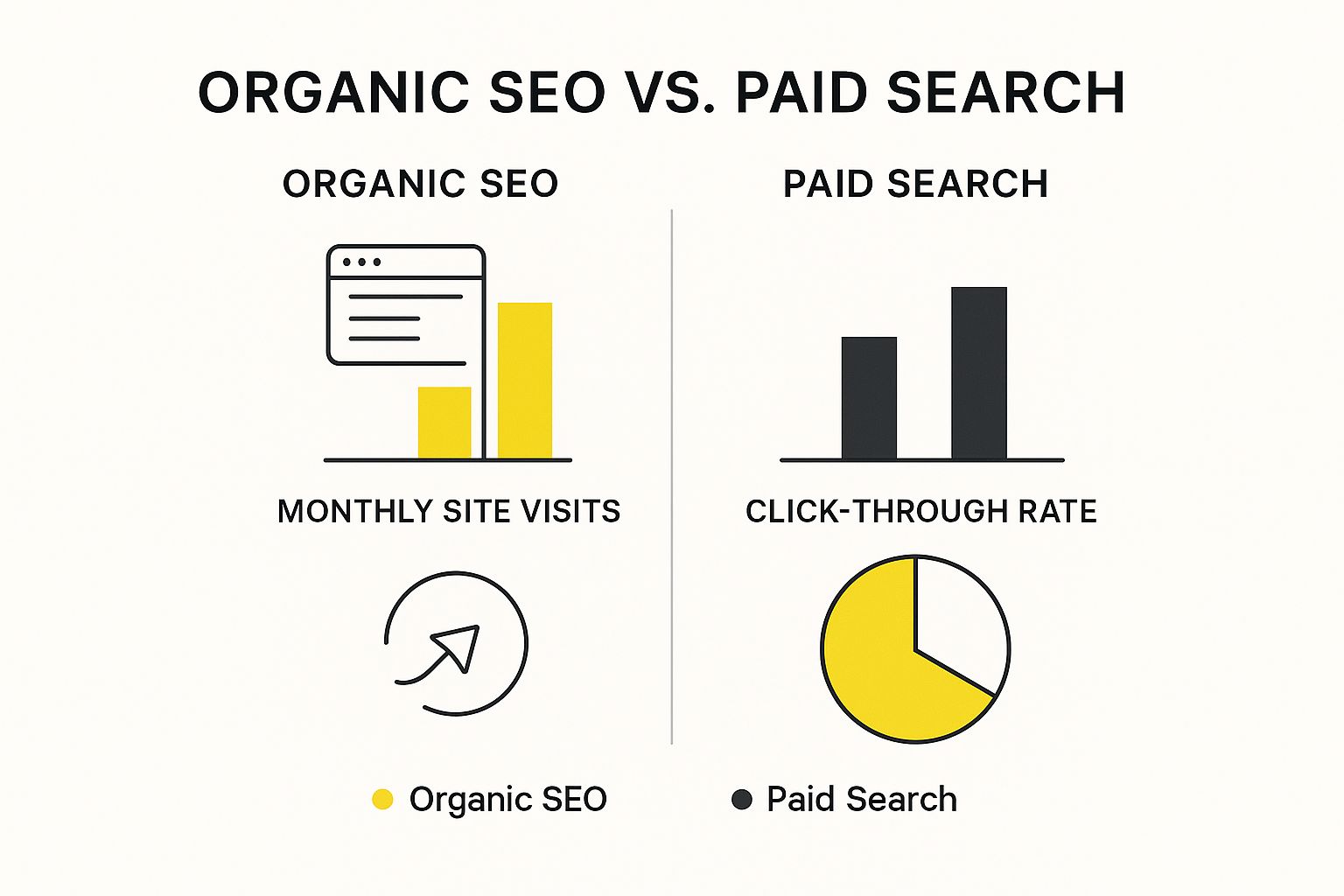
As you can see, paid search gets you visitors fast. But over the long haul, organic SEO often pulls in a much higher click-through rate. Why? Because people tend to trust and prefer the organic results that are powered by genuinely helpful content.
A Side-by-Side Breakdown
To make things even clearer, here’s a table that breaks down the specific roles and functions of each. This should help you see exactly where one ends and the other begins.
Key Differences Content Marketing vs Inbound Marketing
| Attribute | Content Marketing | Inbound Marketing |
|---|---|---|
| Scope | Creating and distributing specific pieces of content. | The entire strategy of attracting, engaging, and delighting customers. |
| Primary Goal | To build authority, educate the audience, and create engagement. | To generate qualified leads and turn them into happy customers. |
| Common Tactics | Blogging, videos, social media updates, podcasts, ebooks. | SEO, email nurturing, landing pages, marketing automation, CRM. |
| Key Metrics | Page views, social shares, time on page, comments. | Lead conversion rates, customer acquisition cost (CAC), customer lifetime value (LTV). |
Ultimately, while content marketing can technically exist on its own—like a single great blog post that gets a lot of shares—its true power is unlocked only when it's plugged into a complete inbound marketing system. That’s when you start seeing real, measurable business results.
How Content Fuels Your Inbound Strategy

It’s one thing to talk about content marketing and inbound marketing in theory, but where the magic really happens is seeing how they work together in the real world. Let’s walk through a practical example to connect the dots.
Imagine you run an e-commerce store selling beautiful, sustainable kitchen products. You're not just selling spatulas and containers; you're selling a more thoughtful way of living. Your entire inbound approach is built on this idea, using helpful content as its foundation.
Attracting the Right Audience
Everything starts with the Attract stage. Your team knows that your ideal customers aren't just looking for kitchenware; they're searching for ways to live a more eco-friendly life. So, you create a blog post optimized for search engines titled, “10 Easy Swaps for a Zero-Waste Kitchen.”
This one article is doing some heavy lifting. It directly answers a question your target audience is already typing into Google. By providing a useful solution right when they need it, you’re pulling in the right kind of traffic—people genuinely interested in your mission, not just random clicks from an ad.
Engaging and Building Trust
Okay, so a visitor has landed on your blog. What now? The goal is to Engage them.
Embedded within the article is an offer for a free, downloadable "Zero-Waste Kitchen Checklist." To get it, all they need to do is provide their email address. Just like that, an anonymous website visitor becomes a tangible lead.
Now, your content shifts from attracting to nurturing. You can set up a simple email series to build that relationship:
- Email 1: A friendly welcome with the promised checklist.
- Email 2: A short video tutorial on how to care for wooden cutting boards.
- Email 3: A customer story showing how someone else transformed their kitchen using your products.
- Email 4: A gentle introduction to your best-selling reusable food wraps, with a link to the product page.
Notice how every email leads with value. You’re guiding them toward a purchase, not shoving a sale down their throat. This thoughtful, step-by-step process is the heart of a great ecommerce content strategy.
Delighting Customers into Advocates
Even after a purchase, the content’s job isn't done. Now you enter the Delight stage.
The new customer gets a thank-you email, but instead of just a receipt, it includes a link to an exclusive video guide on "Getting the Most Out of Your New Sustainable Products." This small touch adds a ton of value after the sale, making the customer feel great about their decision.
A happy customer is more likely to leave a glowing review, share their experience on social media, and become a true advocate for your brand. In a market where digital ad spending is expected to reach $740.3 billion by 2025, turning customers into advocates is your most powerful growth engine. It's how you build real momentum.
Every single piece of content—from that first blog post to the post-purchase thank-you video—has a job to do. It’s the fuel that makes the inbound engine run, smoothly moving someone from a curious visitor to a loyal fan.
Building Your Integrated Marketing Plan
Putting together a smart, unified strategy for your content and inbound marketing is like drawing up a blueprint for growth. And it all starts with one thing: knowing exactly who you’re trying to reach. Before you ever write a single word, you need to build out your buyer personas.
These aren't just generic customer profiles. Think of them as detailed, semi-fictional sketches of your perfect customer. Give them a name, a job, real goals, and specific challenges. What are their pain points? What problems are they trying to solve? When you know this, you can create content that feels like it was written just for them.
Uncovering What Your Audience Wants
Okay, so you know who you're talking to. The next big question is, what are they actually looking for? This is where good old-fashioned keyword research comes in. Fire up your favorite SEO tool and start digging into the exact phrases and questions your audience is typing into search engines.
This research is pure gold. It takes all the guesswork out of your content plan and makes sure you're writing about things people genuinely care about. The real magic happens when you map these keywords to each stage of their buying journey—from the moment they realize they have a problem to the point where they're ready to buy.
A successful plan doesn't just create content; it creates the right content for the right person at the right time. This strategic alignment turns random website visitors into qualified leads.
With your keywords and personas in hand, you can start thinking about content formats. A high-level blog post might be perfect for someone in the early awareness stage, but a detailed comparison guide or a step-by-step video tutorial would be way more helpful for someone closer to making a purchase.
Plotting all of this out in a content calendar is crucial for keeping your team on the same page and ensuring you’re publishing consistently. Of course, creating content is only half the battle. To get it in front of the right eyeballs, you’ll need a solid plan. This ultimate content distribution strategy guide is a great place to start.
The key is to start smart. Don't try to boil the ocean. Focus on creating a few high-impact pieces of content that solve genuine problems for your audience. For e-commerce brands, a well-thought-out plan is non-negotiable. You can get more ideas in our guide to building a winning Shopify marketing strategy.
Got Questions? We've Got Answers

It's totally normal for some practical questions to pop up when you're diving into content and inbound marketing. Let's clear up a few of the most common ones so you can move forward with confidence.
How Do I Actually Measure The ROI On All This?
This is the big one, right? Measuring your return on investment (ROI) is all about connecting your marketing activities to actual business results. You need to see if the effort is paying off.
For content marketing, keep an eye on things like organic traffic growth, how long people stick around on your pages, and how many leads you get from things like e-book downloads.
When you zoom out to your entire inbound strategy, you'll want to focus on bigger metrics. Pay close attention to your customer acquisition cost (CAC) and the customer lifetime value (CLV). Using analytics tools to see which campaigns are directly leading to sales will give you a crystal-clear picture of what's working and what's not.
Be Honest, How Long Until I See Real Results?
This is a marathon, not a sprint. The beauty of inbound marketing is that it builds on itself over time, unlike paid ads that vanish the second you stop paying for them.
You'll likely start seeing some early signs of life—like a bump in website traffic and a few more leads—within 3 to 6 months. But the really meaningful, lasting results? Those tend to show up after you've been putting in consistent work for about 6 to 12 months.
Can A Small Business Really Pull This Off With A Tight Budget?
Yes, absolutely. In fact, inbound and content marketing are fantastic for smaller businesses because they reward clever strategy far more than a massive budget.
The trick is to zero in on a specific niche. Don't try to be everything to everyone. Instead, create incredibly helpful content that solves the exact problems your ideal customer is facing.
By focusing your energy on low-cost channels like SEO and social media, you'll find that quality and consistency will win out over a big ad spend every single time.
Ready to build an e-commerce store that pulls customers in? The team at E-commerce Dev Group specializes in building high-performance Shopify stores designed for exactly this kind of growth. We can help you weave a powerful content and inbound strategy into the very fabric of your site.
Learn more about our Shopify development services and let's start building your brand’s future today.
