


Let's be honest, watching your ad spend vanish with little to show for it is one of the most frustrating parts of running an e-commerce business. It often feels like you're shouting into a void.
The problem usually isn't a lack of effort. It's a disconnect. The solution is to stop marketing to generic audiences and start creating buyer personas. This means getting to know your customers on a deeper level by digging into their data, grouping them into distinct segments, and building detailed profiles that feel like real people.
Why Generic E-commerce Marketing Just Doesn't Work
So many brands fall into the same trap. They launch campaigns based on broad assumptions and then wonder why their message isn't landing. The secret to breaking this cycle is simple: you have to truly understand who you're selling to.
This is where building a solid buyer persona changes everything. Think of it less as a boring marketing exercise and more as your strategic map for connecting with the actual humans behind the clicks and conversions.
Moving Beyond Basic Demographics
It’s tempting to define your audience as "women, aged 25-40, who live in cities." While that might be technically accurate, a description that broad is practically useless for crafting effective marketing. It completely misses the nuances that actually drive someone to buy.
Let's take that same demographic. One woman might be a budget-conscious student hunting for a great deal. Another could be an eco-conscious professional willing to pay a premium for sustainably made products. You can’t possibly appeal to both with the same ad, right?
A well-crafted buyer persona turns a faceless data point into a relatable character. It gives your entire team—from marketing to customer support—a shared understanding of who they’re talking to.
To create marketing that actually works, you need to dig deeper. You have to understand:
- Their Goals: What are they trying to accomplish in their life where your product could lend a hand?
- Their Challenges: What’s getting in their way? What problems are they trying to solve?
- Their Values: What really matters to them? Is it sustainability, convenience, or maybe luxury?
- Their Watering Holes: Where do they hang out online? Are they scrolling Instagram, reading niche blogs, or are they active in specific Facebook groups?
The True Cost of Impersonal Marketing
When you try to market to everyone, you end up connecting with no one. This one-size-fits-all approach is a recipe for wasted ad spend, dismal engagement rates, and a brand message that gets completely lost in the noise.
The data backs this up. Research has shown that 94% of marketers see a jump in sales when they use personalization. It just works.
By taking the time to build detailed customer profiles, you can make smarter decisions across the board. This guide will walk you through how to leave generic outreach behind and start having real conversations that build your brand. We'll show you how to create buyer personas that are more than just a document—they're the foundation of a truly customer-focused business.
Gathering Your Raw Customer Data

Before you can build powerful buyer personas, you need the right raw materials. Forget about making educated guesses—the most potent insights are already sitting inside your business tools, just waiting to be uncovered. This first phase is all about rolling up your sleeves and digging into the data.
Think of it like putting together a puzzle. You’re not looking for one single, magical data source. Instead, you're piecing together a mosaic of information from different places. When you combine what people buy with how they behave on your site and what they say about your products, a truly complete picture of your customer begins to emerge.
Dive Into Your Shopify Sales Data
Your Shopify dashboard is so much more than a place to track revenue. It's a treasure map that can lead you straight to your best customers. Start by running sales reports to identify who’s buying from you, what they’re buying, and how often they come back for more. This is the hard data that forms the skeleton of your personas.
Keep an eye out for patterns. Are certain products flying off the shelves in specific regions? Do your most valuable customers—the ones with the highest lifetime value—tend to buy a particular collection of items? These trends are your first real clues.
Here are a few key areas to dig into:
- Top-Selling Products: Figure out which items are your bestsellers and, more importantly, who is buying them. This helps you zero in on the core problem you're solving for a specific group.
- Average Order Value (AOV): Segmenting customers by how much they spend can instantly differentiate between bargain hunters and premium shoppers.
- Customer Lifetime Value (CLV): Pinpoint your most loyal, repeat customers. This group is critical because they represent the ideal you want to attract more of.
To build out your personas, you need a mix of quantitative data (the numbers) and qualitative data (the stories). A great starting point is pulling from customer surveys, market research, and your sales team's insights. Then, layer on behavioral data from a tool like Google Analytics. Looking at demographics and geographic reports can reveal clear patterns, like the exact paths visitors take on your site before they finally make a purchase. These insights show you which content and touchpoints are actually making an impact. You can find more data-driven tips for persona creation over at magnolia-cms.com.
Uncover User Behavior with Google Analytics
While Shopify tells you what people bought, Google Analytics tells you the story of how they got to your store and what they did once they arrived. It's like seeing your store through your visitors' eyes.
Pro Tip: Don't just focus on your most popular pages. Take a hard look at your exit pages—the last page someone sees before they leave your site. These pages can reveal major points of friction or confusion in the user experience, which might be a common roadblock for one of your future personas.
Mine Your Qualitative Feedback
Numbers tell part of the story, but the real magic is in the qualitative data—the actual words your customers use. This is where you find the frustrations, motivations, and desires that drive every single purchase. Your customer service logs and product reviews are absolute goldmines for this.
Scan through support tickets, emails, and live chat transcripts. What questions pop up over and over? What are people consistently frustrated with? A recurring complaint about shipping times or a product feature isn't a problem; it's a direct insight into a customer's pain point.
Don't forget to comb through your product reviews, both the good and the bad.
- Positive Reviews: Note the specific language people use. Are they raving about "fast shipping," "amazing quality," or how your product solved a very specific problem for them?
- Negative Reviews: These are often even more valuable. They shine a spotlight on unmet expectations and show you exactly where you fell short for a certain type of customer.
Go Straight to the Source with Customer Surveys
The final piece of the puzzle is to go directly to the source and just ask. While all the data you’ve gathered is fantastic for observing behavior, surveys allow you to ask targeted questions to finally understand the "why" behind it all.
Just remember to keep your surveys short and sweet to get the best response rate. Instead of asking generic questions, get specific about their goals and challenges.
A few ideas for survey questions:
- What was the main reason you were looking for a [your product category] today?
- What was the biggest challenge you ran into when choosing which [product] to buy?
- How has our [product] helped you achieve [a specific goal, like saving time or feeling more confident]?
- What other brands did you consider before choosing us?
This mix of sales data, website analytics, customer feedback, and direct survey responses gives you everything you need. You've now got a rich, multi-dimensional view of your customers, and you're ready for the next step: finding the patterns and building your personas.
To get started, it helps to know where to look. Here are some of the most valuable places to gather the raw data for your e-commerce personas.
Essential Data Sources for E-commerce Personas
| Data Source | Key Information to Collect | Insight Type |
|---|---|---|
| Shopify Analytics | AOV, CLV, top-selling products, repeat purchase rate, geographic location. | Quantitative |
| Google Analytics | Traffic sources, user demographics (age, gender), landing/exit pages, on-site behavior flow. | Quantitative |
| Customer Surveys | Motivations, goals, challenges, pain points, what they value, how they use the product. | Qualitative |
| Customer Service Logs | Common questions, recurring complaints, product feedback, points of confusion. | Qualitative |
| Product Reviews | Specific likes/dislikes, language used to describe the product, unmet expectations. | Qualitative |
| Social Media Comments | How customers talk about your brand, what they share, questions they ask in public. | Qualitative |
By pulling information from a few of these sources, you ensure your personas are based on reality, not assumptions. This foundation is what makes them a truly powerful tool for your business.
Finding Your People: How to Spot Patterns and Define Customer Segments
Alright, you've done the hard work of gathering all that customer data. Now comes the fun part: turning that mountain of raw information into something you can actually use. This is where you put on your detective hat and start looking for the hidden stories.
Think of it like this: right now, your data is just a jumble of dots on a page. Your job is to connect those dots to reveal the constellations—the core groups of people who love what you do. This is the moment when spreadsheets and survey results start to feel like real, living customers.
Sifting for Common Threads
First things first, you need to dive into the data and just… look. Don't overthink it at the start. Just start grouping things that feel similar. Are you seeing the same questions pop up in customer service emails? Are certain pain points mentioned over and over in product reviews? Do specific demographic groups keep appearing in your Google Analytics?
Let the patterns come to you.
For example, you might notice a cluster of customers who consistently buy your eco-friendly product line. As you dig a little deeper, you see they also follow sustainability influencers on Instagram and often ask your support team about your sourcing. Boom. That's the beginning of a powerful customer segment.
Look for these kinds of overlaps everywhere:
- Buying Habits: Who are the bargain hunters that only buy with a discount code? Who are the superfans that snap up new arrivals at full price the day they drop?
- Demographics: Are your biggest spenders all living in a few specific zip codes? Is there a dominant age group for a certain product category?
- Mindset & Values: What kind of language do people use in their reviews? Do they talk about convenience? Quality? Ethical production? This is gold.
This is all about moving from sterile columns of data to tangible human traits. The image below shows a great way to start visualizing this—turning raw spreadsheet data into organized notes that start to paint a picture.
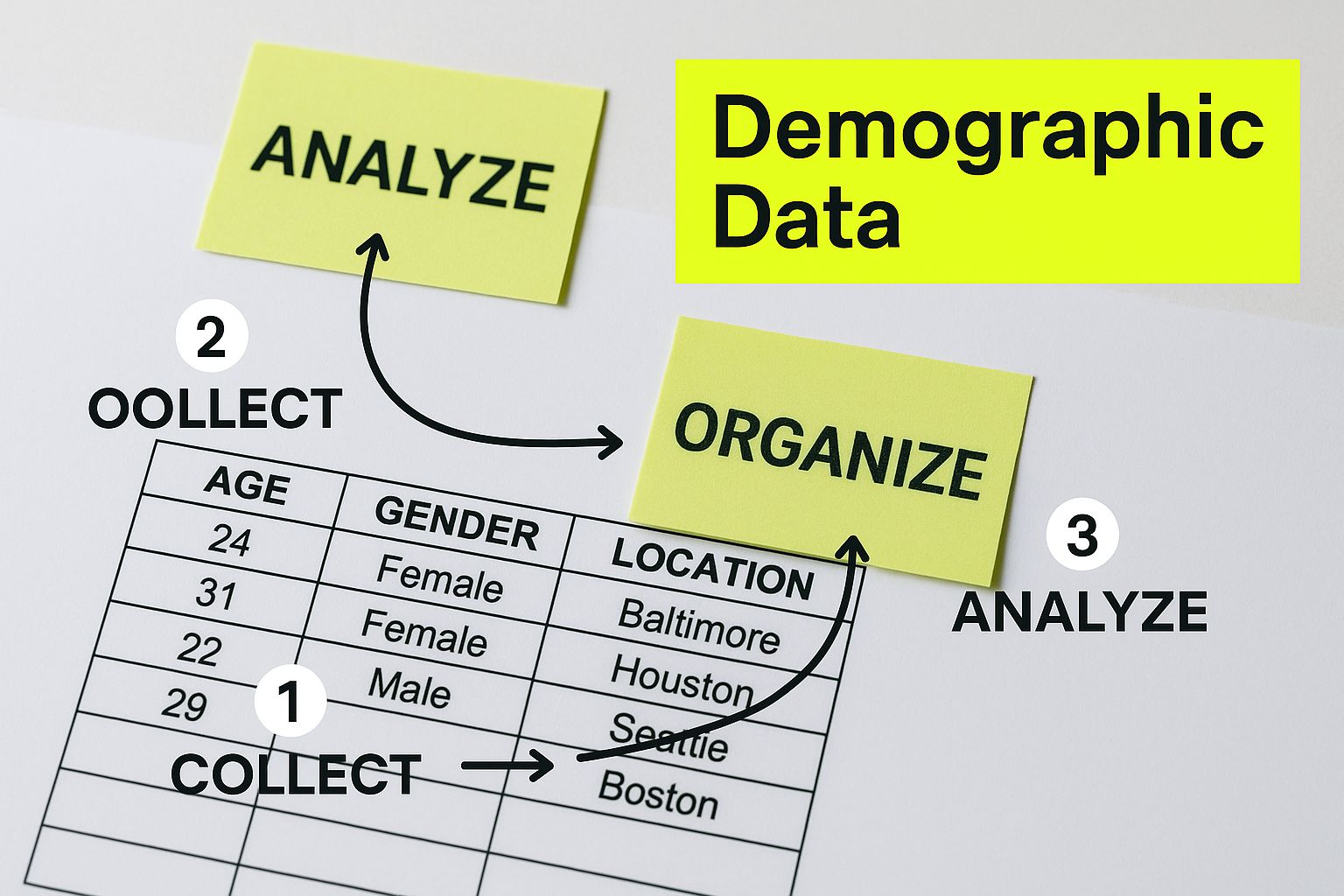
This simple shift in perspective helps you see the people behind the numbers, which is the whole point of this exercise.
From Patterns to Persona Drafts
As these common threads appear, you can start sketching out some rough customer groups. A word of caution here: don't go crazy and create a dozen different personas. That’s a surefire way to dilute your focus and make your marketing a chaotic mess.
Your goal is to pinpoint the 2-4 core segments that are the lifeblood of your business. These are the groups that drive the most revenue and have the biggest impact on your brand. It’s all about quality, not quantity.
Let's say you run a Shopify store selling high-end coffee beans. After sifting through your data, you might start to see two distinct groups emerge:
- The Morning Ritualist: This person is all about consistency. They buy the same medium-roast blend every two weeks like clockwork. They value a good price and a seamless subscription experience. Their biggest fear? Running out of their go-to coffee on a Tuesday morning.
- The Ethical Enthusiast: This customer is a coffee adventurer. They’re always trying your latest single-origin bean, and they’re deeply interested in the story behind it—the farm, the fair-trade certifications, the compostable packaging. For them, the why is just as important as the taste.
See how different they are? The Ritualist is motivated by routine and reliability. The Enthusiast is driven by discovery and values. You can't talk to both of them with the same generic "our coffee is delicious" message. It just won't land.
Understanding these groups also gives you incredible insight into how they buy. To go deeper on this, our guide on the eCommerce customer journey map shows you exactly how to visualize the unique path each persona takes from discovery to checkout. This is what separates good marketing from truly great marketing.
Refining Your Core Segments
Once you have your drafts, it’s time to pressure-test them. Go back to your data and ask yourself, "Is this real?" Can you find enough evidence to make a strong case for each group? If a segment feels a bit flimsy or overlaps too much with another one, you might need to combine them or just set it aside for now.
Your final segments should be crystal clear. If you can't easily explain the key differences between "The Morning Ritualist" and "The Ethical Enthusiast," you need to sharpen your definitions.
Each segment should also represent a meaningful chunk of your audience or revenue. While that tiny group of decaf-only buyers might be interesting, your main personas need to represent the customers who keep the lights on.
With these solid, well-defined segments in hand, you’re ready for the next step: bringing them to life as fully-fleshed-out buyer personas.
Bringing Your Buyer Personas to Life

This is where all your data detective work really comes together. You've crunched the numbers and spotted the patterns, and now it’s time to breathe life into those customer segments. We're about to turn a dry label like "repeat coffee buyers" into a real, three-dimensional person your team can actually connect with.
The point here isn’t just to check a box or fill out a template. It's to build a tool that creates genuine empathy. When your product designer, copywriter, and customer service rep all have the exact same person in mind, that's when the magic happens. We’re moving from spreadsheets to stories.
Crafting the Complete Profile
First things first: your persona needs an identity. This is more than just a name; it's about creating a mental shortcut that makes the persona feel tangible and real.
Start with these essentials:
- Give them a name. An alliterative name like "Ethical Enthusiast Emily" or "Morning Ritualist Mark" is surprisingly effective. It’s catchy and makes the persona instantly more human.
- Find a representative photo. Grab a royalty-free stock photo that captures the vibe of your persona. A picture truly is worth a thousand words, helping your team visualize who they’re talking to. Ditch the generic headshots and look for images that hint at their lifestyle and values.
- Write a short bio. Think of this as a one or two-sentence elevator pitch that sums them up. For "Ethical Emily," you might write: "A 32-year-old graphic designer who sees her purchasing power as a way to support brands that align with her sustainable values."
These basics are the hooks that make the persona stick. They provide a quick reference point that’s way more powerful than any column in a spreadsheet.
Defining Goals and Uncovering Challenges
Okay, now for the important part—getting inside their head. A persona is only useful if it helps you understand the "why" behind their behavior. What gets them out of bed in the morning, and what keeps them up at night? This is how you find your product's place in their life.
Ask yourself two simple but powerful questions about your persona:
- What are their primary goals? And I mean their life goals, not just their shopping goals. Emily’s goal isn’t to "buy coffee." It’s probably something bigger, like "living a more conscious, sustainable lifestyle" or "discovering unique, high-quality products that she can feel good about."
- What are their biggest challenges? What’s standing in their way? Emily might struggle with "finding brands she can actually trust" or feel overwhelmed by all the "greenwashing" and misleading marketing out there.
Connecting these dots is everything. Your product’s job is to be the bridge between their challenges and their goals. For Emily, your transparently sourced, single-origin coffee isn't just a drink; it's a solution that helps her live her values with confidence.
Weaving in the Voice of the Customer
If you want your personas to feel truly authentic, you need to use your customers' own words. Go back to those product reviews, survey answers, and customer service chats you gathered earlier. It's time to pull out some direct quotes that perfectly capture your persona's mindset.
Pro Tip: I always add a "Quotes" section right in the persona document. Including a real customer quote like, "I'm willing to pay more for a product if I know the company treats its farmers fairly," brings the persona to life in a way no summary ever could.
This one simple step keeps your persona grounded in reality. It stops the profile from becoming a creative writing exercise and constantly reminds your team that there are real people with real feelings on the other side of the screen. When your copywriter is staring at a blank page, they can glance at these quotes and hear the customer’s voice in their head.
Building out detailed personas isn't just a "nice-to-have" activity; it has a direct and proven impact on the bottom line. In fact, one report noted that 90% of companies using them gained a better understanding of their customers. This leads to incredible alignment across marketing, sales, and product teams. Take the cloud automation provider Skytap, for example. They invested in creating solid personas, which then guided their entire content strategy and led to a big jump in leads and sales. You can find more stats on how personas drive results at delve.ai.
When you're done, you won't just have a document. You'll have a powerful tool that changes how your entire company thinks about the people you serve. You'll have clear, actionable profiles that guide every decision and make sure every move you make is done with a specific person in mind.
Bringing Your Personas to Life in Your Marketing
Look, a buyer persona gathering dust in a Google Drive folder isn't doing anyone any good. You've done the hard work—you’ve dug through the data and built these beautiful, detailed profiles. But their real value only gets unlocked when you actually use them.
Think of your personas less as a finished project and more as a new lens for every single marketing decision you make from here on out. This is where your research starts paying the bills. When you know exactly who you're talking to, you can stop guessing and start creating marketing that feels personal, intentional, and, frankly, works a lot better.
Reshaping Your Content and Messaging
The most immediate way to put your personas to work is to let them drive your content strategy. Every email you send, every blog post you write, and every product description you craft should be written for a specific person.
Let's imagine we created a persona we'll call "Mindful Megan."
- Who she is: A 34-year-old yoga instructor who genuinely cares about sustainability, natural ingredients, and brands that are transparent about their story.
- Her pain points: She’s tired of "greenwashing" and has a hard time trusting brands. She's busy, so she appreciates convenience, but she absolutely won't compromise her ethical standards.
With Megan in your head, the way you write about your products should instantly change.
Before Persona (Generic):
"Our new face oil is made with high-quality ingredients. Buy now for radiant skin."
After Persona (Targeting Megan):
"Sustainably sourced from a small family farm in Provence, our new lavender face oil is 100% organic. See the story behind your bottle."
See the difference? The second example speaks directly to Megan's values. It cuts through her skepticism and starts building the trust she's looking for. This kind of targeted messaging needs to be consistent across every channel you use.
When you filter your messaging through a persona, you move from just listing your product's features to communicating its value in a way that connects with a real person's life and goals.
Tailoring Your Ad Campaigns
Burning through your ad budget by targeting the wrong audience is one of the fastest ways to lose money in e-commerce. Your personas are the secret weapon for building laser-focused campaigns on platforms like Facebook and Instagram.
Instead of broad targeting based on simple demographics, you can build custom audiences that mirror your persona's specific interests, behaviors, and online hangouts.
For Mindful Megan, you could target users who:
- Follow sustainability influencers and publications.
- Have shown interest in brands like Patagonia or Dr. Bronner's.
- Engage with content related to yoga, meditation, and organic living.
This makes sure your ad for that organic face oil pops up in front of people who are already primed to care about its story. Your return on ad spend will thank you. When it's time to get your team on the same page, crafting a powerful marketing campaign brief is the perfect tool to translate these persona insights into an actionable plan.
Personalizing the Entire Customer Journey
Putting personas to work goes way beyond just your ads and copy. It's about creating a smooth, consistent experience where every touchpoint feels like it was designed just for that person.
-
Email Marketing: Segment your email list by persona. Send Mindful Megan content about your brand's sustainability efforts and new eco-friendly products. For a different persona, say "Budget-Conscious Brian," you’d send exclusive discounts and bundle deals.
-
Product Development: Is your team debating a new product? Stop and ask, "Would Megan buy this?" Her persona can guide decisions on everything from ingredients and packaging to the final price point.
-
Website Experience: You can even customize landing pages. A visitor who clicks an ad targeted at Megan could land on a page that immediately highlights your product's organic certifications and ethical sourcing. This little detail makes the whole experience feel incredibly relevant.
And if your customers are all over the world, a seamless checkout is non-negotiable. Check out our guide on choosing an international payment gateway to keep that experience smooth for everyone.
This stuff isn't just theory; the numbers back it up. One study found that companies who updated their buyer personas within the last six months were over 60% more likely to crush their lead and revenue goals. Personalized email campaigns that lean on persona data have seen click-through rates jump by 14% and conversion rates climb by 10%.
In fact, tailored email marketing can generate about 18 times more revenue than generic, one-size-fits-all emails. You can find more stats on these persona-driven results on salesgenie.com.
When you consistently use your personas as your north star, you stop being a brand that just sells products. You become one that builds genuine connections.
A Few Common Questions About Buyer Personas
Even with a solid plan, a few questions always come up when you get down to the nitty-gritty of building buyer personas. It’s totally normal to wonder if you’re heading in the right direction. Let's walk through some of the most common sticking points I see Shopify merchants run into.
Think of this as the practical advice that bridges the gap between a good idea and a great strategy. Nailing these details is what makes your personas a genuinely useful tool for your business, not just a document that gathers dust.
How Many Personas Do I Actually Need?
This is the big one, and the answer isn't as complicated as you might think: focus on quality, not quantity. For most Shopify stores, having 2 to 4 core personas is the sweet spot. If you create more than that, especially early on, you risk spreading your marketing efforts too thin and watering down your message.
Start by zeroing in on the customer segments that are your bread and butter—the ones who are most loyal and profitable. These are the people you need to understand inside and out. You can always build out more niche personas later as you add new product lines or expand, but a sharp focus at the start gets you the best results, faster.
What if I'm a New Store with Almost No Customer Data?
Don't let a lack of data paralyze you. If you're just starting out, you won't have a giant pile of customer history to dig through, and that's perfectly fine. You can start by building what we call "proto-personas"—initial sketches based on what you do know and can observe.
To get these started, you can:
- Look for common threads in your first handful of sales. Any patterns?
- Check out the demographics and interests of your social media followers.
- Do some detective work on your direct competitors. Who are they talking to in their ads?
Pull this together with your own gut instincts and educated guesses about your ideal customer. Treat these first profiles as working drafts. They're meant to be updated and refined with real data as you grow and learn more about who's actually buying from you.
The goal here is progress, not perfection. A well-reasoned proto-persona is a hundred times more valuable than no persona at all. It gives you a starting point to test your assumptions against.
How Often Should I Revisit My Personas?
Your customers aren't static, and neither is the market. Your personas can't be a "set it and forget it" task. I always recommend a formal review and refresh at least once a year, maybe during your annual marketing planning sessions.
It's also a smart move to pull them out anytime your business goes through a major change. This could be a big product launch, a pivot in your marketing strategy, or expanding into new territories. For instance, if you decide to start selling overseas, you'll need a much deeper understanding of those new customers. You can learn more about that in our guide to Shopify international shipping. The key is to keep your finger on the pulse of your analytics and customer feedback so your personas always reflect reality.
Can AI Help with This Process?
Absolutely. In fact, AI tools can be a fantastic assistant here. They are brilliant at churning through massive amounts of qualitative data—like customer reviews, survey responses, and support emails—to spot patterns and recurring themes much faster than a human ever could.
Let AI do the heavy lifting of data analysis, but make sure a human—you—crafts the final story. An AI might tell you that customers mention "fast shipping" a lot. But it takes your strategic insight to dig deeper and understand that what they're really after is the reliability and peace of mind that comes with it. Use it as a powerful tool to speed things up, not as a replacement for your own expertise.
At E-commerce Dev Group, we build Shopify stores with your ideal customer in mind, turning persona insights into high-converting designs and seamless user experiences. Learn more about our custom development services.
