


Taking your Shopify store global is more than just offering international shipping. The real key to unlocking sales in new markets is allowing customers to pay in a way that feels familiar, secure, and effortless. Choosing the right international payment gateway is the critical step that bridges this gap, preventing cart abandonment and building trust with a worldwide audience. An inadequate gateway can lead to declined transactions, high fees, and a frustrating checkout experience, directly impacting your revenue and brand reputation.
This guide is designed to cut through the complexity. We will directly compare the top payment gateways available for Shopify merchants, including Stripe, PayPal, and Adyen. For a deeper dive into the fundamental concepts before we begin, you can refer to a comprehensive guide to international payment gateways which explains the core mechanics of these systems.
Here, you'll find a practical, side-by-side analysis focused on what matters most:
- Transaction Fees: Understanding the real cost of each payment.
- Currency Support: Which gateways let you sell in local currencies.
- Key Features: From fraud protection to recurring billing.
- Ease of Integration: How quickly you can get set up on Shopify.
Each entry includes screenshots and direct links to help you make a fast, informed decision. Let's find the perfect payment solution to fuel your global expansion.
1. PayPal
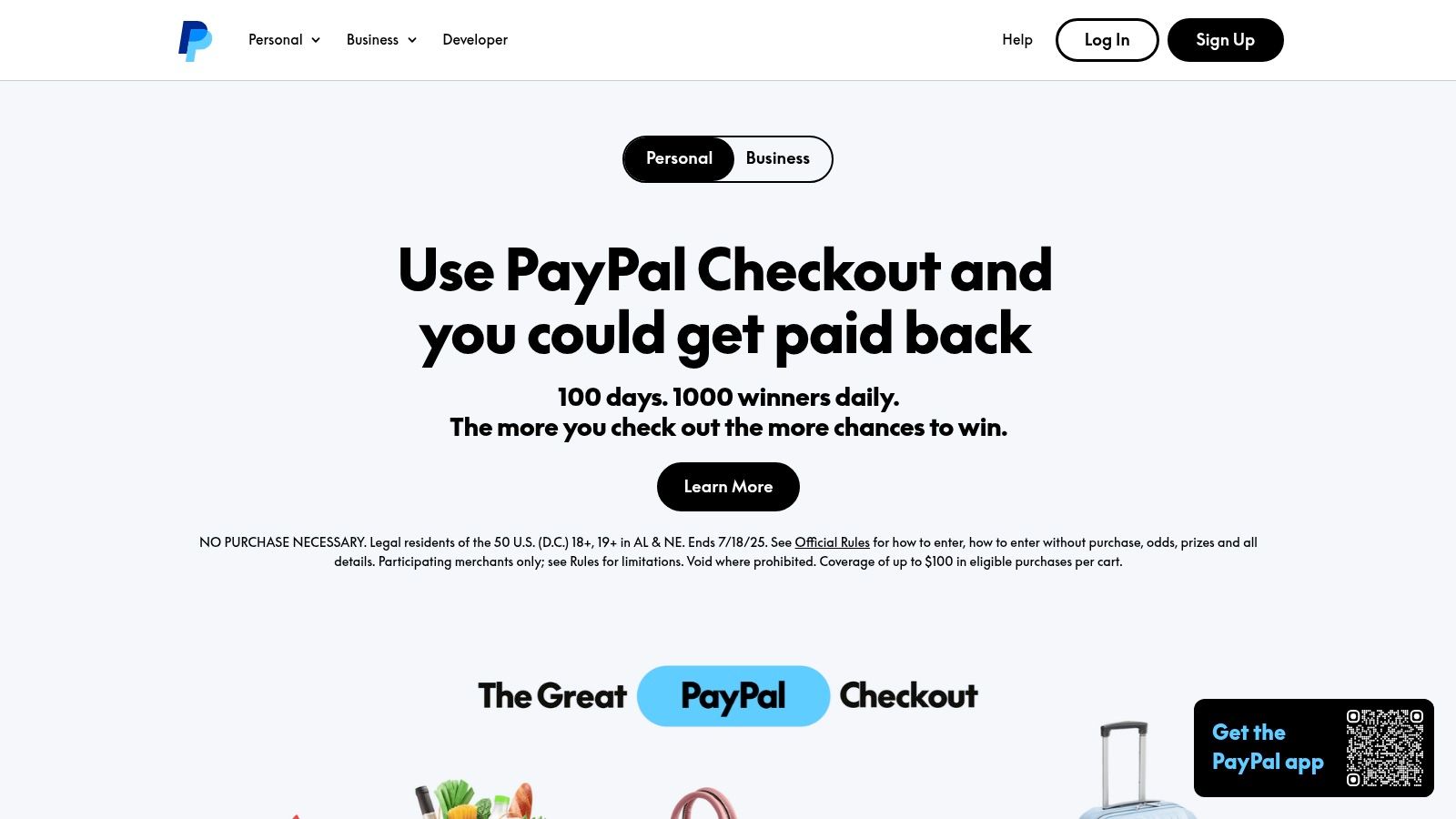
PayPal is arguably the most recognized name in online payments, making it a powerful and often essential international payment gateway for businesses aiming for global reach. Its strength lies in universal brand recognition and consumer trust. When customers see the PayPal button, they often feel more secure completing a purchase, which can significantly reduce cart abandonment rates, especially for new or smaller stores.
The platform allows you to accept a wide array of payments, including major credit and debit cards, PayPal balances, Pay Later options, and even Venmo in the U.S. This versatility ensures you can cater to diverse customer preferences across more than 200 markets and handle transactions in 25 different currencies.
Why PayPal Stands Out for Shopify Merchants
For Shopify store owners, integrating PayPal is incredibly straightforward. It's a default payment provider, meaning activation is just a few clicks away in your Shopify admin panel. You don’t need advanced technical skills to get started.
What makes PayPal unique is its built-in audience of over 400 million active users. This isn't just a payment processor; it's a platform customers actively use and trust. The user experience is seamless, with features like one-touch payments that simplify checkout for returning customers.
Practical Tip: Enable "PayPal Express Checkout" on your Shopify store. This adds a dynamic checkout button to your product and cart pages, allowing customers to bypass the standard checkout process and pay directly with their PayPal account, speeding up the entire transaction.
Pricing and Key Considerations
PayPal's pricing structure is transparent, with no setup or monthly fees for a standard account. However, its transaction fees can be higher than some competitors, especially for international sales.
| Transaction Type | Fee Structure |
|---|---|
| Domestic Sales | Typically 2.99% + fixed fee (e.g., $0.49 USD) |
| International Sales | 4.49% + fixed fee based on currency |
| Currency Conversion | Additional 4.0% fee on the conversion rate |
While these fees are a key consideration, the platform's robust security, including advanced AI-driven fraud detection and seller protection policies, provides a valuable safety net. Be aware that PayPal is known for occasionally placing holds on funds or limiting accounts if it detects unusual activity, so it's wise to maintain clear documentation for all your transactions.
Website: https://www.paypal.com/
2. Stripe
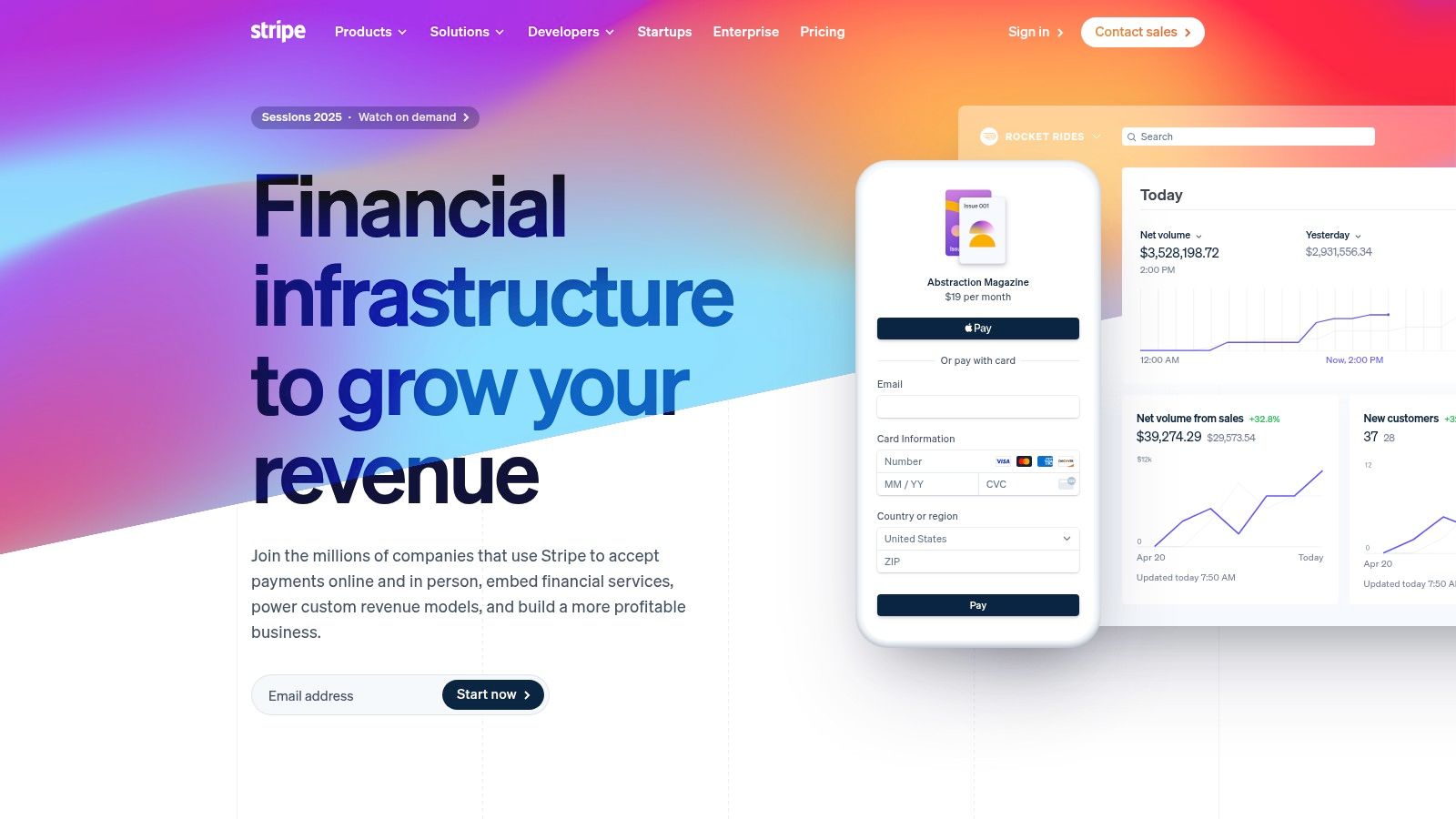
Stripe has rapidly become a favorite international payment gateway for tech-savvy businesses and developers, celebrated for its powerful, flexible, and API-first approach. It excels at providing a seamless and highly customizable payment experience directly on your website, meaning customers never have to leave your store to complete a purchase. This integration reduces friction and builds trust by keeping your brand front and center throughout the checkout process.
The platform supports a vast ecosystem, processing payments from over 135 currencies and offering local payment methods across more than 40 countries. This makes it an ideal choice for businesses with a diverse global customer base, from SaaS companies managing recurring subscriptions to large-scale e-commerce stores seeking robust, scalable payment infrastructure.
Why Stripe Stands Out for Shopify Merchants
For Shopify merchants, Stripe is a default payment provider within Shopify Payments, making activation incredibly simple. Its true power, however, lies in its deep customization capabilities and extensive developer documentation. While the basic setup is easy, businesses can leverage Stripe’s APIs to build sophisticated payment flows, custom checkout experiences, and integrated financial reports.
What sets Stripe apart is its comprehensive toolset, which goes beyond simple payment processing. It includes features like Stripe Billing for recurring revenue and subscriptions, Radar for advanced fraud detection using machine learning, and Connect for building multi-vendor marketplaces. This all-in-one approach allows businesses to manage their entire financial stack within a single, unified platform.
Practical Tip: Use Stripe's built-in support for local payment methods like iDEAL in the Netherlands or Bancontact in Belgium. You can enable these directly in your Shopify Payments settings to cater to specific international markets, which can significantly boost conversion rates in those regions.
Pricing and Key Considerations
Stripe’s pricing is transparent and competitive, with a pay-as-you-go model that includes no setup or monthly fees for standard processing. Its flat-rate structure makes it easy to predict costs.
| Transaction Type | Fee Structure |
|---|---|
| Domestic Sales | Typically 2.9% + $0.30 USD |
| International Sales | Additional 1.5% fee for international cards |
| Currency Conversion | Additional 1% fee if currency conversion is required |
While Stripe's developer-focused nature is a huge advantage for scalability, it can present a steeper learning curve for non-technical users looking for advanced customizations. However, its out-of-the-box integration with Shopify is straightforward for anyone. The platform's robust security, extensive documentation, and powerful features make it a top-tier choice for businesses planning for long-term global growth.
Website: https://stripe.com/
3. Authorize.Net
Authorize.Net is one of the oldest and most trusted names in the payment processing industry, making it a reliable international payment gateway for small to medium-sized businesses. Its reputation is built on stability and security, offering a robust solution that goes beyond simple transaction processing. It’s a Visa-owned company, which adds an extra layer of credibility for merchants and customers alike.
The platform supports all major credit cards, including Visa, MasterCard, American Express, and Discover, as well as digital payment services like Apple Pay and PayPal. It also handles electronic checks (ACH), providing a comprehensive suite of payment options. This flexibility allows businesses to cater to a wide range of customer preferences in multiple countries.
Why Authorize.Net Stands Out for Shopify Merchants
For Shopify merchants handling a high volume of transactions or those needing more control over security, Authorize.Net is an excellent choice. Its standout feature is the Advanced Fraud Detection Suite™, which includes a set of customizable, rule-based filters and tools to identify, manage, and prevent suspicious transactions. This is invaluable for merchants operating in high-risk markets or industries.
Integration with Shopify is well-supported, though it requires an active Authorize.Net account before you can connect it in your Shopify admin. Once set up, it provides a seamless and secure checkout experience directly on your site, without redirecting customers.
Practical Tip: Before going live, use Authorize.Net’s sandbox environment to run test transactions. This allows you to verify your setup and ensure everything functions correctly without processing real payments. For a deeper dive, you can learn more about how to properly test Shopify payment gateways.
Pricing and Key Considerations
Authorize.Net’s pricing is different from all-in-one solutions. It acts as the gateway, but you also need a separate merchant account. It offers an all-in-one option that includes both a gateway and a merchant account for simplicity.
| Plan/Fee | Fee Structure |
|---|---|
| All-in-One Option | $25/month gateway fee |
| Transaction Fee | 2.9% + $0.30 per transaction |
| Gateway Only Plan | $25/month gateway fee |
While the monthly fee is a key consideration, the platform’s security features, including its virtual terminal for manual phone orders and recurring billing options, provide significant value. The setup can feel more complex than competitors like Stripe, but its reliability and advanced fraud tools make it a powerful choice for established businesses seeking a secure international payment gateway.
Website: https://www.authorize.net/
4. Adyen
Adyen is a powerful, enterprise-grade international payment gateway built for scalability and unified commerce. Unlike many gateways that focus solely on online transactions, Adyen provides a single, integrated platform that handles payments across online, mobile, and in-person channels. This unified approach simplifies operations for large businesses managing multiple sales streams.
The platform excels in global coverage, supporting a vast array of local payment methods across more than 150 currencies. For businesses targeting specific international markets, this means you can offer familiar and trusted payment options like iDEAL in the Netherlands or Boleto in Brazil, which can dramatically improve conversion rates. Its data-rich dashboard provides deep insights into transaction performance, authorization rates, and customer behavior.
Why Adyen Stands Out for Shopify Merchants
Adyen is an ideal choice for large, established Shopify Plus merchants who require a sophisticated and all-in-one payment solution. Its direct integration with Shopify allows businesses to consolidate all their payment data into one system, providing a holistic view of revenue from e-commerce and physical retail stores.
The platform's standout feature is its advanced risk management tool, RevenueProtect, which uses machine learning to identify and block fraud without negatively impacting legitimate customers. This is particularly valuable for high-volume stores that are prime targets for fraudulent activity.
Practical Tip: Leverage Adyen’s Dynamic 3D Secure feature. It intelligently applies 3D Secure authentication only to high-risk transactions, reducing friction for genuine customers while maintaining strong security. This helps balance fraud prevention with a smooth checkout experience.
Pricing and Key Considerations
Adyen uses an Interchange++ pricing model, which is more transparent but also more complex than typical flat-rate structures. It consists of an acquirer markup plus the interchange and scheme fees charged by card networks. This model can be more cost-effective for large-volume businesses.
| Fee Type | Description |
|---|---|
| Processing Fee | A fixed fee per transaction (e.g., €0.10) |
| Payment Method Fee | A variable fee depending on the payment method used |
| Interchange++ | The direct cost from card schemes (Visa, Mastercard) |
Because of its complexity and feature set, Adyen is often better suited for enterprise-level clients rather than small businesses or startups. The setup process can be more involved, and businesses must meet certain transaction volume requirements to qualify for an account. However, for a global brand seeking maximum control and data, Adyen is a top-tier choice.
Website: https://www.adyen.com/
5. 2Checkout (now Verifone)
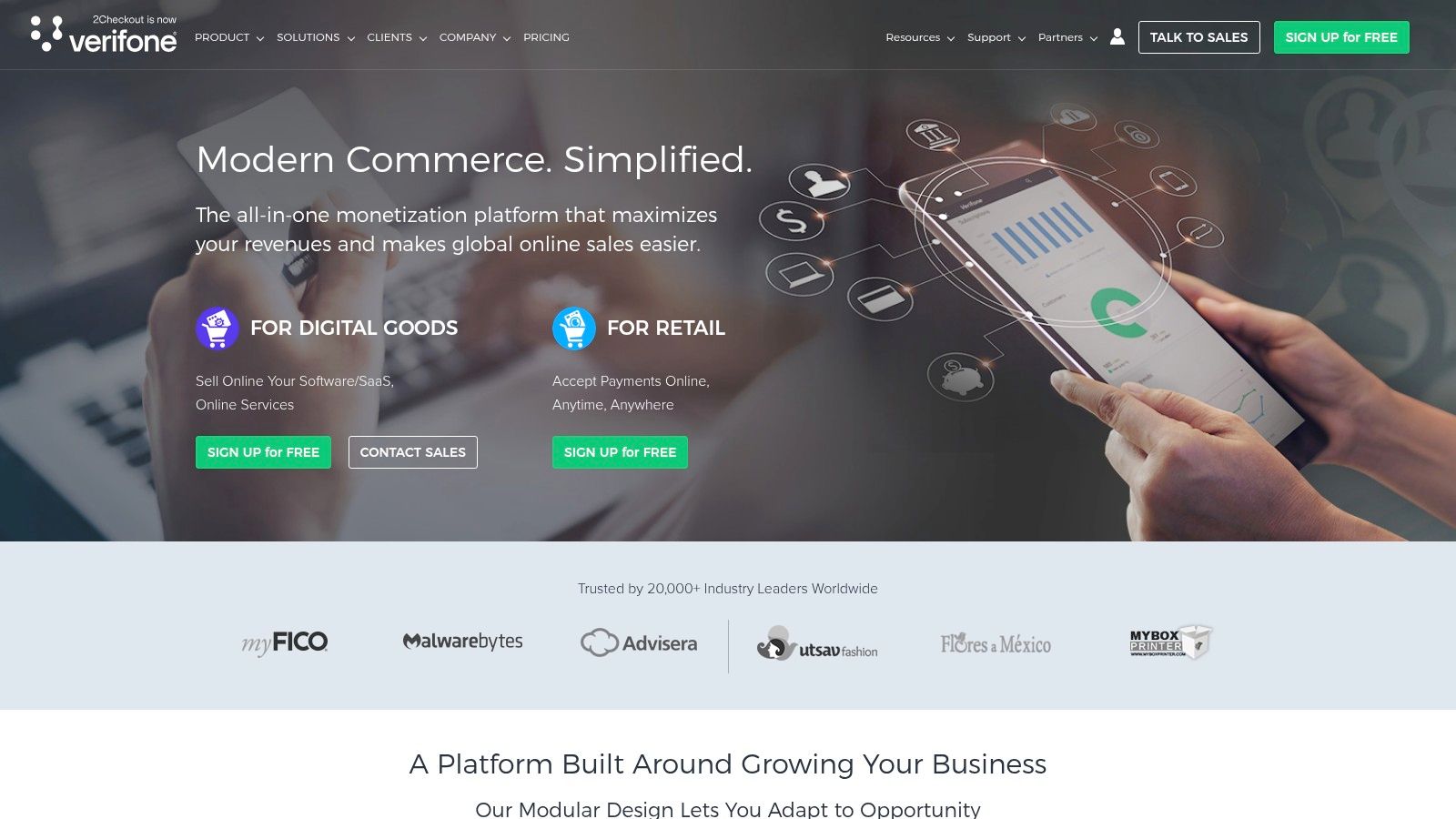
2Checkout, now part of Verifone, is an all-in-one monetization platform designed to simplify global e-commerce. It stands out as a powerful international payment gateway by focusing on global reach and localization, allowing merchants to sell into over 200 countries and territories. This makes it an excellent choice for businesses aiming to scale internationally without the headache of managing multiple payment processors.
The platform excels at handling local preferences, supporting over 100 currencies and more than 45 payment methods, from major credit cards to regional favorites like iDEAL and eWallets. This broad acceptance ensures a frictionless checkout experience for a global customer base, which can dramatically improve conversion rates in new markets.
Why 2Checkout Stands Out for Shopify Merchants
For Shopify store owners, 2Checkout offers a robust solution that goes beyond simple payment processing. Its key differentiator is its merchant of record (MoR) model, where 2Checkout takes on the financial and legal responsibilities for transactions, including sales tax management, invoicing, and compliance. This offloads a significant administrative burden, allowing you to focus on growing your business.
Integrating with Shopify is seamless via a dedicated app. What makes it unique is its built-in subscription billing and management engine, perfect for businesses offering recurring services or products. This feature is more advanced than what many standard gateways provide, supporting complex trial periods, upgrades, and renewals.
Practical Tip: Use 2Checkout's localization features to your advantage. Customize your checkout page to display prices in the customer's local currency and show their preferred payment methods first. This small adjustment can significantly boost trust and reduce cart abandonment.
Pricing and Key Considerations
2Checkout offers several pricing plans tailored to different business needs, but its fee structure can be more complex than some alternatives. There are generally no setup or monthly fees, with costs baked into transaction rates.
| Plan | Fee Structure (Per Successful Sale) |
|---|---|
| 2SELL | 3.5% + $0.35 |
| 2SUBSCRIBE | 4.5% + $0.45 |
| 2MONETIZE | 6.0% + $0.60 |
These plans bundle different features, with higher tiers including advanced tools like subscription management and global tax handling. While the per-transaction fees might seem higher, they include services that would otherwise require separate, costly tools. Be aware that cross-border and currency conversion fees may also apply, so it’s important to read the terms for your specific sales regions carefully.
Website: https://www.2checkout.com/
6. Braintree
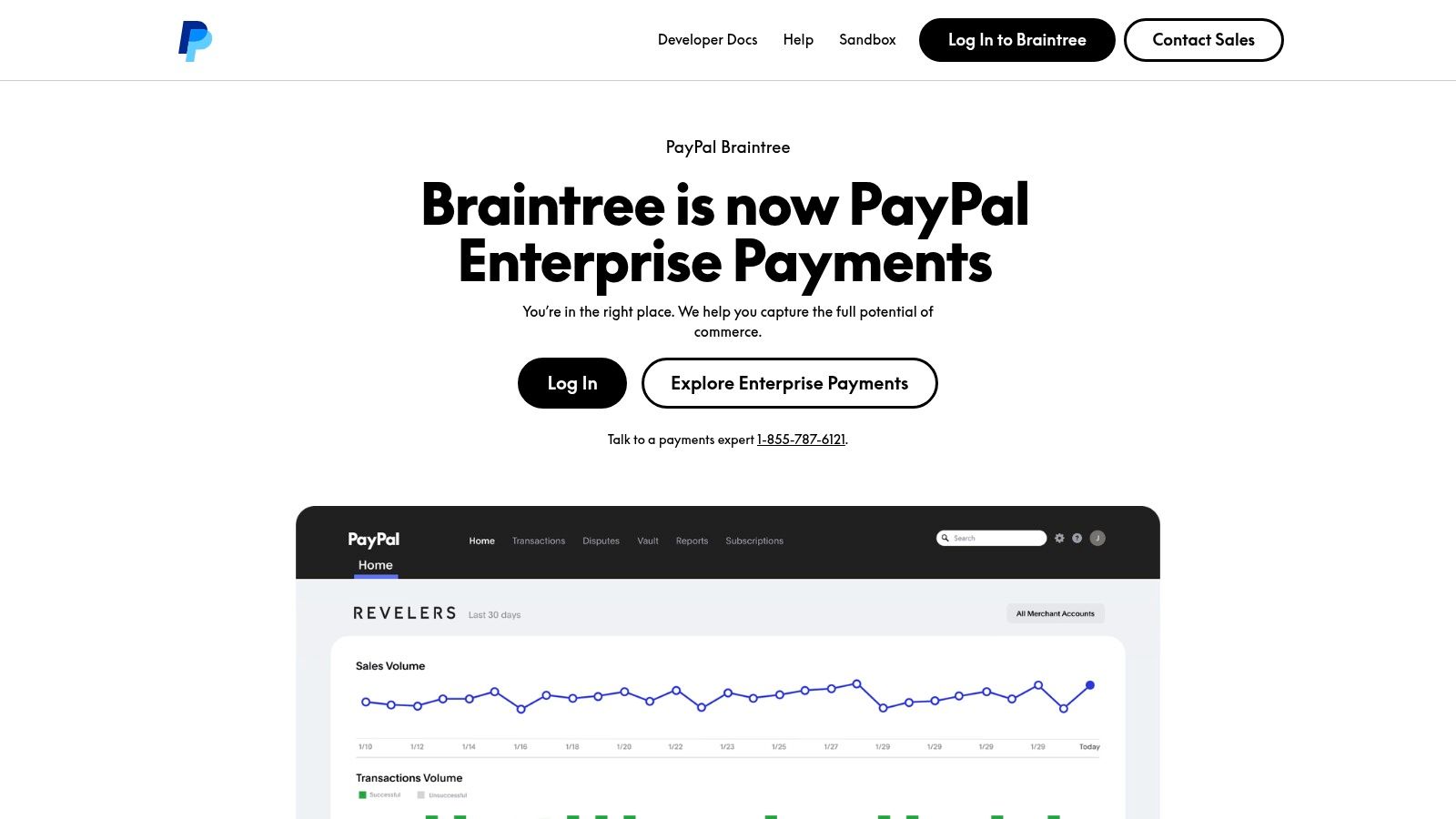
Braintree, a service owned by PayPal, operates as a sophisticated and highly scalable international payment gateway designed for growing and large-scale businesses. It empowers merchants to accept, process, and split payments seamlessly, providing the infrastructure needed to expand globally. The platform supports transactions in over 130 currencies across more than 45 countries, making it a robust choice for e-commerce stores with ambitious international goals.
Its core strength lies in its all-in-one approach, combining a payment gateway with a merchant account. Braintree allows you to accept a wide array of payment methods, including major credit and debit cards, digital wallets like Apple Pay and Google Pay, and of course, PayPal itself. This comprehensive support ensures you can meet diverse customer expectations worldwide.
Why Braintree Stands Out for Shopify Merchants
For Shopify merchants, Braintree offers a level of customization and control that goes beyond many standard payment processors. While the integration requires more technical setup via its API compared to default options, it unlocks powerful features. This makes it ideal for businesses that have outgrown simpler solutions and need more flexibility.
What truly sets Braintree apart is its advanced feature set, which includes customizable fraud protection tools, recurring billing, and subscription management right out of the box. Its powerful API and developer-friendly documentation allow for deep integrations, enabling unique checkout experiences tailored to your brand. By offering a unified platform for cards, PayPal, and digital wallets, you can streamline your backend operations while offering customers their preferred ways to pay. For insights on implementation, you can learn more about adding multiple payment methods in Shopify.
Practical Tip: Use Braintree’s advanced fraud tools to set custom rules based on your business needs. You can configure filters for AVS (Address Verification System), CVV, risk thresholds, and other parameters to automatically flag or reject suspicious transactions, minimizing chargebacks without blocking legitimate customers.
Pricing and Key Considerations
Braintree offers a straightforward pricing model with no monthly fees for its standard plan. However, fees vary depending on the payment method, and international transactions carry additional costs.
| Transaction Type | Fee Structure |
|---|---|
| Standard Card/Wallet | 2.59% + $0.49 per transaction |
| PayPal/Venmo | Standard PayPal pricing applies |
| International Transactions | Additional 1% fee for non-U.S. cards |
| Currency Conversion | Additional 1% fee for settlement in a different currency |
While the integration is more complex, the platform's scalability is a significant advantage. Braintree is built to grow with your business, handling high transaction volumes without issue. Its strong security protocols, including Level 1 PCI DSS compliance, provide peace of mind. Be prepared for a more hands-on setup process, but the long-term benefits of a customizable and powerful payment system are often worth the initial effort.
Website: https://www.braintreepayments.com/
7. Payoneer
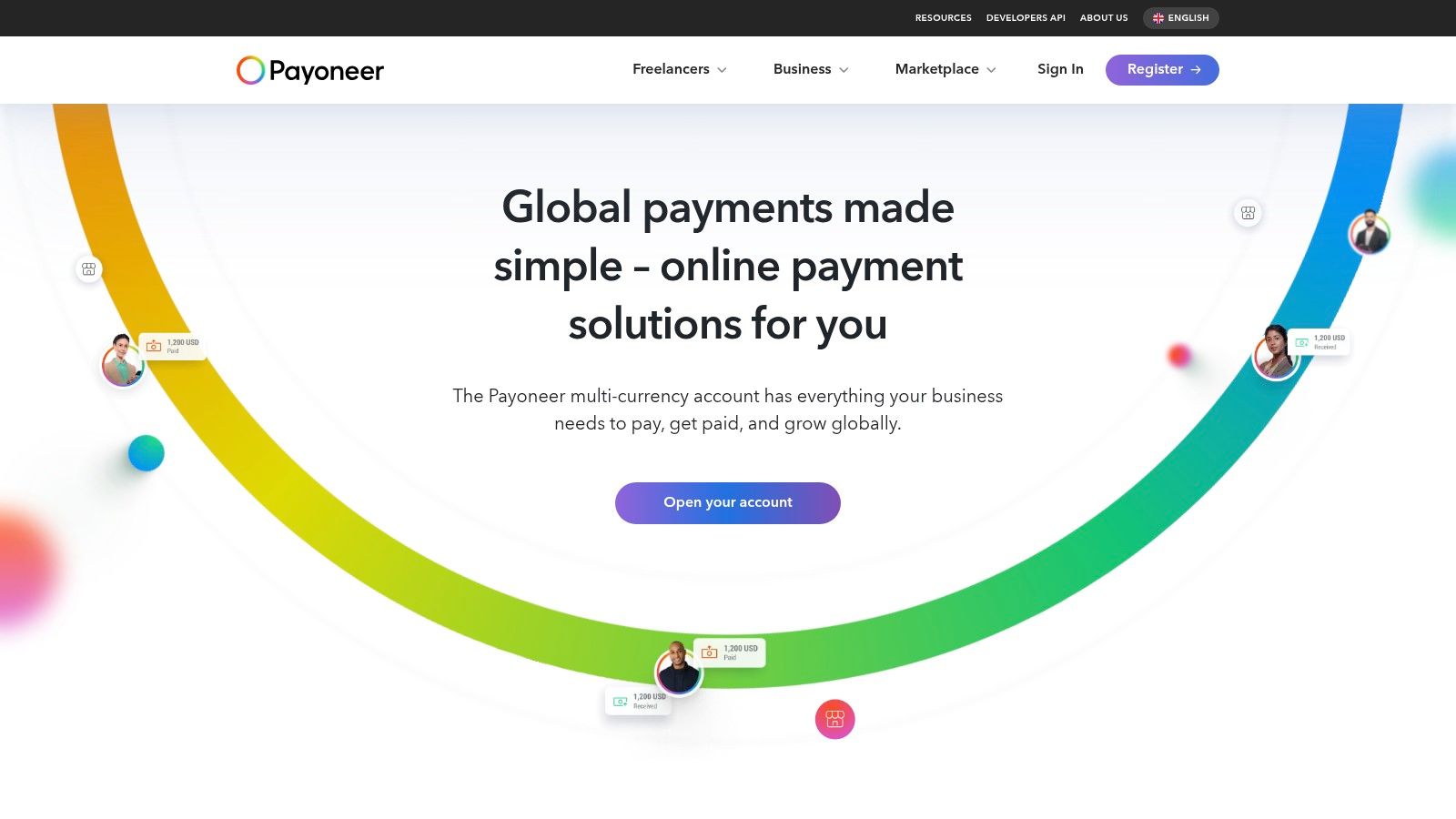
Payoneer carves out a unique niche as an international payment gateway by focusing on the needs of freelancers, service providers, and B2B sellers. Unlike traditional gateways centered on direct customer checkout, Payoneer excels at facilitating mass payouts and cross-border payments between businesses, making it ideal for stores that work with global suppliers, affiliates, or contractors.
Its core strength is providing users with local receiving accounts in multiple currencies (like USD, EUR, GBP, JPY). This allows you to receive international payments as if you had a local bank account in that country, bypassing costly SWIFT fees and poor exchange rates. It supports over 150 currencies, ensuring you can manage finances seamlessly across different markets.
Why Payoneer Stands Out for Shopify Merchants
For Shopify merchants, Payoneer's value extends beyond a simple checkout button. It is a powerful tool for managing the operational side of a global business. You can pay international suppliers, advertising agencies, or affiliate marketers directly from your Payoneer balance, often with no fees for Payoneer-to-Payoneer transfers.
The platform integrates with major marketplaces like Amazon, Upwork, and Airbnb, allowing you to centralize earnings from multiple channels into one account. While Payoneer Checkout is available for direct website payments, its true distinction lies in its robust B2B and payout infrastructure. This flexibility is also becoming increasingly important with the rise of new payment methods; you can learn more about trends in mobile payments for Shopify stores here.
Practical Tip: Use your Payoneer virtual bank accounts to receive payouts from other payment processors or marketplaces. This consolidates your international revenue in one place, giving you better control and often lower currency conversion fees when you decide to withdraw funds to your local bank.
Pricing and Key Considerations
Payoneer's fee structure varies significantly based on the type of transaction. There are no monthly account fees, but you should pay close attention to the costs associated with receiving and withdrawing funds.
| Transaction Type | Fee Structure |
|---|---|
| Receiving Payments (via Receiving Accounts) | Free for USD, EUR, GBP, and others |
| Receiving Payments (via Credit Card) | 3% of the transaction amount |
| Receiving Payments (via Bank Debit) | 1% of the transaction amount (for USD ACH) |
| Currency Conversion (Withdrawal) | Up to 2% above the mid-market rate |
One key advantage is the optional Payoneer MasterCard, which allows you to spend your balance directly online or at ATMs, bypassing withdrawal fees altogether. However, be mindful that its customer-facing checkout solution is less customizable than competitors like Stripe, making it more suited for B2B transactions than high-volume retail.
Website: https://www.payoneer.com/
International Payment Gateway Comparison
| Payment Gateway | Implementation Complexity 🔄 | Resource Requirements ⚡ | Expected Outcomes 📊 | Ideal Use Cases 💡 | Key Advantages ⭐ |
|---|---|---|---|---|---|
| PayPal | Low – Easy integration with platforms | Moderate – No setup fees but transaction fees | High security and versatile payment acceptance | Small to large businesses, global commerce | Strong security, user-friendly, global reach |
| Stripe | High – Requires developer expertise | Moderate – No monthly fees, pay-as-you-go | Highly customizable, scalable payments | Tech-savvy businesses, subscription billing | Robust APIs, transparent pricing, scalable |
| Authorize.Net | Medium – API integration can be complex | Moderate – Monthly fees plus transaction fees | Reliable payment acceptance, fraud protection | SMBs needing manual transactions and subscriptions | Established, multiple payment options |
| Adyen | High – Comprehensive platform setup | High – Higher transaction fees | Unified multi-channel payments, advanced analytics | Large enterprises with diverse payment needs | Global coverage, scalability, robust security |
| 2Checkout (Verifone) | Medium – Multiple integration options | Moderate – Complex fees | Wide currency & country support, subscription billing | Global sellers needing tax management | Extensive global reach, flexible payments |
| Braintree | Medium – API integration required | Moderate – Higher fees for certain methods | Scalable solution for growing businesses | Growing global businesses with varied payments | Strong security, supports many payment methods |
| Payoneer | Low – Focus on global payouts | Moderate – Fees vary, offers prepaid card | Flexible global payments, easy withdrawals | Freelancers, marketplaces, cross-border payments | Wide currency support, prepaid card option |
Making Your Final Choice: A Strategic Decision for Global Growth
Selecting the right international payment gateway is more than a simple technical integration; it's a foundational decision for your e-commerce store's global ambitions. The gateways we've explored, from the widespread recognition of PayPal to the enterprise-level power of Adyen, each offer a unique combination of features, fees, and regional strengths. Your task now is to align these options with your specific business model, target markets, and growth strategy.
To recap, we’ve seen how Stripe excels with its developer-friendly API and transparent, flat-rate pricing, making it a favorite for modern e-commerce brands. PayPal offers unparalleled brand trust and a massive user base, which can significantly boost conversion rates, especially in new markets. For merchants needing more traditional, robust solutions, Authorize.Net provides reliability and extensive support, while Braintree (a PayPal service) cleverly combines the best of both worlds with its advanced feature set and seamless PayPal integration.
Meanwhile, platforms like Adyen and 2Checkout (now Verifone) are built for businesses with serious global scale in mind, offering a unified platform for payments across countless countries and currencies. Finally, Payoneer presents a strong case for businesses heavily involved in B2B transactions and freelancer payouts, simplifying cross-border commerce in a unique way.
How to Choose Your Gateway: A Practical Checklist
Making the final call requires a clear-eyed assessment of your store’s needs. Don't just pick the most popular option; choose the most strategic one.
- Analyze Your Target Markets: Where are your customers located? A gateway like 2Checkout with strong support in emerging markets might be better than a North America-focused provider if you plan to expand into Eastern Europe or Latin America.
- Calculate the True Cost: Look beyond the advertised transaction fee. Consider monthly fees, PCI compliance costs, chargeback fees, and currency conversion rates. A lower transaction percentage might be offset by higher fixed costs, so model your expenses based on your projected sales volume.
- Evaluate Technical Requirements: How much control do you need over the checkout experience? Stripe and Adyen offer deep customization for a seamless, on-site checkout, while PayPal often redirects users, which can be simpler to implement but may affect conversions.
- Plan for Payment Failures: No matter which gateway you choose, some payments will inevitably fail. To maximize revenue and minimize payment failures, a key part of your strategic decision involves robust Dunning Management Strategies. Implementing automated retries and customer notifications can recover significant revenue that would otherwise be lost.
Choosing an international payment gateway is a critical step in unlocking your brand's potential. By carefully weighing these factors against the detailed profiles of each provider, you can build a payment infrastructure that not only supports your current operations but also scales with you as you conquer new markets. This choice empowers you to offer a localized, frictionless checkout experience that builds trust and drives sales worldwide.
Ready to implement the perfect payment solution but need expert technical help? The team at E-commerce Dev Group specializes in complex Shopify and Shopify Plus integrations, ensuring your chosen international payment gateway is configured flawlessly for maximum performance and security. Visit the E-commerce Dev Group website to learn how our development services can help you scale globally.
