

For too long, Shopify owners have been told they need to choose: SEO or Google Ads. This is a false choice. Thinking of them as separate channels is one of the biggest mistakes you can make. The truth? They’re two parts of a much more powerful whole.
When you weave them together, you create a growth engine. Your paid ads give you immediate, actionable data on what makes customers click and buy. You then feed that intel directly into your long-term SEO strategy, which builds a foundation for free, organic traffic. It’s a beautiful, self-sustaining cycle.
Why Your Shopify Store Needs Both SEO and AdWords
Let's finally put the whole "paid vs. organic" debate to rest. For any Shopify store trying to make a real impact, picking just one is like trying to row a boat with a single oar. You'll work hard, but you’ll probably just end up going in circles.
Real, forward momentum happens when you get both oars in the water, pulling together. A coordinated effort using both SEO and Google Ads ensures you’re reaching customers no matter where they are in their buying journey.
The Power of a Combined Strategy
I like to think of it like this: Google Ads is your sprinter. It’s built for speed, getting you immediate visibility and traffic right when you need it most—perfect for a new product drop or a big holiday sale.
SEO, on the other hand, is your marathon runner. It's all about building endurance and authority over the long haul, eventually bringing in a consistent flow of high-quality, free traffic day after day.
When you actually integrate SEO and AdWords, you kickstart a powerful feedback loop that snowballs your growth:
- Get Instant Data from Ads: Your Google Ads campaigns are a goldmine of real-world data. You quickly see which keywords and ad copy actually get shoppers to pull out their credit cards. This isn't a guess; it's what your target audience is telling you with their clicks and purchases.
- Make Smarter SEO Decisions: Take those proven, high-converting keywords from your ad campaigns and weave them into your SEO content—your product descriptions, blog posts, and category pages. Suddenly, the guesswork is gone.
- Dominate the Search Results: When you show up in both the paid and organic results for your top keywords, you completely own that digital real estate. This "double-dipping" not only pushes your competitors down the page but also builds massive credibility for your brand.
A Real-World Shopify Scenario
Let’s look at a practical example. Imagine a Shopify store that sells handcrafted leather goods. They decide to run a Google Ads campaign targeting the keyword "men's full-grain leather wallet."
After a few weeks, they notice something interesting in the data. While that term gets a lot of clicks, the phrase "personalized leather wallet for men" has a 3x higher conversion rate. Boom. That's a game-changing insight.
With this new information, they pivot. Not only do they double down on that keyword in their ad campaigns, but they also get to work on their SEO. They write a comprehensive blog post titled "How to Choose the Perfect Personalized Leather Wallet" and optimize it for that high-intent phrase. Soon enough, that post starts ranking on its own, pulling in free traffic from people who are ready to buy.
By using the hard data from Google Ads to steer their SEO efforts, the store captures immediate sales and builds a long-term asset that will bring in free traffic for years to come. This is the synergy that makes a combined SEO and AdWords strategy unbeatable.
Building Your Unified Keyword Strategy
This is where the real work—and the real payoff—begins. A powerful, integrated strategy starts with smart keyword research. Instead of running two separate research tracks for SEO and AdWords, you'll do it once and then decide which channel gets which keywords. It’s all about playing to the strengths of each.
The objective isn't just about chasing high-volume search terms. It's about getting inside the searcher's head to understand their user intent. What are they actually trying to accomplish? Are they just kicking tires and looking for information, or do they have their credit card out, ready to buy? Nailing this distinction is how you align your ads and content with where your customer is on their journey.
Sorting Keywords by Intent
For your Shopify store, think of keyword intent in two simple categories: informational and transactional. Getting this right is the secret to making your combined SEO and AdWords budget work smarter, not harder.
- Informational Keywords: These are your "how-to," "what is," and "best way to" searches. Someone looking up "how to clean a leather bag" is in research mode, not shopping mode. They're looking for answers.
- Transactional Keywords: These scream "I want to buy!" Think phrases like "buy men's leather wallet" or "brown leather satchel sale." The user is deep in the buying funnel and ready to make a move.
This is a critical split. You don’t want to burn your ad spend on someone who just wants cleaning tips, and you’ll struggle to get a product page to rank for a broad informational query.
Pro Tip: Your informational keywords are perfect for building your brand with SEO content like blog posts and video guides. Meanwhile, your transactional keywords are gold for targeted Google Ads that point straight to a product page.
Creating Your Master Keyword Map
With your keywords sorted by intent, it's time to build a master keyword map. This simple document is your strategic playbook, clearly defining which channel is responsible for which terms.
Let’s say you run a Shopify store selling high-end coffee beans. Your map might look something like this:
| Search Intent | Keyword Example | Primary Channel | Content/Campaign Type |
|---|---|---|---|
| Informational | "best way to grind coffee beans" | SEO | Blog Post |
| Informational | "how to make cold brew at home" | SEO | Video Tutorial / Guide |
| Transactional | "buy single origin ethiopian coffee" | AdWords / SEO | Product Page / Ad Group |
| Transactional | "dark roast coffee subscription" | AdWords | Subscription Landing Page Ad |
This approach ensures you have an answer for every type of searcher. SEO will capture them early on and build your brand's authority, while AdWords will swoop in to close the sale with highly motivated buyers.
Of course, SEO isn't just about content. It’s a whole ecosystem. For instance, data shows that top-ranking pages have about 3.8 times more backlinks than those on the lower half of page one. This shows just how vital a solid link-building strategy is to support your content efforts.
To really dig in and build a unified strategy, you first have to understand how to conduct keyword research like an expert. For a deeper look at the software and platforms that can make this process a whole lot easier, check out our comprehensive guide to SEO keyword research tools.
Structuring Your Campaigns and Site for Synergy
A great integrated strategy is about more than just sharing keywords; it’s about intentional, smart structure. You've got your Google Ads campaigns on one hand and your Shopify store's architecture on the other. The magic happens when you build them to mirror each other, creating a seamless experience for your customers that just plain works better.
The whole idea boils down to thematic alignment. Your ad campaigns need to be split into tight, focused ad groups, and your Shopify site needs logical collections and pages that match those themes. This creates a powerful, direct line from what someone searches for to what they see on your site.
Aligning Ad Groups with Site Structure
Think about your Google Ads account like a well-organized filing cabinet. You wouldn't just toss every document into a single drawer, right? You’d use folders for different topics. That’s exactly how your ad groups should function.
Each ad group should zero in on a very specific keyword theme. For instance, instead of lumping everything under a giant "leather wallets" campaign, you’d create separate, focused ad groups:
- Ad Group 1: Keywords like "men's brown leather wallets."
- Ad Group 2: Keywords targeting "personalized leather wallets."
- Ad Group 3: Keywords focused on "slim minimalist wallets."
Getting this specific lets you write ad copy that feels like it’s speaking directly to the searcher. The ad for "men's brown leather wallets" can highlight the exact features of those products.
The crucial next step is making sure each ad group sends traffic to an equally specific page on your Shopify store. The ad for brown wallets should link right to your collection page for brown wallets—not the general "all wallets" page. This direct match between the ad and the landing page is what drives high Quality Scores and better conversion rates. For a deeper dive, our guide on PPC for e-commerce walks through building these high-converting campaigns.
Key Takeaway: A tightly structured campaign does more than just organize keywords. It makes sure that when a visitor clicks an ad for a specific product, they land on a page that instantly says, "You're in the right place." This one thing can slash your bounce rates.
Building a Cohesive On-Site Experience
Your SEO site structure should be a direct reflection of your ad campaign themes. This means organizing your Shopify store with clear, logical pathways that follow how your customers actually search for things. Your collections, product pages, and even your blog content should all be built around the same keyword themes you’ve identified.
When you get this right, you create a powerful dual presence. Imagine a customer clicks your ad for "men's brown leather wallets" and lands on a perfectly optimized collection page. Even if they don't buy right then, they've had a fantastic first impression.
A few days later, they’re searching again and see your blog post ranking organically for "how to care for a leather wallet." That's the synergy in action. The initial paid click introduced them to your brand, and the organic touchpoint that followed builds trust and positions you as an expert.
This dual-channel visibility can turn a one-time click into a loyal customer. The whole system works because it’s based on how people search on the world's biggest platform. As of 2025, Google holds a massive 81.95% of the global search market share. That number alone shows why aligning both your SEO and AdWords with Google’s ecosystem isn’t just a good idea—it’s essential for being seen. You can discover more insights about Google Ads statistics on analyzify.com.
Using Ad Data to Fuel Your SEO Content
This is one of the most powerful feedback loops you can create for your Shopify store. Think of your Google Ads account as more than just a way to get sales—it’s a live research lab, giving you direct insight into what your customers actually want. You're already paying for those clicks, so you might as well squeeze every bit of value out of them.
The best place to start is the Google Ads Search Terms Report. This isn't theoretical keyword research; it's a raw, unfiltered look at the exact phrases people typed into Google right before clicking your ad and landing on your site. This is pure customer language.
Mine Your Search Terms Report for Gold
As you dig into your report, you’ll start to uncover hidden gems—especially long-tail keywords you would have never thought of on your own. Keep an eye out for queries with high click-through rates (CTR), but pay even closer attention to those with high conversion rates. These are the terms that don’t just grab eyeballs; they drive sales.
Once you’ve got a list of these high-performers, it’s time to weave them into your SEO strategy. This is more than just keyword stuffing.
- Spark New Blog Ideas: Did an unexpected "how to clean vintage leather" search term convert really well for your leather conditioner? That’s your next blog post, right there.
- Sharpen Product Descriptions: Take the language your customers are using and work it directly into your product pages. It makes your copy more relevant and relatable.
- Optimize Page Titles and Meta Descriptions: A search term that you know converts can be a game-changer when used in your on-page SEO.
The infographic below shows just how powerful this cycle can be when you sync your best ad-driven keywords with your organic content.
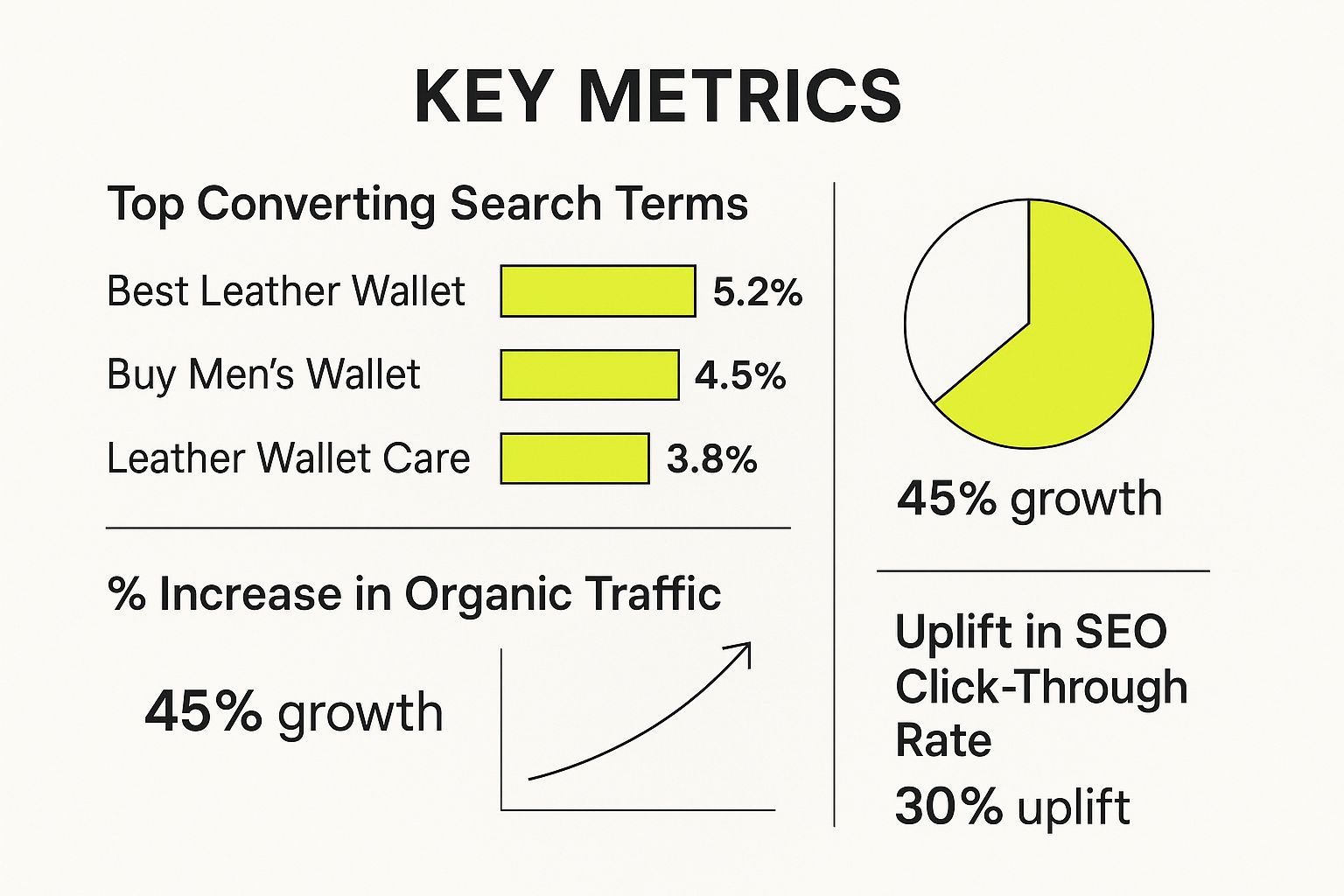
It’s pretty clear: the insights you pull from your best-converting ads can lead to huge gains in organic traffic and click-through rates.
The table below breaks down how to translate specific Google Ads metrics into tangible SEO actions. It’s a cheat sheet for turning paid data into organic growth.
Translating AdWords Data into SEO Actions
| Google Ads Metric | What It Tells You | Actionable SEO Strategy |
|---|---|---|
| High-Converting Search Terms | These phrases are driving actual sales and are highly relevant to purchase intent. | Create blog posts, FAQ pages, or product guides around these exact terms to capture organic traffic. |
| High Click-Through Rate (CTR) Ad Copy | The messaging in these headlines and descriptions resonates strongly with your audience. | Test similar phrasing in your SEO page titles and meta descriptions to improve organic CTR. |
| Low Impression, High Conversion Keywords | These are valuable niche terms that might not have high search volume but are very profitable. | Build dedicated landing pages or long-form content targeting these specific long-tail keywords. |
| Time of Day/Day of Week Performance | You know when your customers are most active and likely to convert. | Schedule new content to be published during these peak times to maximize initial visibility and engagement. |
Ultimately, this data gives you a clear road map. You're not guessing what might work; you're acting on what already is working.
Repurpose Winning Ad Copy for SEO
Your best-performing ad headlines and descriptions are battle-tested. You already know they connect with your audience because people are clicking. So why on earth wouldn't you use that proven copy in your organic listings?
If an ad headline is getting a fantastic click-through rate, a similar SEO page title will almost certainly perform well in the organic search results. This one little trick takes all the guesswork out of writing compelling titles.
I saw this happen with a Shopify store selling jewelry. One of their ad headlines, "Timeless Diamond Pendants, Free Engraving," consistently pulled in a 25% higher CTR than any other version they tested. So, they took that exact phrase and made it the SEO title for their diamond pendant collection page.
What happened? Within two months, organic traffic to that page more than doubled. All they did was apply a proven winner from their paid campaigns to their SEO.
This synergy between paid ads and organic search is a massive lever for growth, especially as you start producing more content. To get better at refining your content, check out this guide on the Humanizer for AI SEO Content. By grounding your content strategy in real-world paid data, you’re building everything on a foundation of what truly works.
Measuring Your Integrated Success
Let's be blunt: you can't improve what you don't measure. Flying blind is the fastest way to burn through your ad budget and waste months on SEO that goes nowhere. To really understand the impact of your combined SEO and AdWords strategy, you have to get your tracking right and learn how to read the story your data is telling you.
The goal isn't just to see which ad or keyword got the final click before a sale. That's a flat, one-dimensional view of what's happening. The real magic comes from understanding the entire customer journey, where multiple touchpoints—both paid and organic—work together to land that purchase. For this, Google Analytics is your command center.
Understanding the Full Customer Journey
One of the biggest mistakes I see Shopify owners make is giving all the credit to the last click. They see a conversion came from a Google Ad and immediately think their SEO efforts are useless, or vice versa. This thinking leads to terrible decisions, like gutting the budget for a channel that's actually doing the heavy lifting behind the scenes.
The truth is always more complex. A real customer journey often looks something like this:
- First Touch (SEO): A shopper is in research mode. They google an informational query like "how to choose a leather messenger bag" and land on your blog post. They now know your brand exists, but they aren't ready to buy.
- Middle Touch (Social): A few days later, they're scrolling through Instagram and see one of your posts. It’s a gentle reminder, reinforcing your brand in their mind.
- Last Touch (AdWords): A week later, they're ready to pull the trigger. They search "buy men's leather messenger bag," see your retargeting ad, click it, and finally make a purchase.
If you only look at that last click, Google Ads gets 100% of the credit. But would that last click have even happened without the initial discovery through SEO? Probably not.
Dig into the Multi-Channel Funnel reports in Google Analytics. This is where you can see exactly how different channels assist each other. It gives you a complete picture of performance, proving the value of SEO and paid ads working together.
Key Metrics for a Combined Strategy
When you're looking at your integrated performance, you need to go beyond surface-level vanity metrics. Your conversion rate is everything—it tells you how effective your campaigns truly are. In 2025, the average conversion rate for Google Ads is hovering around 7.52%, meaning just over 7% of ad clicks turn into a sale or lead. Of course, this number can shoot much higher in certain niches, which just goes to show how critical sharp ad copy and killer landing pages really are. You can learn more about 2025 Google Ads benchmarks on wordstream.com to see how your industry compares.
To really get a handle on all this, you need to bring your data into one place. Building a custom dashboard that shows both paid and organic performance side-by-side allows you to make smarter, data-backed decisions that will grow your entire business, not just one channel. A great starting point is to check out our guide on building a Shopify analytics dashboard. This is how you start seeing the big picture and putting your money where it will actually make a difference.
Answering Your Shopify SEO & AdWords Questions
Even with a solid plan, a few common questions always pop up when you start weaving together your SEO and Google Ads efforts. Let's run through them so you can move forward without any lingering doubts.
Do Google Ads Actually Help My SEO Rankings?
This is probably the number-one question I get. The short answer is no, not directly. Google has made it crystal clear over the years: you can't buy your way to the top of the organic search results.
But that’s not the whole story. The indirect benefits are huge. The data you get from your ad campaigns is basically a cheat sheet for your SEO. You discover which keywords actually convert, what ad copy gets people to click, and which landing pages close the deal. You’re essentially paying to find out what works, then applying those lessons to your long-term organic strategy for free.
They're two different tools in your toolbox, but they work incredibly well together.
Should I Really Bid on My Own Brand Name?
It feels counterintuitive, right? Why pay for a click you'd probably get for free, especially if you already rank #1 for your brand? I look at this as both a defensive and an offensive move.
First, defense. If you don't bid on your own name, a competitor will. They can set up an ad that appears right above your organic result, stealing away customers who were looking specifically for you. It happens all the time.
Bidding on your own brand is like buying insurance. It's a small cost to protect your most valuable traffic and ensure you control the entire top of the search results page.
The strategic upside is that you get to control the message and the destination. You can send branded searchers directly to a special offer or a high-converting category page, instead of just dumping them on your homepage.
How Long Until I Actually See Results?
This is where the difference between SEO and Google Ads really shines through. They operate on completely different timelines.
- Google Ads: You can see results almost immediately. Seriously. Once your campaign is live, you could be driving traffic and making sales within a few hours. It’s a sprint.
- SEO: This is a marathon, no doubt about it. You’re building an asset, and that takes time. Realistically, you're looking at 4-6 months before you start seeing significant, consistent traffic from your SEO efforts.
Think of it this way: Ads give you the immediate feedback and cash flow, while SEO builds the long-term, sustainable foundation for your business.
Which Is Better If I Have a Really Small Budget?
This is a tough one, and the right answer really depends on your immediate goals.
If you absolutely need sales this week to keep the lights on, a small, laser-focused Google Ads campaign is your best move. It's the most direct path to getting your products in front of people who are ready to buy right now.
But if you have a little breathing room and can think long-term, investing that same small budget into foundational SEO and quality content will pay off way more down the road. Every blog post or optimized product page is an asset that can bring you free traffic for years. An ad budget, on the other hand, is gone the second you spend it.
My favorite approach for stores on a tight budget? Start with a tiny ad spend to test the waters and find a few winning keywords. Once you know what converts, pivot that budget into creating SEO content around those proven terms.
Ready to stop guessing and start growing? The experts at E-commerce Dev Group build high-performance Shopify stores that are optimized for both SEO and paid ads from day one. Let's build your growth engine together.
