

Getting more visitors to your website can feel like a constant uphill battle. You’ve built a great site and created excellent products, but now comes the real challenge: how do you get the right people to actually see it? The answer isn't just about getting any traffic; it's about attracting qualified visitors who are likely to become customers. More targeted traffic directly translates to more leads, higher sales, and sustainable business growth.
This guide cuts through the noise and provides a clear, actionable roadmap. We've compiled 10 proven ways to increase website traffic, covering everything from foundational search engine optimization and content marketing to advanced strategies like community building and strategic partnerships. Getting users to your site is the first step, but you also need them to click. To maximize your website's potential, understanding how to improve click-through rates is paramount for turning impressions into valuable visits.
Each strategy detailed below is designed to be practical and effective, whether you’re just starting out or managing a large e-commerce operation. Forget vague advice; this is your blueprint for driving meaningful results. Let’s dive in and start turning your website into a powerful traffic magnet.
1. Search Engine Optimization (SEO)
Search Engine Optimization (SEO) is the foundational practice of improving your website’s visibility in search engine results. When a potential customer searches for products or information relevant to your business on Google or Bing, SEO helps your site appear higher in the rankings. This process drives high-intent organic traffic, meaning visitors who are actively looking for solutions you provide.
This long-term strategy is behind the success of giants like HubSpot, which attracts millions of visitors monthly by consistently publishing content that answers user questions. Similarly, e-commerce review site Wirecutter built its entire audience through product-focused SEO, leading to its acquisition by The New York Times. SEO is not just a tactic; it’s a sustainable channel for growth.
How to Get Started with SEO
Focusing on a few core areas is one of the most effective ways to increase website traffic without paying for ads. Start by understanding what your audience is searching for and create content that directly addresses their needs.
- Target Long-Tail Keywords: Instead of competing for broad terms like "shoes," target more specific phrases like "best waterproof running shoes for men." These have lower competition and attract more qualified buyers.
- Match Search Intent: Analyze the top-ranking results for your target keyword. Are they blog posts, product pages, or videos? Create content in the format that Google prefers to rank.
- Optimize On-Page Elements: Ensure your page titles, meta descriptions, and headers include your target keywords naturally. This helps search engines understand what your content is about.
- Build Quality Backlinks: Earn links from reputable websites through guest posting or digital PR. Backlinks act as votes of confidence, signaling to Google that your site is a credible authority.
2. Content Marketing
Content marketing is a strategic approach focused on creating and distributing valuable, relevant, and consistent content to attract and retain a specific audience. Unlike direct advertising, it provides genuine value through formats like blog posts, videos, and ebooks, building trust and establishing your brand as an authority. This method drives high-quality organic traffic by addressing the audience's pain points and interests.
This strategy is the engine behind many successful brands. For instance, Buffer's blog grew to over 5 million visitors by publishing transparent, educational content about social media. Similarly, Canva’s Design School offers free tutorials and resources, attracting millions of users to its platform. Content marketing is a powerful way to increase website traffic by nurturing an audience that views you as a go-to resource.
How to Get Started with Content Marketing
Creating high-value content is one of the most sustainable ways to increase website traffic and build a loyal following. The key is to shift from selling to educating, informing, or entertaining your target audience.
- Create Content Clusters: Build your content around core "pillar" topics. Create one comprehensive guide on a broad subject and link out to more specific "cluster" articles, establishing topical authority in the eyes of search engines.
- Repurpose Content: Maximize your efforts by turning one piece of content into multiple formats. A detailed blog post can become a video, an infographic, a podcast episode, and a series of social media updates.
- Focus on Evergreen Topics: Create content that remains relevant and valuable long after its publication date. How-to guides, case studies, and ultimate guides can drive consistent traffic for years.
- Use the Skyscraper Technique: Find the best-performing content for a specific topic, then create something significantly better. Improve it by adding more depth, including original data, or presenting it in a more engaging format.
3. Social Media Marketing
Social Media Marketing is the practice of using platforms like Instagram, TikTok, LinkedIn, and Facebook to promote content, engage with an audience, and drive traffic back to your website. This approach combines organic content, community management, and paid advertising to build brand awareness and create direct pathways for users to visit your site, making it one of the most dynamic ways to increase website traffic.

This strategy is behind countless modern success stories. Beauty brand Glossier built its empire on Instagram engagement, fostering a community that drove massive organic growth. Similarly, Dollar Shave Club’s viral YouTube video led to 12,000 orders in just two days, proving the power of a single piece of shareable content. Social media turns passive scrolling into active website visits.
How to Get Started with Social Media Marketing
Effective social media is about more than just posting; it’s about strategic engagement and providing value. Focus on the platforms where your target customers spend their time and build a presence that encourages clicks and conversions.
- Choose Platforms Wisely: Don't spread yourself thin. Focus on 2-3 key platforms where your target audience is most active and engaged.
- Optimize Your Bio Link: Use tools like Linktree or create a dedicated social media landing page on your site to direct followers to your most important content and products.
- Use Platform-Specific Features: Leverage native formats like Instagram Reels, TikTok videos, and LinkedIn articles. Algorithms often favor these, leading to better organic reach.
- Post with a Clear Call-to-Action (CTA): Explicitly tell your audience what to do next. Use phrases like "Shop the link in bio," "Learn more on our blog," or "Sign up now" to guide them to your website.
4. Pay-Per-Click Advertising (PPC)
Pay-Per-Click (PPC) advertising is a powerful method for driving immediate and highly targeted visitors to your website. Unlike organic strategies, PPC allows you to place ads directly in search engine results and across social media platforms, paying only when a user clicks your ad. This model provides rapid feedback and scalable results, making it one of the most direct ways to increase website traffic.
The impact of a well-run PPC campaign is significant. Mattress brand Purple famously spent over $3 million per month on paid ads to rapidly scale its business and capture market share. On a smaller scale, many Shopify sellers attribute 20-30% of their total revenue to Google Shopping ads, demonstrating the channel's effectiveness for e-commerce.
How to Get Started with PPC
Success with PPC depends on meticulous setup and continuous optimization. To avoid wasting your budget, focus on creating campaigns that are highly relevant to your target audience. For a deeper dive, consider resources on mastering Pay Per Click campaign management to refine your approach.
- Create Tightly Themed Ad Groups: Group a small number of closely related keywords into one ad group. This improves your Quality Score, which Google uses to reward relevant ads with lower costs and better placements.
- Use Negative Keywords: Actively add negative keywords to your campaigns to prevent your ads from showing for irrelevant searches. This simple step saves money and improves your conversion rate.
- Optimize Your Landing Pages: A great ad is only half the battle. Ensure the page users land on is directly related to the ad copy and has a clear call-to-action (CTA).
- Implement Remarketing: Re-engage visitors who have previously interacted with your site but didn't convert. These warm leads are often more likely to become customers on their second or third visit.
5. Email Marketing
Email marketing is a powerful strategy for driving repeat visitors back to your website by nurturing a direct relationship with your audience. It involves building a subscriber list and sending them valuable content, promotions, and updates directly to their inbox. This consistent communication keeps your brand top-of-mind and encourages loyal engagement.

This method is behind the massive success of media companies like Morning Brew, which grew to over 4 million subscribers and sold for $75 million, largely through its engaging daily newsletter. Similarly, TheSkimm built a community of millions by delivering news in a digestible format, proving that a well-executed email strategy is one of the most reliable ways to increase website traffic.
How to Get Started with Email Marketing
Building an engaged email list gives you a direct-access channel to your most interested audience, independent of algorithm changes on other platforms. The key is to provide genuine value that makes subscribers look forward to your emails.
- Offer a High-Value Lead Magnet: Encourage sign-ups by offering a free resource like an ebook, checklist, or exclusive discount. This gives visitors a compelling reason to share their email.
- Write Compelling Subject Lines: Your subject line is the first thing users see. Keep it under 50 characters and create curiosity to boost open rates. Learn more about how to write an effective newsletter on scaleshopify.com.
- Segment Your Audience: Group subscribers based on their interests or purchase history. Sending targeted, relevant messages to different segments dramatically improves click-through rates.
- Include Clear Calls-to-Action (CTAs): Every email should guide the reader on what to do next. Use clear, concise CTAs that link back to your website, whether it’s to read a blog post, view a new product, or claim an offer.
6. Influencer Marketing & Collaborations
Influencer marketing involves partnering with individuals who have established, engaged audiences in your niche. By leveraging their credibility, you can introduce your brand, products, or website to a loyal community. This strategy drives highly targeted referral traffic from followers who trust the influencer’s recommendations, making it one of the most effective ways to increase website traffic.
Watch brand Daniel Wellington famously built its $220 million empire almost entirely through Instagram influencer partnerships. Similarly, Gymshark achieved a valuation of over $500 million by collaborating with fitness influencers who authentically integrated its apparel into their content. These partnerships are not just promotions; they are powerful social proof that builds brand trust and drives clicks.
This bar chart breaks down the typical costs associated with different influencer tiers.
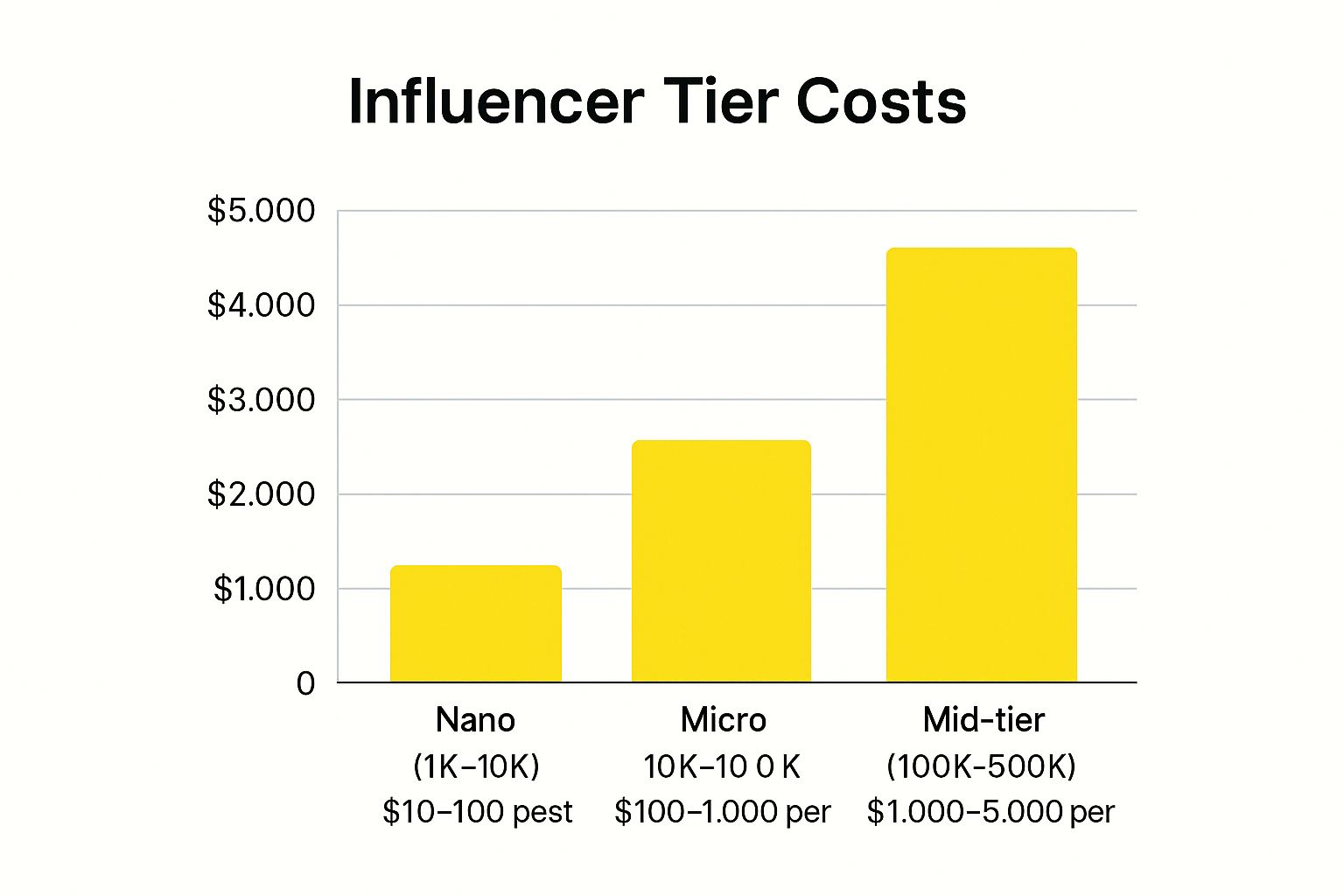
The chart illustrates that collaborating with nano and micro-influencers is significantly more cost-effective for brands on a budget.
How to Get Started with Influencer Marketing
Building an effective influencer program starts with finding the right partners and creating a mutually beneficial relationship. The goal is to generate authentic endorsements that resonate with their audience and direct valuable traffic to your site.
- Focus on Engagement Over Followers: Prioritize micro-influencers (10K–100K followers) who often have higher engagement rates and a more dedicated community than larger accounts.
- Ensure Audience Alignment: Vet potential partners thoroughly to confirm their audience matches your target customer demographic. An aligned audience is more likely to convert.
- Provide Unique Tracking Links: Give each influencer a custom discount code or a trackable URL. This allows you to accurately measure the traffic and sales generated from each collaboration.
- Encourage Creative Freedom: Allow influencers to create content in their own unique style while providing clear campaign goals. Authenticity is key to building trust with their followers.
7. Guest Blogging & Content Syndication
Guest blogging is the practice of writing and publishing articles on other established websites within your industry. Content syndication involves republishing your existing content on larger platforms. Both strategies tap into an established audience, driving referral traffic back to your site while building valuable backlinks that boost your SEO authority.
This approach was famously used by Leo Widrich, who wrote over 150 guest posts in nine months to help Buffer acquire its first 100,000 users. Similarly, Groove used strategic guest posts on sites like Fast Company and Copyblogger to attract thousands of highly relevant visitors. This tactic is one of the most effective ways to increase website traffic by borrowing credibility and reach from authoritative platforms.
How to Get Started with Guest Blogging & Syndication
Success in guest blogging requires a strategic approach that prioritizes quality and relationship-building over quantity. Focus on providing immense value to another website's audience, and the traffic will follow.
- Target Relevant Audiences: Focus on sites where your ideal customers spend their time, not just those with high domain authority. Relevance drives more qualified traffic.
- Pitch Unique, High-Quality Topics: Research the target blog and propose topics that fill a content gap or offer a fresh perspective. Your pitch should demonstrate you've done your homework.
- Include Contextual Backlinks: Place one or two natural, contextual links to relevant resources on your site within the article's body. Also, add a primary link in your author bio.
- Syndicate Your Best Content: Identify your top-performing blog posts and pitch them for republication on larger sites. Always ensure the publisher uses a canonical tag pointing to your original article to avoid SEO penalties.
8. Video Marketing (YouTube & Video SEO)
Video marketing is the strategic creation and distribution of video content to attract, engage, and convert an audience. With YouTube being the second-largest search engine in the world, optimizing your videos for search (Video SEO) is one of the most powerful ways to increase website traffic. When done right, video content appears in both YouTube and Google search results, driving highly engaged viewers back to your site.
This strategy is mastered by creators like Pat Flynn, whose YouTube channel consistently funnels viewers to his Smart Passive Income blog and courses. Similarly, Neil Patel generates millions of monthly views on his marketing videos, each one designed to lead viewers back to his website for tools and services. Video marketing builds trust and authority while creating a direct pathway for new traffic.
How to Get Started with Video Marketing
Creating a successful video channel that drives traffic involves more than just uploading content. You need to focus on discoverability and clear calls to action that guide viewers to your website.
- Optimize for Search: Research keywords your audience uses on YouTube. Include these keywords in your video titles, descriptions, and tags to improve your ranking in search results.
- Create Engaging Thumbnails: Design custom thumbnails with high-contrast visuals, bold text, and expressive faces. A compelling thumbnail dramatically increases your click-through rate.
- Drive Traffic with CTAs: Include clear verbal calls to action in your videos, telling viewers exactly why they should visit your website. Add links in your video description and use YouTube’s Cards and End Screens features.
- Write Detailed Descriptions: Use the video description to provide a summary, include relevant links to your site, and add timestamps. This helps both users and the YouTube algorithm understand your content’s value.
9. Community Building & Forum Marketing
Community building and forum marketing involve engaging with your target audience where they already gather online. By participating in forums, Reddit, Quora, and niche groups, you can establish expertise, provide genuine value, and direct interested users back to your website. This approach builds relationships and drives highly relevant traffic from users actively discussing topics related to your business.
This strategy is behind the explosive growth of companies like Indie Hackers, which built its entire platform around a community of entrepreneurs sharing their stories. Similarly, Groove’s early success was fueled by transparent blog posts that went viral on Reddit, driving thousands of new users. Instead of pushing ads, this method focuses on becoming a trusted voice, making it one of the most authentic ways to increase website traffic.
How to Get Started with Community Marketing
Success in community marketing hinges on authenticity and providing value before asking for anything in return. Focus on becoming a helpful member of the community first and a marketer second.
- Follow the 90-10 Rule: Dedicate 90% of your activity to providing helpful answers and engaging in discussions, and only 10% to self-promotion.
- Share Content When Relevant: Only post links to your website when they directly and genuinely answer a question or add significant value to a conversation.
- Build Your Reputation First: Most communities have a karma or reputation system. Participate actively and build your profile's authority before you start sharing links.
- Monitor Industry Keywords: Use tools to track mentions of your brand or relevant topics. This allows you to jump into conversations where you can offer expert advice and organically introduce your solution.
10. Strategic Partnerships & Link Building
Strategic partnerships are collaborations with complementary businesses or influencers to tap into their established audiences. By forming mutually beneficial relationships, you can generate referral traffic, earn high-quality backlinks, and build brand authority far more quickly than going it alone. This approach leverages the trust and reach of others to drive highly relevant visitors to your site.
This strategy was crucial for Dropbox, which integrated with Mailchimp to cross-promote services and grow both user bases. Similarly, Shopify’s partner program drives millions in revenue by empowering agencies and developers who, in turn, refer new merchants. These partnerships are powerful ways to increase website traffic by transforming competitors and adjacent brands into powerful allies.
How to Get Started with Partnerships
The goal is to find non-competing businesses that serve the same audience you do. Focus on creating genuine value for your potential partners and their customers first, as this builds the foundation for a strong, long-term relationship that benefits everyone.
- Identify Aligned Partners: Look for brands, influencers, or publications whose audience overlaps with your target customers. Tools like SparkToro can help identify these opportunities.
- Create Link-Worthy Assets: Develop unique resources like free tools, original research, or comprehensive guides. These "linkable assets" give potential partners a compelling reason to link to your site.
- Use Digital PR Tactics: Platforms like HARO (Help a Reporter Out) connect you with journalists looking for expert sources. A quote can earn you a powerful backlink from a major publication.
- Find and Fix Broken Links: Identify broken links on relevant websites and suggest your content as a replacement. This is a simple, effective way to provide value while earning a link. Learn more about effective link building for ecommerce sites to get started.
Top 10 Website Traffic Strategies Comparison
| Marketing Strategy | Implementation Complexity 🔄 | Resource Requirements ⚡ | Expected Outcomes 📊 | Ideal Use Cases 💡 | Key Advantages ⭐ |
|---|---|---|---|---|---|
| Search Engine Optimization (SEO) | Moderate to High 🔄🔄 | Medium (tools, specialist knowledge) ⚡ | Long-term sustainable organic traffic 📊⭐ | Businesses aiming for organic growth and authority; competitive niches needing lasting ROI | Cost-effective, builds trust, measurable results ⭐ |
| Content Marketing | High 🔄🔄🔄 | High (writing, design, video skills) ⚡ | Brand authority, lead nurturing, social shares 📊 | Brands focusing on education, thought leadership, and multi-format content delivery | Establishes authority, supports SEO, repurposable content ⭐ |
| Social Media Marketing | High 🔄🔄🔄 | Medium to High (content creation, daily management) ⚡ | Immediate engagement, brand awareness, viral potential 📊 | B2C, entertainment, e-commerce brands with active audiences on specific platforms | Direct audience access, viral potential, real-time feedback ⭐ |
| Pay-Per-Click Advertising (PPC) | Moderate 🔄🔄 | High (ad spend, campaign management) ⚡ | Immediate targeted traffic and conversions 📊⭐ | Time-sensitive campaigns, product launches, scaling paid acquisition | Immediate results, precise targeting, budget control ⭐ |
| Email Marketing | Moderate 🔄 | Medium (content creation, automation tools) ⚡ | High ROI, predictable traffic, lead nurturing 📊⭐ | Businesses with existing leads/customers focusing on retention and direct communication | Highest ROI, owner-controlled list, personalized messaging ⭐ |
| Influencer Marketing & Collaborations | Moderate to High 🔄🔄 | Medium to High (budget varies by influencer tier) ⚡ | Access to engaged niche audiences, social proof 📊 | Brands targeting specific demographics via credibility and endorsements | High trust, immediate audience reach, content repurposing ⭐ |
| Guest Blogging & Content Syndication | Moderate 🔄🔄 | Medium (writing, pitching, relationship building) ⚡ | Referral traffic, SEO backlinks, authority 📊 | Niche industries seeking backlinks and expanded reach | Builds SEO, accesses established audiences, diversified traffic ⭐ |
| Video Marketing (YouTube & Video SEO) | High 🔄🔄🔄 | High (equipment, editing skills, scripting) ⚡ | High engagement, multi-platform traffic, long-term views 📊 | Brands targeting visual learners, younger demographics, building strong connections | High engagement, dual ranking (YouTube & Google), repurposable ⭐ |
| Community Building & Forum Marketing | High 🔄🔄🔄 | Low to Medium (time-intensive participation) ⚡ | Highly targeted, trust-based traffic, viral potential 📊 | Niche/community-driven brands looking for authentic engagement and authority building | Builds genuine relationships, free traffic, direct feedback ⭐ |
| Strategic Partnerships & Link Building | High 🔄🔄 | Medium to High (outreach, content creation) ⚡ | Quality backlinks, sustained referral traffic 📊 | Companies seeking sustainable SEO boost and co-marketing opportunities | High-quality backlinks, mutual benefit, credibility through association ⭐ |
Putting It All Together: Your Next Steps for Traffic Growth
We've covered a wide range of powerful methods to boost your site's visibility, from the foundational principles of SEO to the dynamic engagement of video marketing and community building. Navigating these ten distinct ways to increase website traffic can feel overwhelming, but the goal isn't to master them all at once. The true path to sustainable growth lies in strategic implementation, consistent effort, and a deep understanding of what resonates with your specific audience.
Think of these strategies not as a checklist to be completed, but as a menu of opportunities. Your business is unique, and so is your ideal customer. The powerful PPC campaign that works for one brand might be less effective than a targeted influencer collaboration for another. The key is to start with a solid foundation and build from there.
Your Actionable Roadmap to More Visitors
The journey to higher traffic begins with a single, deliberate step. Don't try to launch a podcast, a YouTube channel, and a massive guest blogging outreach all in the same week. Instead, focus your energy where it will have the most immediate and lasting impact.
Here’s a simple, actionable plan to get started:
- Step 1: Solidify Your SEO Foundation. Before anything else, ensure your on-page and technical SEO are airtight. This is the bedrock of all your traffic-generating efforts. A technically sound, fast-loading website is non-negotiable for ranking high and providing a great user experience.
- Step 2: Commit to High-Value Content. Choose one primary content channel, whether it's a blog, a video series, or a podcast. Focus on creating exceptional, problem-solving content that serves your audience and naturally incorporates your target keywords. Consistency here builds authority and trust.
- Step 3: Select an Amplification Channel. Once you have great content, you need to promote it. Pick one amplification channel to master first. This could be email marketing to nurture your existing audience, or social media marketing on the platform where your customers are most active.
The Long-Term Vision for Traffic Success
Mastering these ways to increase website traffic is about more than just boosting numbers on an analytics dashboard. It's about building a resilient, multi-channel marketing engine that attracts, engages, and converts your ideal customers. Each new visitor represents a potential sale, a future brand advocate, and a valuable data point that helps you refine your strategy.
By experimenting, meticulously tracking your results with tools like Google Analytics, and doubling down on what works, you transform guesswork into a predictable system for growth. The most important takeaway is that progress requires action. Choose one strategy from this guide today, break it down into manageable tasks, and begin the process. Your future customers are searching for you; it's time to make it easier for them to find you.
Ready to supercharge your Shopify store's technical SEO and site performance? The experts at E-commerce Dev Group specialize in optimizing e-commerce sites to convert traffic into sales. Visit E-commerce Dev Group to see how our tailored solutions can unlock your store's full growth potential.
