

Imagine sending the perfect offer to the right person at the exact moment they're ready to buy. That's not a marketing fantasy; it's the power of effective customer segmentation. In the crowded world of e-commerce, treating all your customers the same is a recipe for missed opportunities and wasted ad spend. The key to unlocking sustainable growth is understanding that your audience isn't a monolith but a collection of diverse groups with unique needs, behaviors, and motivations.
This article dives deep into nine powerful customer segmentation techniques that will transform your generic marketing into a personalized, high-converting machine. We'll move beyond the basics, providing actionable steps and Shopify-specific examples to help you identify your most valuable customers, re-engage at-risk shoppers, and build lasting brand loyalty. For a deeper dive into the practical aspects of breaking down customer lists into focused groups, explore this practical guide to customer segmentation analysis.
By the end of this roundup, you'll have a clear roadmap to segment your audience and drive meaningful results for your business. Whether you're just starting or looking to refine your strategy, these methods are your key to smarter marketing.
1. Demographic Segmentation
Demographic segmentation is one of the most straightforward and widely used customer segmentation techniques. It involves grouping your audience based on observable, statistical data. These traits include age, gender, income level, education, occupation, and marital status. The core idea is that people with shared demographic characteristics often have similar needs and buying habits.
This method is a foundational starting point because the data is relatively easy to collect and analyze. For a Shopify store, this information can come from signup forms, customer surveys, or even inferred data from analytics platforms. It provides a clear, high-level view of who your customers are.

Why It's Effective
Demographics directly influence a customer's needs, wants, and purchasing power. A brand like Johnson & Johnson, for example, uses age to create distinct product lines for babies, teens (Clean & Clear), and adults. Similarly, a luxury apparel store on Shopify can target individuals in a high-income bracket with exclusive offers, knowing they have the disposable income for premium products.
How to Implement It on Shopify
- Refine Your Ad Targeting: Use demographic data to create highly specific audiences for your Facebook, Instagram, and Google ad campaigns. Target ads for a new line of professional attire to users aged 30-50 with occupations listed as "Manager" or "Director."
- Personalize On-Site Content: Use Shopify apps to show different homepage banners or product recommendations based on a user's gender or age group if that data is available.
- Develop Tailored Product Lines: If you notice a large segment of your customers are new parents, consider launching a collection of family-friendly or baby-safe products.
Pro-Tip: Demographic segmentation is powerful but becomes even more effective when layered with other methods. Combine age and income data with psychographic insights (like interests and values) for a much richer and more accurate customer profile.
2. Psychographic Segmentation
Psychographic segmentation is a sophisticated approach among customer segmentation techniques that groups customers based on their psychological attributes. It moves beyond who your customers are to understand why they buy, focusing on their values, attitudes, interests, and lifestyles. This method uncovers the motivations driving consumer behavior, allowing for deeply resonant marketing.
For a Shopify store, this means understanding if your customers are thrill-seekers, environmentally conscious, budget-focused, or early adopters of technology. This qualitative data helps create a more complete picture of your audience, revealing the intrinsic desires that influence their purchasing decisions.

Why It's Effective
Psychographics allow brands to connect with consumers on an emotional level. Patagonia, for instance, targets not just people who hike, but those who value sustainability and environmental activism. This values-based alignment builds powerful brand loyalty. Similarly, a Shopify store selling cruelty-free cosmetics can target customers who prioritize ethical consumption, creating a message that goes far beyond product features. Understanding these nuances is crucial for mapping out an effective e-commerce customer journey.
How to Implement It on Shopify
- Conduct Customer Surveys: Use tools like Typeform or Shopify's own apps to ask customers about their hobbies, values, and lifestyle choices. Questions can be about their weekend activities or what they look for in a brand.
- Analyze On-Site Behavior: Look at which blog posts are most popular or which product collections get the most traffic. A high-traffic collection of eco-friendly products indicates a segment that values sustainability.
- Create Value-Aligned Content: Develop marketing campaigns and messaging that reflect your target segments' values. If you identify a segment of health-conscious buyers, create blog content around wellness and healthy living.
Pro-Tip: Monitor social media conversations and forums related to your niche. Observing the language, interests, and opinions shared by your target audience is a goldmine for psychographic insights that can inform your product development and marketing strategy.
3. Behavioral Segmentation
Behavioral segmentation is one of the most powerful customer segmentation techniques because it groups customers based on their actions, not just their characteristics. It analyzes their direct interactions with your brand, such as purchase history, spending habits, product usage frequency, and brand loyalty. This method focuses on what customers do, offering deep insights into their intent and needs.
This data-driven approach moves beyond assumptions to look at tangible user behavior. For a Shopify store, this means tracking metrics like how often a customer buys, what product categories they browse, or whether they respond to discounts. It allows you to understand the customer journey on a practical level.
Why It's Effective
Customer actions are a stronger predictor of future behavior than static demographic data. A customer who frequently purchases running shoes is highly likely to be interested in new athletic apparel, regardless of their age or income. For example, Amazon’s recommendation engine is a prime example of behavioral segmentation, suggesting products based on a user’s browsing and purchase history. Similarly, the Starbucks Rewards program segments users by purchase frequency to offer tailored incentives that encourage repeat business.
How to Implement It on Shopify
- Create Triggered Email Campaigns: Use a Shopify app like Klaviyo to send automated emails based on behavior. For instance, send a "we miss you" campaign to customers who haven't purchased in 90 days or a cross-sell email to someone who just bought a complementary product.
- Segment by Purchase Frequency: Identify your most loyal customers (e.g., those who have made 5+ purchases) and create a VIP segment. Offer them exclusive early access to new products or special loyalty discounts.
- Target Based on Engagement: Group customers who consistently open your emails but haven't purchased recently. You can retarget this engaged-but-not-converting segment with a compelling offer to push them over the finish line.
Pro-Tip: Focus on high-value behaviors. Identify the specific actions that correlate most strongly with customer lifetime value, such as signing up for subscriptions or leaving a product review, and build segments around encouraging those actions.
4. Geographic Segmentation
Geographic segmentation is a fundamental customer segmentation technique that groups your audience based on their physical location. This can be as broad as a country or continent, or as specific as a city, ZIP code, or even a neighborhood. The core principle is that a customer's location significantly influences their needs, cultural preferences, and purchasing behavior.
This method is powerful because it acknowledges that consumer habits are not universal. Factors like climate, local culture, population density (urban vs. rural), and regional regulations all shape what people buy. For a Shopify store, this data can be gathered from shipping addresses, IP addresses, or by asking customers directly during signup.
Why It's Effective
Location directly impacts everything from product relevance to shipping logistics. For instance, a clothing retailer can market heavy winter coats to customers in colder climates like Canada while promoting swimwear to those in Australia during the same month. Similarly, a food and beverage brand like Coca-Cola adapts its marketing campaigns and even product flavors to align with local tastes and cultural celebrations in different countries.
How to Implement It on Shopify
- Offer Location-Based Promotions: Run targeted sales for specific regions. For example, create a "Beat the Miami Heat" promotion with discounts on summer apparel exclusively for customers with Florida shipping addresses.
- Customize Shipping and Logistics: Use Shopify apps to set up different shipping rules and rates based on geographic zones. This allows you to offer more competitive shipping options for local customers or accurately calculate international shipping costs.
- Tailor Website Content: Implement tools that change your website's language, currency, or featured products based on the user's IP address. Showing prices in the local currency is a simple yet effective way to improve the user experience for international shoppers.
Pro-Tip: Combine geographic data with behavioral insights. For example, analyze the purchasing habits of customers in a specific city to identify local trends. You might discover that your customers in New York City have a higher demand for express shipping options than those in rural areas.
5. RFM Analysis (Recency, Frequency, Monetary)
RFM Analysis is a powerful, data-driven customer segmentation technique that classifies customers based on their transaction history. It evaluates three key dimensions: Recency (how recently a customer purchased), Frequency (how often they purchase), and Monetary value (how much they spend). This method helps identify your most valuable customers, predict future buying behavior, and pinpoint those at risk of churning.
Unlike demographic or psychographic methods that focus on who customers are, RFM analysis focuses entirely on what they do. This quantitative approach provides an objective look at customer value, making it easier to prioritize marketing efforts and resources. For a Shopify store, it can transform your customer database into a strategic asset.
The following infographic illustrates the core process of calculating RFM scores.
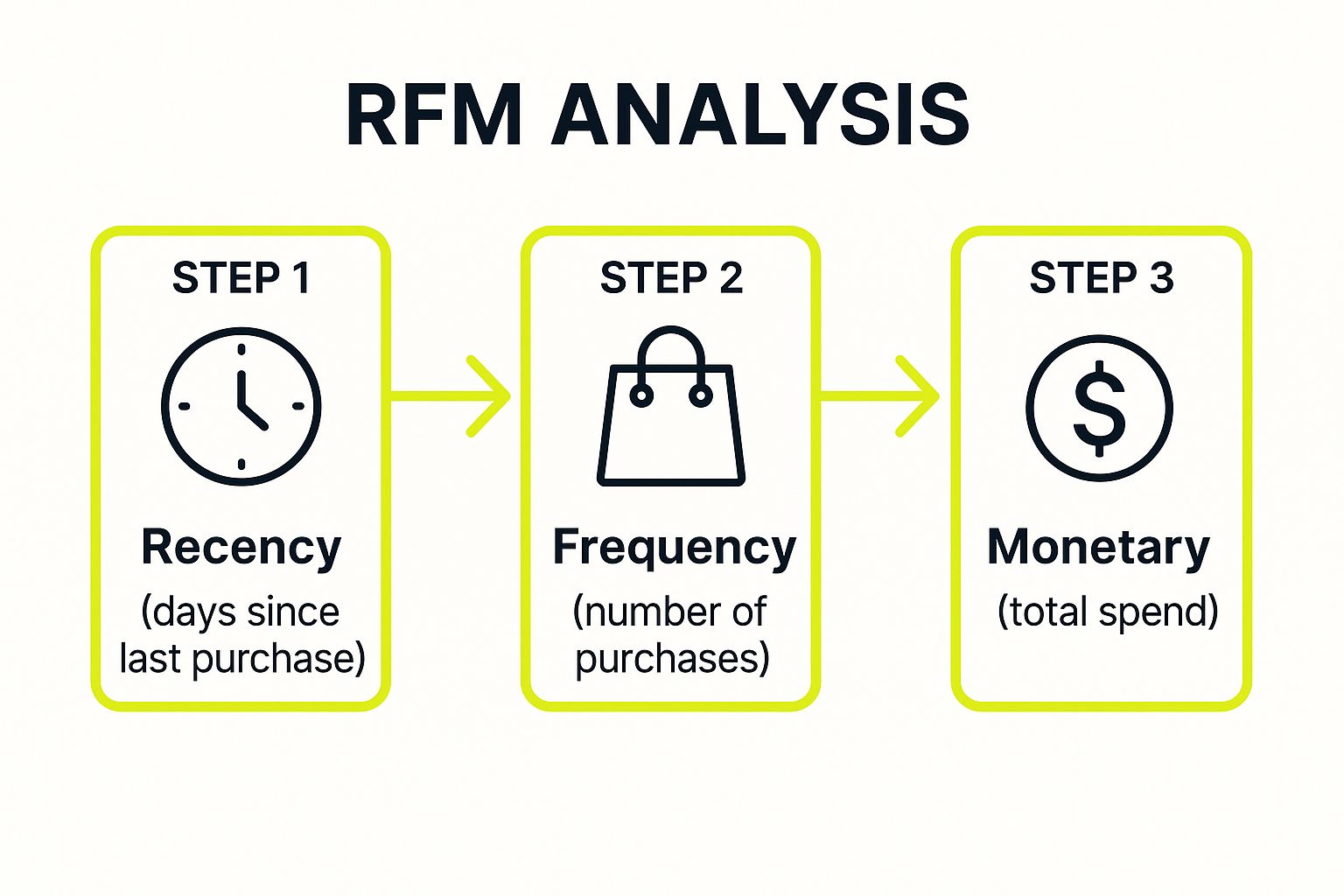
This process assigns a score for each dimension, which are then combined to create distinct customer segments.
Why It's Effective
RFM analysis is effective because past purchasing behavior is one of the strongest predictors of future action. A customer who bought recently, buys often, and spends a lot is far more likely to respond to a new campaign than an infrequent, low-spending one. For example, an e-commerce brand can use RFM to identify its "Champions" (high R, F, and M scores) and enroll them in an exclusive VIP loyalty program, fostering retention and advocacy.
How to Implement It on Shopify
- Create High-Value Segments: Use Shopify apps or a connected CRM to automatically score and segment customers. Target your top 10% of customers (your "Champions") with early access to new products or exclusive discounts.
- Re-engage At-Risk Customers: Identify customers with low recency scores but high frequency and monetary values. Launch a targeted "We Miss You" email campaign with a special offer to win them back before they churn.
- Personalize Marketing Communications: Tailor your email marketing content based on RFM segments. Send upgrade or cross-sell offers to frequent buyers and educational content to new, low-frequency customers.
Pro-Tip: Your RFM model is not static. Customer behavior changes, so you should recalculate scores regularly, perhaps quarterly or monthly. This ensures your segments remain accurate and your marketing stays relevant. Learn more about how you can apply this with our in-depth guide to RFM segmentation for Shopify stores.
6. Value-Based Segmentation
Value-based segmentation is a strategic approach that groups customers based on their economic value to your business. This customer segmentation technique looks beyond single purchases to consider factors like customer lifetime value (CLV), average order value (AOV), and overall profitability. The goal is to identify and prioritize your most valuable customers, allowing for more efficient resource allocation.
This method shifts the focus from who the customers are to what they are worth to your business. For a Shopify store, it means distinguishing between a one-time bargain hunter and a loyal, high-spending advocate. Analyzing this data helps you understand which segments drive the most revenue and profit over time.
Why It's Effective
Not all customers are created equal in terms of their financial impact. By identifying your high-value segments, you can dedicate your best resources, marketing efforts, and customer service to them. For example, a B2B Shopify Plus store might offer dedicated account managers and exclusive terms to its enterprise clients, recognizing their significant contribution to revenue. Similarly, airlines create tiered loyalty programs (e.g., Silver, Gold, Platinum) to reward and retain their most profitable travelers with special perks.
How to Implement It on Shopify
- Calculate Customer Lifetime Value (CLV): Use Shopify Analytics or dedicated apps like Lifetimely to calculate the CLV for each customer. Create segments for "High-Value," "Mid-Value," and "Low-Value" customers.
- Create VIP Programs: Offer exclusive benefits such as early access to new products, free shipping, or a dedicated support line for your top-tier customer segment.
- Tailor Marketing Campaigns: Send personalized win-back campaigns to high-value customers who haven't purchased recently, and focus acquisition efforts on attracting lookalike audiences that resemble your most profitable segment. For a deeper dive, learn more about using Shopify data for customer segmentation.
Pro-Tip: Remember to factor in the "cost to serve." A customer who spends a lot but also requires significant support or frequently returns products might be less valuable than a lower-spending but lower-maintenance customer. True value segmentation considers both revenue and costs.
7. Needs-Based Segmentation
Needs-based segmentation is a powerful customer-centric approach that groups customers according to their specific motivations, pain points, and desired outcomes. Instead of focusing on who the customer is, this technique zeroes in on why they are buying. It's built on the idea that customers purchase products to solve a problem or fulfill a need.
This method, often associated with the "Jobs-to-be-Done" framework, requires a deeper understanding of the customer's context and goals. For a Shopify store, this means uncovering what "job" a customer is "hiring" your product to do. It shifts the focus from product features to customer solutions, making it one of the most insightful customer segmentation techniques available.
Why It's Effective
This approach is highly effective because it directly addresses the core drivers of purchasing decisions. A brand like Spotify excels at this by creating playlists not just by genre (demographic), but for specific needs like "Focus," "Workout," or "Dinner Party." Similarly, Intuit QuickBooks offers different software versions tailored to the distinct accounting needs of freelancers versus growing small businesses, solving specific problems for each group.
How to Implement It on Shopify
- Conduct Customer Interviews and Surveys: Go beyond basic satisfaction questions. Ask customers about the problems they faced before finding your product and what they were trying to achieve. Use tools like post-purchase surveys to gather these insights.
- Analyze Customer Support Data: Your support tickets, live chats, and product reviews are a goldmine for identifying common pain points, frustrations, and unmet needs. Look for recurring themes and challenges.
- Create Needs-Based Landing Pages: Develop specific landing pages on your Shopify store that speak directly to a particular need. For a skincare brand, you could have separate pages targeting "acne-prone skin solutions" and "anti-aging routines."
Pro-Tip: Map out the entire customer journey for each identified needs-based segment. This will reveal specific pain points and opportunities at different stages, from initial product discovery to post-purchase support, allowing you to tailor the experience precisely.
8. Technographic Segmentation
Technographic segmentation is a modern and powerful customer segmentation technique that groups customers based on the technology they use. This includes their preferred devices (desktop vs. mobile), operating systems, software stack, and overall technology adoption patterns. It’s built on the idea that the technology a person or business uses reveals a lot about their behaviors, needs, and sophistication.
This method is especially critical for SaaS companies, B2B sellers, and Shopify stores selling tech-related products or apps. By understanding your customer's tech stack, you can identify compatibility, pinpoint integration opportunities, and tailor your messaging to their specific digital environment. It answers the question of how your customers interact with the digital world.
Why It's Effective
The technology a customer uses directly impacts how they will interact with your product and marketing. For instance, a software company like Adobe can segment its audience by those who use competing design software versus those who are new to digital creation, tailoring their outreach accordingly. Similarly, a Shopify app developer can target stores that use a specific set of complementary apps, knowing their product will integrate seamlessly and add immediate value.
How to Implement It on Shopify
- Analyze Site Traffic Data: Use Google Analytics to segment visitors by device (mobile, desktop, tablet) and operating system (iOS, Android, Windows). A high percentage of mobile iOS users might warrant prioritizing a better mobile experience for Safari browsers.
- Use Surveys and Forms: Add optional fields to your signup or contact forms asking about the software or platforms customers use that are relevant to your products. This provides direct, actionable data.
- Leverage B2B Data Tools: For Shopify Plus merchants in the B2B space, tools like BuiltWith or SimilarTech can reveal the technology stack of your business clients, allowing for highly targeted sales and marketing campaigns.
Pro-Tip: Technographic data changes rapidly. A customer's preferred device or software can change in a year. Regularly update your technographic segments and stay informed about emerging technology trends to keep your strategy relevant and effective.
9. Life Stage Segmentation
Life stage segmentation is a dynamic approach that groups customers based on where they are in their life journey. This customer segmentation technique recognizes that a person's priorities, spending habits, and needs dramatically shift during major life events like graduating, getting married, buying a home, having children, or retiring.
Unlike static demographic data, this method is temporal and focuses on transitions. A Shopify store can leverage this by understanding that a college student's needs are vastly different from those of a new parent or an empty nester. This model helps you anticipate future needs and market products relevant to a customer's current circumstances.
Why It's Effective
Life stages are powerful purchase triggers. When customers enter a new phase of life, they actively seek products and services to support that transition. For example, a furniture store can target users who have recently moved or bought a home, while a baby products brand can focus on expecting parents. This relevance makes marketing messages more timely, personal, and effective, leading to higher conversion rates.
How to Implement It on Shopify
- Create Trigger-Based Email Automations: Set up email flows that activate based on life stage indicators. If a customer starts purchasing from your baby category, enroll them in a "New Parent" email series featuring relevant products, parenting tips, and special offers.
- Develop Curated Product Collections: Build and promote collections on your Shopify store tailored to specific life stages, such as "Graduation Gifts," "Newlywed Home Essentials," or "Retirement Hobbies." This simplifies the shopping experience for these segments.
- Personalize Ad Campaigns: Use browsing history and purchase data to infer a customer's life stage. Target ads for engagement rings to users browsing wedding content, or promote larger family-sized products to customers who have previously purchased items for young children.
Pro-Tip: Life stage segmentation is most powerful when used for long-term customer relationship building. Focus on becoming a trusted resource for customers as they navigate different life phases, and they will be more likely to stay loyal to your brand over time.
Customer Segmentation Techniques Comparison
| Segmentation Type | Implementation Complexity 🔄 | Resource Requirements ⚡ | Expected Outcomes 📊 | Ideal Use Cases 💡 | Key Advantages ⭐ |
|---|---|---|---|---|---|
| Demographic Segmentation | Low – simple data collection | Low – uses widely available data | Clear target groups, broad segmentation | Retail, Financial services, Healthcare | Easy, cost-effective, stable characteristics |
| Psychographic Segmentation | High – needs surveys & analysis | High – requires sophisticated tools | Deeper insights, emotional connection | Lifestyle brands, premium products | Personalized marketing, predicts behavior |
| Behavioral Segmentation | Medium – requires robust tracking | Medium – transactional data systems | Precise targeting, actionable insights | E-commerce, Loyalty programs, Streaming | Directly related to actions, dynamic segmentation |
| Geographic Segmentation | Low – based on location data | Low – simple geographic info | Region-specific marketing, tailored products | Local marketing, Distribution planning | Simple, cost-effective, efficient distribution |
| RFM Analysis | Medium – scoring & segmentation steps | Medium – transactional data | Identify high-value customers, predict churn | E-commerce, Subscription services, Retail | Quantitative, tied to revenue impact |
| Value-Based Segmentation | High – requires advanced analysis | High – data-heavy and complex | Optimized resource allocation, ROI improvement | Premium services, Loyalty programs | Links segmentation to profitability |
| Needs-Based Segmentation | High – extensive research needed | High – customer interviews & surveys | Tailored solutions, innovation opportunities | Product development, Customer satisfaction | Customer-focused, uncovers unmet needs |
| Technographic Segmentation | Medium – tech data collection | Medium to high – analytics & databases | Precise digital targeting, trend prediction | B2B tech, SaaS, Digital products | Predicts tech adoption, aids product planning |
| Life Stage Segmentation | Medium – tracking life events | Medium – ongoing data updates | Lifecycle marketing, long-term relations | Financial services, Insurance, Retail | Predictive, emotional connection, lifecycle focus |
From Insight to Impact: Putting Your Segmentation Strategy to Work
You've explored the diverse landscape of customer segmentation, from the foundational demographic and geographic approaches to the more nuanced behavioral and psychographic models. We've journeyed through powerful frameworks like RFM Analysis and delved into specialized methods such as needs-based and life stage segmentation. The common thread is clear: understanding your customer on a deeper level is no longer a luxury, but a core component of sustainable e-commerce growth.
The true power of these customer segmentation techniques isn't in knowing them, but in applying them. The most successful Shopify merchants don't just pick one method and stick with it. Instead, they create a dynamic strategy by layering different models to build a multi-dimensional view of their audience.
The Art of Combining Segmentation Models
Imagine combining the "what" with the "why." You can layer behavioral data (what customers do) over psychographic profiles (why they do it). For example, you might identify a segment of "High-Value, Eco-Conscious Shoppers" by combining RFM analysis with data on their values and lifestyle interests. This group not only spends more but does so because your brand's sustainable mission aligns with their personal beliefs. This level of insight allows you to move beyond generic discounts and craft resonant marketing messages that build genuine loyalty.
Similarly, pairing demographic data with life stage segmentation can unlock new opportunities. A customer in the "New Parent" life stage has vastly different needs and purchasing triggers than one in the "Empty Nester" stage, even if they share the same age bracket or income level. Recognizing this allows you to tailor product recommendations, content, and promotions with precision. To see how leading SaaS companies put this into practice, you can discover more customer segmentation examples and draw inspiration for your own e-commerce strategy.
Your Actionable Next Steps
Getting started doesn't require a complete overhaul of your marketing. The key is to begin with a focused, manageable approach and build from there.
- Start Small, Aim High: Choose one or two customer segmentation techniques that directly align with your most pressing business goal. If you want to improve retention, RFM analysis is a fantastic starting point. If you aim to increase average order value, consider value-based or needs-based segmentation.
- Leverage Your Tools: Your Shopify store is already a data goldmine. Use built-in analytics and customer tags to create basic segments. As you grow, integrate dedicated apps for customer data platforms (CDPs) or advanced analytics to automate and refine the process.
- Test, Measure, and Iterate: Customer segments are not set in stone. Your audience evolves, market trends shift, and your product line changes. Regularly review the performance of your segmented campaigns. Are your targeted emails getting higher open rates? Are personalized product recommendations leading to more conversions? Use this feedback to continuously refine your segments.
Ultimately, mastering customer segmentation transforms your marketing from a broadcast into a conversation. It enables you to speak directly to the unique needs, motivations, and desires of each customer group, fostering stronger relationships and driving predictable revenue. The journey from raw data to meaningful impact begins with your first segment.
Ready to turn customer data into your most powerful growth engine but not sure where to start? The experts at E-commerce Dev Group specialize in helping Shopify and Shopify Plus merchants implement advanced analytics and custom segmentation strategies. We transform complex data into clear, actionable insights that drive conversions and build lasting brand loyalty. Learn how we can help you scale your Shopify store today.
