


Mobile commerce, often called m-commerce, is simply the act of buying and selling things through a wireless handheld device, like your smartphone or tablet. Think of it as e-commerce that fits in your pocket, letting you make a purchase from literally anywhere, at any time. This big move from desktop computers to mobile phones has completely changed the game for online shopping.
Your Guide to Understanding Mobile Commerce
Let's use an analogy. Picture the difference between a sprawling, old-school department store and a trendy, personalized pop-up shop. The department store represents traditional e-commerce—it has everything you could ever want, but you have to make a special trip and wander through its massive aisles to find it.
The pop-up shop, on the other hand, is like mobile commerce. It’s convenient, curated, and seems to follow you wherever you go, popping up with exactly what you need, right when you think of it. That’s the real magic behind m-commerce.
This incredible convenience has made mobile the go-to shopping method for millions of people. No longer tethered to a desk, customers can browse, compare products, and complete a purchase while on their morning commute, waiting for a coffee, or just lounging on the couch. For businesses, this constant connectivity opens up countless new opportunities to engage with their audience.
M-Commerce vs. E-commerce
While m-commerce is technically a part of the larger e-commerce world, the user experience couldn't be more different. Everything from the smaller screen and touch-based controls to the on-the-go nature of mobile shopping requires a completely different strategy. Grasping these distinctions is crucial for any online business hoping to thrive today. For a detailed breakdown, you can explore the benefits and challenges of mobile commerce and see what it takes to succeed.
This simple graphic perfectly illustrates the powerful link between our phones, easy payment options, and the convenience that fuels the m-commerce engine.
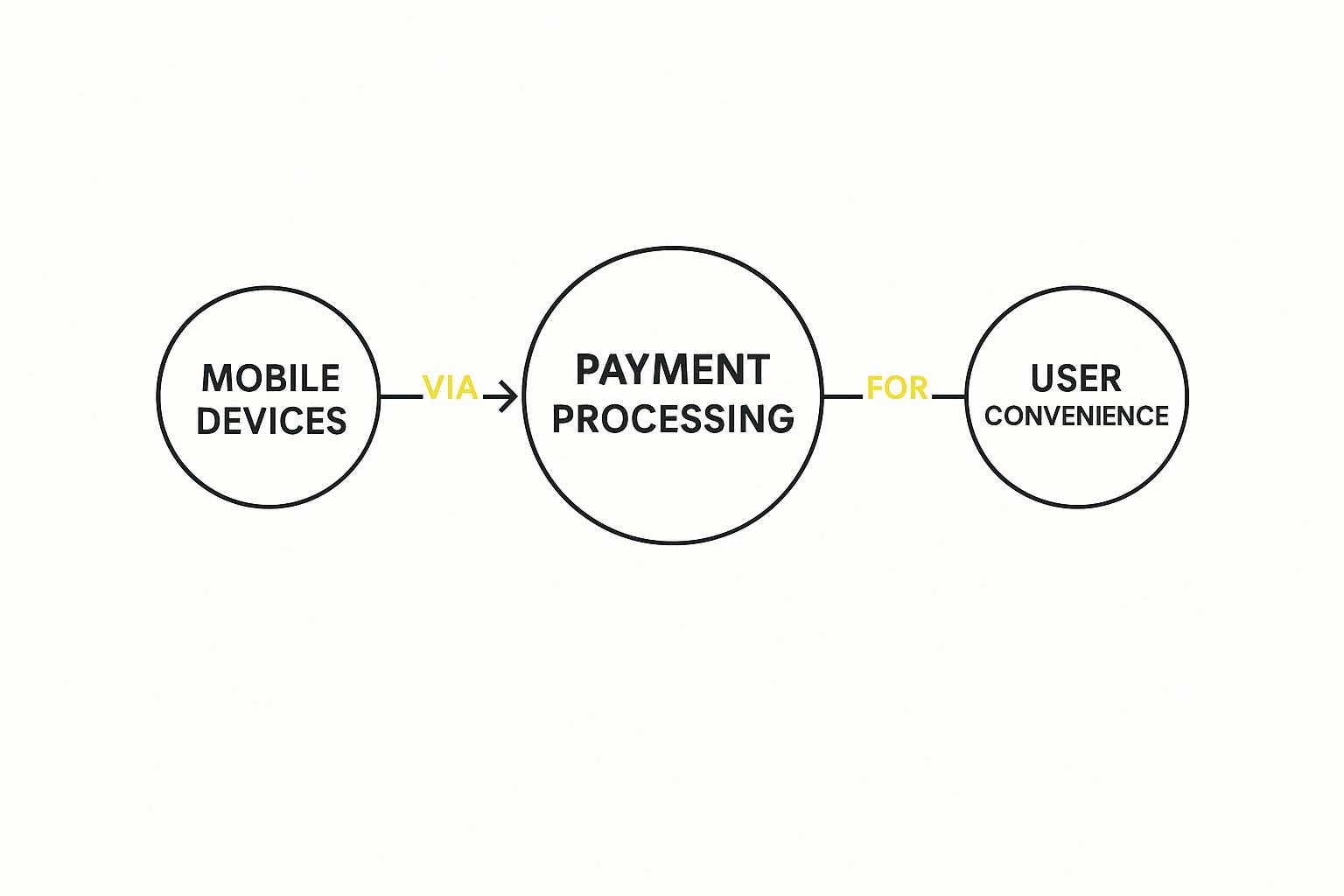
As you can see, seamless payment systems are the essential piece of the puzzle, turning our everyday phone habits into a powerful shopping platform. The growth here is staggering. Mobile commerce isn't just a trend; it's quickly becoming the main event in online retail.
Current projections show that m-commerce will make up 59% of all retail e-commerce sales by 2025. That's a mind-boggling $4.01 trillion in global revenue, all driven by the rise of smartphones and changing consumer behaviors.
Mobile Commerce vs Traditional E-commerce at a Glance
To really spell it out, it helps to see a direct comparison between the two shopping environments. This table breaks down the key differences between shopping on your phone versus a desktop computer.
| Characteristic | Mobile Commerce (M-Commerce) | Traditional E-commerce (Desktop) |
|---|---|---|
| Primary Device | Smartphones and tablets | Desktops and laptops |
| User Context | On-the-go, multi-tasking, short bursts | Focused, stationary, longer sessions |
| Screen Size | Small, vertical orientation | Large, horizontal orientation |
| Key Advantage | Unmatched accessibility and convenience | Detailed product views and comparisons |
Ultimately, understanding these nuances helps you create better experiences for your customers, no matter how they choose to shop.
Why Mobile Shopping Is Growing So Fast
The incredible rise of mobile commerce isn't some accident. It’s a direct result of powerful, real-world changes in how we all live and shop. The biggest driver? The smartphone you have with you right now. Since our phones are our go-to tools for everything from talking to friends to getting work done, it was only a matter of time before they became our main way to buy things, too.
This isn't just about a smaller screen. It's about being able to reach customers where they already are—on their phones, all day long. This constant connection has set a new bar for convenience. The entire journey from seeing a product you love to actually buying it can now happen in seconds.
For merchants, this isn't just a trend to watch; it's the central arena for retail. A mobile-first mindset is no longer a forward-thinking strategy but a fundamental requirement for survival and growth.
The Power of Instant Gratification
Today’s shoppers want things fast and simple. Gone are the days of waiting for a desktop computer to boot up just to browse a store. Mobile commerce works so well because it cuts out the friction, playing right into our natural desire for immediate results.
Just think about how easy one-tap payments are. Services like Apple Pay and Google Pay have completely eliminated the chore of typing in credit card numbers and shipping addresses. That small change has had a huge impact, turning a potential point of frustration into a smooth, satisfying checkout.
This level of convenience is a major reason why fewer people abandon their carts. When you can finalize a purchase with a fingerprint or a quick facial scan, you're far more likely to see it through. This not only boosts conversion rates but also builds a positive feeling about your brand that keeps people coming back.
A Constantly Connected Consumer
The way we use our phones—in short, frequent bursts—has completely changed the shopping journey. People now find products while scrolling through social media, look up reviews while waiting for coffee, and even make purchases on their morning commute. This new pattern creates countless "micro-moments" for brands to connect with their audience.
This has also made personalized experiences more crucial than ever. Our phones provide useful context, like our location or browsing history, giving merchants the clues they need to show us relevant offers and product suggestions.
- Social Commerce Integration: Platforms like Instagram and TikTok aren't just for sharing photos and videos anymore. They’re legitimate sales channels where you can buy a product directly from a post.
- Location-Based Marketing: A shop can send a push notification with a special discount right when a customer walks by the physical store, creating a perfectly timed reason to pop in.
Nailing the mobile experience means understanding that designing for a small touchscreen is a whole different ballgame than designing for a large desktop monitor. You can learn more about this by exploring the distinctions between mobile and desktop UX in our guide.
The Unstoppable Economic Engine
The numbers behind this shift are truly mind-boggling. Globally, the entire e-commerce market is expected to hit $7.5 trillion in sales by 2025. And what’s fueling that fire? Mobile devices. In 2023, phones were responsible for roughly 60% of all e-commerce sales. This isn't a fluke—forecasters predict that mobile commerce sales will climb to an incredible $3.4 trillion by 2027.
At the end of the day, the explosive growth of mobile shopping is a story of technology finally catching up to human behavior. It offers convenience, instant access, and personalized experiences that were unimaginable just a decade ago. For Shopify merchants, this is a clear signal: optimizing for mobile isn't just an option—it’s the absolute key to future growth.
Exploring the Different Types of Mobile Commerce

Mobile commerce isn’t just one thing. It's a whole ecosystem of different ways for people to shop on their phones, and each one has its own strengths. Think of it like fishing: you can cast a wide net, use a specialized lure, or simply drop a line where the fish are already gathered. They all work, but you use them for different reasons.
For Shopify merchants, getting a handle on these differences is the first step to building a solid mobile strategy. When you understand what is mobile commerce in all its forms, you can meet customers wherever they feel most comfortable—whether that's a web browser, a dedicated app, or their social media feed.
Let's break down the three main types.
Mobile Websites: The Universal Front Door
The absolute foundation of mobile commerce is your mobile-responsive website. This is your digital storefront, open to anyone with a phone and an internet connection. It’s the starting point for nearly every customer.
A responsive site automatically adjusts its layout to look great on any screen, from a small phone to a large tablet. For a Shopify store, this isn't optional; it's essential.
The beauty of this approach is that it asks nothing extra of the customer. No downloads, no installations. They can find you through a Google search, click a link in an email, and start shopping instantly.
Your mobile-friendly website is your greatest asset. It captures the widest possible audience and acts as the central hub for your entire m-commerce strategy. Everything else eventually leads back here.
Dedicated Shopping Apps: The Loyalty Club
If your mobile site is the front door for everyone, a dedicated shopping app is the exclusive VIP lounge. While a website is built for discovery, an app is for your most loyal, returning customers. It sits right on their home screen, offering a faster and more personal experience.
Apps are slicker because they can save user preferences, payment info, and browsing history right on the device. They also unlock powerful features that websites just can't match.
- Push Notifications: Send alerts about flash sales, new arrivals, or abandoned carts straight to a user's phone. It's a direct line to grab their attention.
- Exclusive Content: Reward your best customers with app-only discounts, early access to new collections, or special loyalty perks.
- Offline Access: Let users browse their wish lists or saved items even without a connection, making your brand a constant presence.
A great example is how Target uses its app to merge online shopping with the in-store experience, offering things like store maps and scannable coupons. It builds a much deeper relationship than a website alone ever could.
Social Commerce: The In-the-Moment Purchase
The newest and fastest-growing frontier is social commerce. This is where shopping happens right inside platforms like Instagram, TikTok, and Facebook. It’s the digital version of an impulse buy at the checkout counter.
Social commerce turns casual scrolling into active shopping. A user can see a product in a video, tap a tag, and buy it—all without ever leaving the app. The journey is so seamless that there's almost no friction.
Imagine someone watching a TikTok video of a new skincare routine. With a shoppable link right there, they can buy the product the second they feel inspired. This channel is incredibly powerful for capturing those spur-of-the-moment sales. A big part of its success comes from easy payment options, so it's smart to keep up with the latest 2024 trends in mobile payments for Shopify stores to make sure your checkout is as smooth as possible.
The Real-World Business Benefits of M-Commerce
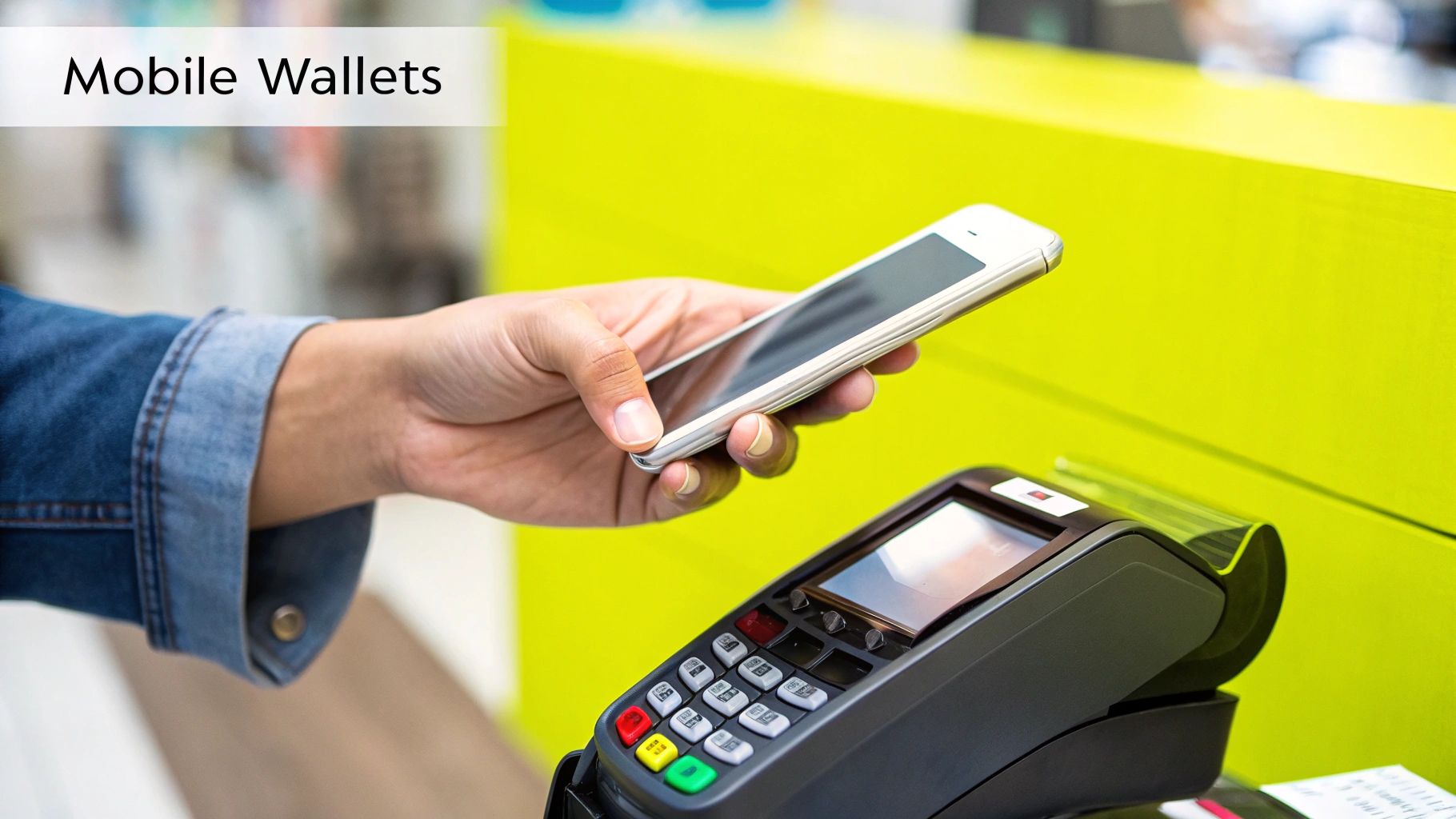
Getting serious about mobile commerce isn’t just a box-ticking exercise. It's a genuine strategy for growing your business. When you make it dead simple for people to shop on their phones, you’re doing more than just being convenient—you’re directly shaping how happy they are, how loyal they become, and how much they spend. The results can completely change the game for your store.
The most immediate win is a much, much better customer experience. We've all been there: trying to navigate a clunky desktop site on a phone screen. Pinching, zooming, trying to hit a tiny button… it’s a nightmare. Most people just give up. A smooth, mobile-first experience gets rid of all that frustration, making shopping feel easy and even fun. That first impression is everything.
And here’s the best part: a great mobile experience has a direct impact on your wallet. Study after study shows that a frictionless mobile checkout leads to more sales. By cutting out the hassle with things like one-tap payments and saved shipping info, you slash the chances of someone abandoning their cart. Every bit of friction you remove is one less reason for a customer to walk away.
Creating a Direct Line to Your Customers
One of the biggest perks of m-commerce, especially if you have your own app, is creating a direct channel to your customers. Forget emails that get buried in a crowded inbox; mobile gives you instant, personal ways to connect.
- Push Notifications: Imagine sending an alert for a flash sale or a back-in-stock notice that pops right up on their home screen. It’s a fantastic way to drive traffic and create a bit of buzz.
- Location-Based Marketing: You can use a customer’s location to send them incredibly relevant offers. A Shopify merchant with a pop-up shop, for instance, could ping a discount code to anyone who walks by, neatly connecting their online and offline worlds.
- Personalized Recommendations: Mobile apps can learn what your customers like to browse and suggest other products they’ll love. This makes people feel like you get them, and it’s a proven way to increase the average order value.
These tools change your marketing from a generic shout into a series of one-on-one conversations, building a much stronger bond with your audience.
When you meet customers on the devices they use all day long, your store becomes more than just a website. It becomes a helpful companion on their shopping journey. That’s how you build real, long-term loyalty.
Expanding Your Reach and Boosting Your Sales
At the end of the day, all these benefits point to one thing: growth. A strong mobile presence opens your doors to a much wider audience. With 79% of smartphone users having bought something on their device in the last six months, not being mobile-friendly is like leaving cash on the table.
Think of your mobile store as your best salesperson—one who works 24/7. It’s always there, ready to make a sale the second a customer feels inspired. That anytime, anywhere access is a game-changer. To really make the most of this, it helps to explore the different effective mobile app monetization strategies and see what makes sense for your brand.
Putting effort into a mobile-first approach really does pay off across the board. You get happier customers, stronger brand loyalty, more traffic, and ultimately, more sales. Mobile commerce isn’t some side-project anymore; it’s where the modern retail game is won. For any Shopify merchant aiming to succeed, it’s not just an option—it’s the engine that will drive your business forward.
How to Ride the Social Commerce Wave
Social media isn't just for sharing photos and updates anymore—it's become a massive, always-on marketplace. This shift has given rise to social commerce, a powerful trend that completely changes how we think about online shopping. It’s all about selling your products directly through social media apps, letting customers buy what they see the moment they see it.
Platforms like Instagram, TikTok, and Facebook are no longer just sending traffic to your website. They’ve built entire storefronts inside their apps, allowing users to browse, tap, and buy without ever having to leave their feed. It’s a beautifully simple and effective way to shop.
The real power here is how effortless it makes the buying journey. The distance between a customer seeing something cool in a post and actually owning it is just a few quick taps. For you as a Shopify merchant, this means you can capture a sale right when a customer’s excitement is at its peak.
Why Social Commerce Just Clicks with Shoppers
The secret sauce of social commerce is that it meets people where they already are. We all spend hours scrolling, watching videos, and connecting with content we enjoy. When a product shows up in that mix, it doesn't feel like a pushy advertisement; it feels like a natural part of the experience.
This is a huge deal, especially for younger generations who crave authenticity and convenience. Social media has become a legitimate retail space, and the numbers back it up. In 2024, global social commerce sales exploded to an incredible $699.4 billion, a 22.6% increase from the year before. By 2025, it's predicted that nearly 31% of all shoppers will be buying directly from social media. Young people are all over it—42% of Gen Z bought holiday gifts on social media, which is more than double the average of 20% for everyone else. You can dig deeper into these mobile and social commerce trends on theretailexec.com.
Social commerce isn’t just about putting your products in a new place. It’s about weaving your brand into your customers' daily lives and conversations, making shopping feel less like a chore and more like a discovery.
Tying Your Shopify Store to the Social Scene
If you're running a Shopify store, getting in on this action is surprisingly straightforward. Most of the big social platforms have built-in tools that sync directly with your product catalog, transforming your profile into a fully shoppable experience. Your social media presence goes from being just a marketing channel to a serious sales driver.
Here are the heavy hitters:
- Instagram Shopping: This lets you tag products right in your posts, Stories, and Reels. A customer can tap the tag, see the product details, and click straight through to your Shopify store to buy it.
- TikTok Shop: Perfect for capitalizing on viral trends. You can add shoppable links directly to your videos, making it a go-to for product demos, behind-the-scenes content, and fun tutorials.
- Facebook Shops: Think of this as a dedicated storefront right on your Facebook page. People can browse your entire collection and check out without ever leaving the app.
Choosing the right platform is key, as each one attracts a different crowd and is better suited for certain types of products.
Key Social Commerce Platforms for Merchants
This table gives you a quick look at the top social platforms and where your brand might fit best.
| Platform | Primary Audience | Best For |
|---|---|---|
| Millennials & Gen Z | Highly visual products like fashion, beauty, home decor, and food. | |
| TikTok | Gen Z & Younger Millennials | Trend-driven items, unique gadgets, and products with a strong "wow" factor that can be demonstrated in short videos. |
| Gen X & Millennials | A broad range of products, especially those that appeal to community groups, hobbies, and family interests. | |
| Millennial & Gen X Women | Aspirational lifestyle products, including DIY, wedding, home goods, and fashion inspiration. |
By hooking your Shopify store up to these platforms, you're not just opening up new sales channels; you're building a stronger brand presence where your customers hang out. You're making it incredibly easy for them to go from casual follower to loyal fan.
How to Nail Mobile Commerce on Your Shopify Store
Knowing that mobile commerce is a big deal is one thing, but actually making it work for your store is another. This is where the rubber meets the road for Shopify merchants. The goal isn't just to make your store work on a phone; it's to create an experience so seamless that shopping on mobile feels completely natural.
Think about the typical mobile shopper. They're probably on the go, easily distracted, and have zero patience for a slow or clunky website. To win them over, you need to focus on three things: speed, simplicity, and getting rid of any and all friction from the moment they land on your site to the final tap of the "buy" button.
A great mobile store isn’t just a shrunken-down version of your desktop site. It’s a complete reimagining of the shopping journey, built specifically for a small, touch-based screen.
Start with a Responsive Foundation
First things first: your Shopify theme has to be responsive. This is non-negotiable. A responsive theme automatically adapts its layout, images, and menus to look great and work perfectly on any device, from a tiny phone to a huge tablet. It’s the bedrock of a good mobile experience.
When you're picking a theme, don't just go for looks. Look for themes marketed as "mobile-first" or those with glowing reviews about their speed and performance. These were designed with the mobile user as the top priority, not as an afterthought.
Simplify Navigation for Easy Browsing
On a small screen, less is more. A messy, crowded navigation menu is one of the fastest ways to lose a mobile visitor. You want to help them find what they're looking for with as few taps as possible.
- Embrace the Hamburger Menu: That little three-line icon is your best friend. It keeps your main navigation tucked away, freeing up valuable screen real estate.
- Limit Your Main Menu: Stick to just a few essential categories. You can use dropdowns for subcategories, but don't go overboard. Keep it simple.
- Feature a Big, Obvious Search Bar: A lot of mobile shoppers know exactly what they want. Make it incredibly easy for them to find it with a prominent search bar, ideally with predictive text to speed things up.
By clearing the path to your products, you make browsing feel effortless, which encourages people to stick around and see what you have to offer.
Obsess Over Lightning-Fast Load Times
Mobile shoppers are not patient. At all. Even a single-second delay in your page load time can send your conversion rates plummeting. Speed isn't just a nice-to-have; it's a critical feature.
The number one cause of a slow mobile site? Huge, unoptimized images. Of course, you need high-quality product photos, but they need to be compressed for the web. You can use Shopify apps or other tools to shrink the file size without sacrificing clarity. For a complete walkthrough, our mobile optimization guide for Shopify stores gets into the nitty-gritty of image optimization.
Make Your Checkout Ridiculously Easy
The checkout is the make-or-break moment, and it's where most mobile sales go to die. A long, complicated form on a tiny keyboard is a recipe for abandoned carts. Your job is to make this step completely painless.
- Cut Down on Form Fields: Only ask for what you absolutely need. Every extra box to fill is another chance for someone to give up.
- Offer Guest Checkout: Never force someone to create an account to buy from you. That’s a huge barrier, especially for a new customer.
- Add Mobile Wallets: This is the single biggest game-changer. By offering one-tap payment options like Apple Pay, Google Pay, and PayPal, you let customers skip the nightmare of typing in their credit card and shipping info.
Adding these express checkouts can slash the time it takes to buy something down to just a few seconds. That’s how you turn casual mobile browsers into loyal customers.
Got Questions About Mobile Commerce? We've Got Answers.

To wrap things up, let's go over a few of the questions that pop up all the time when Shopify merchants start digging into mobile commerce. These quick answers should clear up any final thoughts and lock in the main ideas we've covered.
What’s the Real Difference Between E-commerce and M-commerce?
Think of it this way: e-commerce is the big umbrella for any shopping done online, whether on a laptop, desktop, or anything else connected to the internet.
M-commerce is a specific slice of that pie. It’s all about transactions happening on a wireless mobile device, like your smartphone or tablet. This distinction is everything because the mobile experience—small screens, touch controls, and people shopping on the move—requires a totally different strategy for design, marketing, and checkout.
Do I Actually Need a Mobile App for My Shopify Store?
Probably not, at least not right away. Your number one job is to make sure your website is fully mobile-responsive and lightning-fast. That’s non-negotiable. Most of your customers will find you through Google or Instagram on their phones, so your mobile site is your real storefront.
A mobile app is a powerhouse for customer loyalty. It's perfect for engaging your die-hard fans with push notifications and special offers. But that comes after you’ve perfected your mobile website experience.
What's the Single Biggest Hurdle in Mobile Commerce?
In a word: friction. Mobile shoppers have zero patience. They're often multitasking, easily distracted, and expect everything to work instantly.
A slow page load, a clunky menu, or a checkout form with too many fields will send them running for the hills. Winning at m-commerce means making the entire journey, from discovery to purchase, as smooth and effortless as possible. Every tap and every second truly matters.
Ready to build a mobile shopping experience that actually converts? The pros at E-commerce Dev Group live and breathe this stuff, specializing in getting Shopify stores ready for mobile-first customers. Let's build your perfect mobile storefront together.
