


In today's mobile-first world, having an ecommerce website isn't enough. Customers expect a seamless, fast, and engaging shopping experience directly on their phones. This is where a dedicated mobile app comes in, offering unparalleled access to your audience through features like push notifications and a user experience optimized for handheld devices. But building an app from scratch can be complex and costly. Fortunately, an ecommerce app builder provides a powerful, accessible solution.
These platforms allow you to create a professional, feature-rich mobile app without writing a single line of code. For businesses with an established online presence, it's an efficient strategy for growth; you can even learn how to turn your website into a mobile app to leverage your existing assets and launch faster. The challenge, however, is choosing the right tool from a crowded market.
This guide simplifies that decision. We'll dive into the top 12 ecommerce app builders for 2025, from simple no-code platforms like Shopify's native builder to more advanced options like FlutterFlow. We will analyze their strengths, weaknesses, pricing, and ideal use cases to help you select the best fit for your business. Each review includes screenshots and direct links, giving you everything needed to make a confident choice.
1. Shopify
Shopify stands out as a powerful and comprehensive platform that goes beyond a simple website builder; it's a full-fledged ecommerce app builder ecosystem. It allows businesses of all sizes, from solo entrepreneurs to large enterprises, to create, manage, and scale their online retail operations with remarkable ease. Its core strength lies in its balance of user-friendliness and deep customizability.
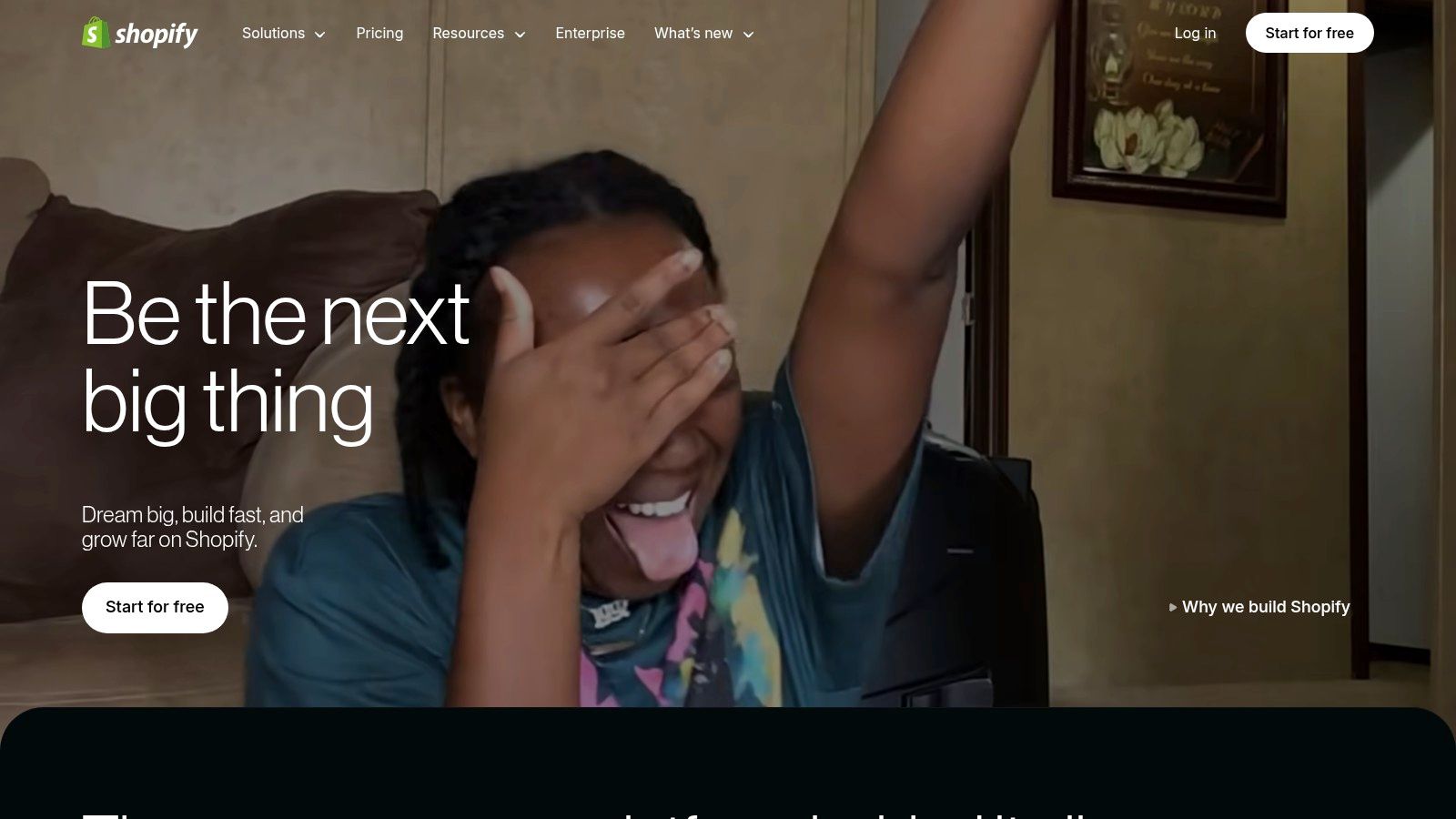
While the drag-and-drop editor is intuitive for beginners, the platform's true potential is unlocked through its extensive App Store. With over 8,000 apps, you can integrate specialized functionalities for marketing, customer service, inventory management, and more without writing a single line of code. This modular approach allows merchants to build a custom solution tailored to their specific needs.
Key Considerations
- Pricing: Plans start from a basic tier for new businesses to the enterprise-level Shopify Plus. Be mindful that using third-party payment gateways instead of the native Shopify Payments incurs additional transaction fees on top of your plan's cost.
- Best For: Merchants who want a scalable, all-in-one solution that can grow with their business. It’s ideal for those who value a massive ecosystem of integrations and robust, built-in tools. For more information, you can learn about integrating Shopify apps on scaleshopify.com.
- Pros: Highly scalable, exceptional community support, and a vast marketplace for endless customization.
- Cons: Monthly costs can rise significantly with premium themes and multiple paid app subscriptions.
Website: https://www.shopify.com
2. Wix
Wix has evolved from a general website builder into a powerful ecommerce app builder, prized for its exceptional design flexibility and user-friendly interface. It empowers entrepreneurs and small businesses to craft visually stunning online stores without needing any technical or coding knowledge. The platform’s main draw is its intuitive drag-and-drop editor, offering total creative control over the look and feel of your storefront.
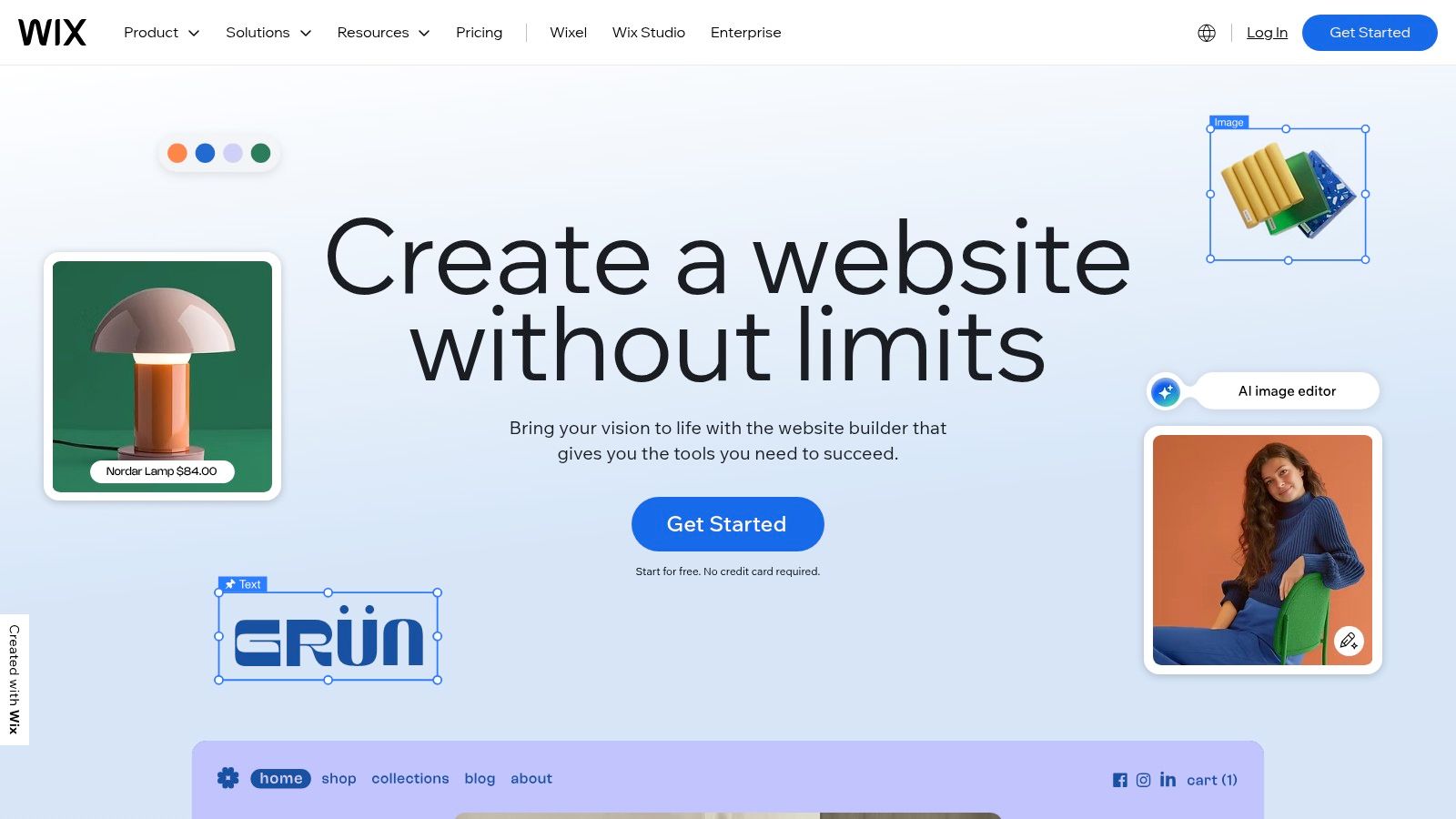
While known for design, Wix provides a comprehensive suite of business tools. This includes integrated payment solutions, robust SEO features to improve search visibility, and automatic mobile optimization. The Wix App Market further extends functionality, allowing you to add features for bookings, marketing, and customer management, making it a versatile tool for building a complete online business presence from the ground up.
Key Considerations
- Pricing: Wix offers specific Business and eCommerce plans that are required to accept online payments. These plans vary in features and storage, catering to different business sizes.
- Best For: Creative entrepreneurs and small to medium-sized businesses who prioritize design and brand identity. It’s perfect for those who want a visually rich store without the complexity of coding.
- Pros: Highly customizable design options, completely code-free environment, and extensive support resources including tutorials and a dedicated help center.
- Cons: Scalability can be a concern for very large-volume stores, and some of the more advanced ecommerce features are locked behind higher-tier plans.
Website: https://www.wix.com
3. BigCommerce
BigCommerce positions itself as a powerful ecommerce app builder, particularly suited for established businesses aiming for significant growth. Its architecture is designed to provide extensive, native functionality out of the box, reducing the immediate need for a multitude of third-party apps for core operations. This makes it an attractive platform for merchants who want robust features built directly into their system from day one.
The platform excels at providing tools for multi-channel selling, advanced SEO, and comprehensive analytics without extra costs. BigCommerce allows businesses to manage complex catalogs and scale operations efficiently. While it offers customizable templates, the primary focus is on providing a stable, feature-rich foundation that can handle high-volume sales and intricate product variations natively.
Key Considerations
- Pricing: BigCommerce plans are tiered based on annual sales volume. While it boasts zero transaction fees on all plans, crossing a certain revenue threshold will automatically upgrade you to a higher-priced plan.
- Best For: Fast-growing brands and large-scale businesses that require advanced, built-in features without heavy reliance on an app marketplace. It's also a strong choice for those considering moving from other platforms; you can learn about migrating to a new platform on scaleshopify.com.
- Pros: Highly scalable with extensive native features, strong security measures, and no platform transaction fees.
- Cons: The selection of free themes is limited, and the mandatory plan upgrades based on sales can lead to unexpected cost increases.
Website: https://www.bigcommerce.com
4. Squarespace
Squarespace has earned its reputation as a premier ecommerce app builder for those who prioritize design and aesthetics. It’s an ideal choice for creatives, artists, and brands where visual presentation is paramount. The platform provides a unified, all-in-one solution that seamlessly integrates a stunning website with robust ecommerce capabilities, eliminating the need to piece together multiple services.
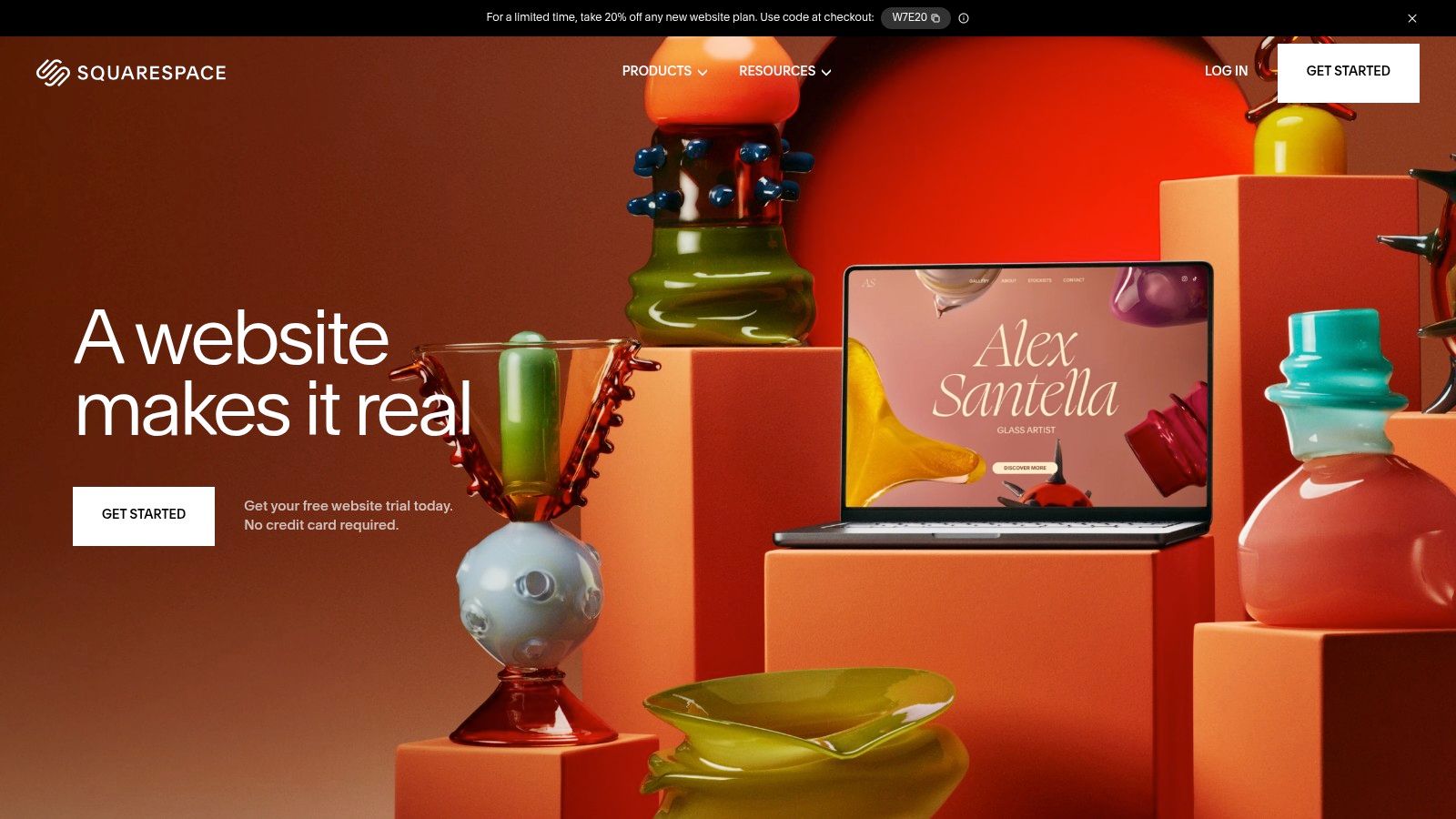
Its strength lies in its award-winning, designer-quality templates that are mobile-responsive out of the box. While not as endlessly customizable with apps as some rivals, Squarespace offers a curated set of built-in tools for SEO, marketing, and analytics. This controlled ecosystem ensures a smooth, cohesive user experience without the complexity of managing third-party extensions, making it a powerful yet simple ecommerce app builder.
Key Considerations
- Pricing: Squarespace offers several plans with escalating features. The Business plan introduces basic ecommerce but incurs a transaction fee, while the Commerce plans (Basic and Advanced) remove this fee and add more powerful retail tools.
- Best For: Small to medium-sized businesses, artists, and service providers who need a visually impressive online store without a steep learning curve. It's perfect for merchants whose brand identity is closely tied to design aesthetics. For more on the importance of visuals, you can explore theme customization insights on scaleshopify.com.
- Pros: Exceptional, high-quality design templates, a truly all-in-one platform with no need for plugins, and reliable 24/7 customer support.
- Cons: Limited third-party integrations and less overall flexibility compared to platforms with large app marketplaces.
Website: https://www.squarespace.com
5. Appy Pie
Appy Pie positions itself as a uniquely accessible and rapid ecommerce app builder, designed for users with absolutely no coding background. Its primary appeal lies in its no-code, template-based environment that dramatically simplifies the process of creating a functional mobile storefront. The platform empowers small business owners and startups to enter the mobile commerce space quickly and affordably, transforming an idea into a publishable app for both Android and iOS in a matter of hours.
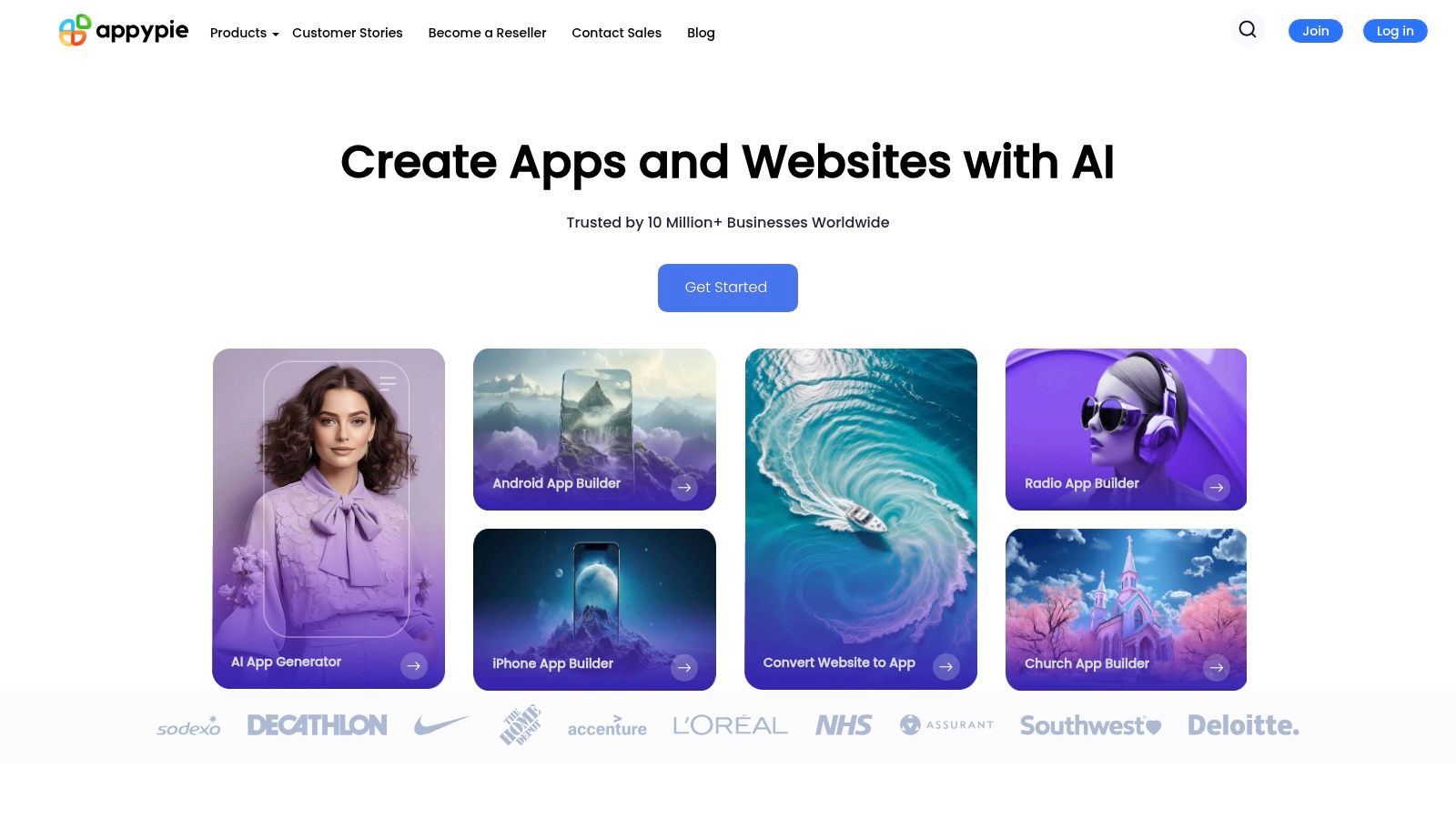
The user experience is centered around a drag-and-drop interface where you select features like product catalogs, shopping carts, and push notifications to add to your app. While it provides essential integrations with popular payment gateways, the platform is more about speed and simplicity than deep, complex functionality. This makes it an excellent choice for businesses looking to test the waters of mobile commerce or complement an existing website with a dedicated app without significant investment.
Key Considerations
- Pricing: Appy Pie offers tiered subscription plans, including a free plan that comes with Appy Pie branding. Paid plans unlock more features, remove branding, and offer dedicated support.
- Best For: Entrepreneurs and small businesses who need a fast, straightforward, and budget-friendly way to build a mobile app. It's ideal for those prioritizing speed to market over extensive customization.
- Pros: Extremely user-friendly with no coding required, very affordable pricing, and fast development turnaround.
- Cons: Customization options are limited compared to custom development or more advanced platforms. The free version includes mandatory branding.
Website: https://www.appypie.com
6. GoodBarber
GoodBarber specializes in creating native mobile apps and progressive web apps (PWAs), positioning itself as a powerful ecommerce app builder for businesses prioritizing a mobile-first strategy. It provides a no-code environment that allows merchants to build visually appealing and functional shopping apps for both iOS and Android platforms. The platform's main appeal is its focus on creating a true native app experience, complete with features designed to enhance user engagement.
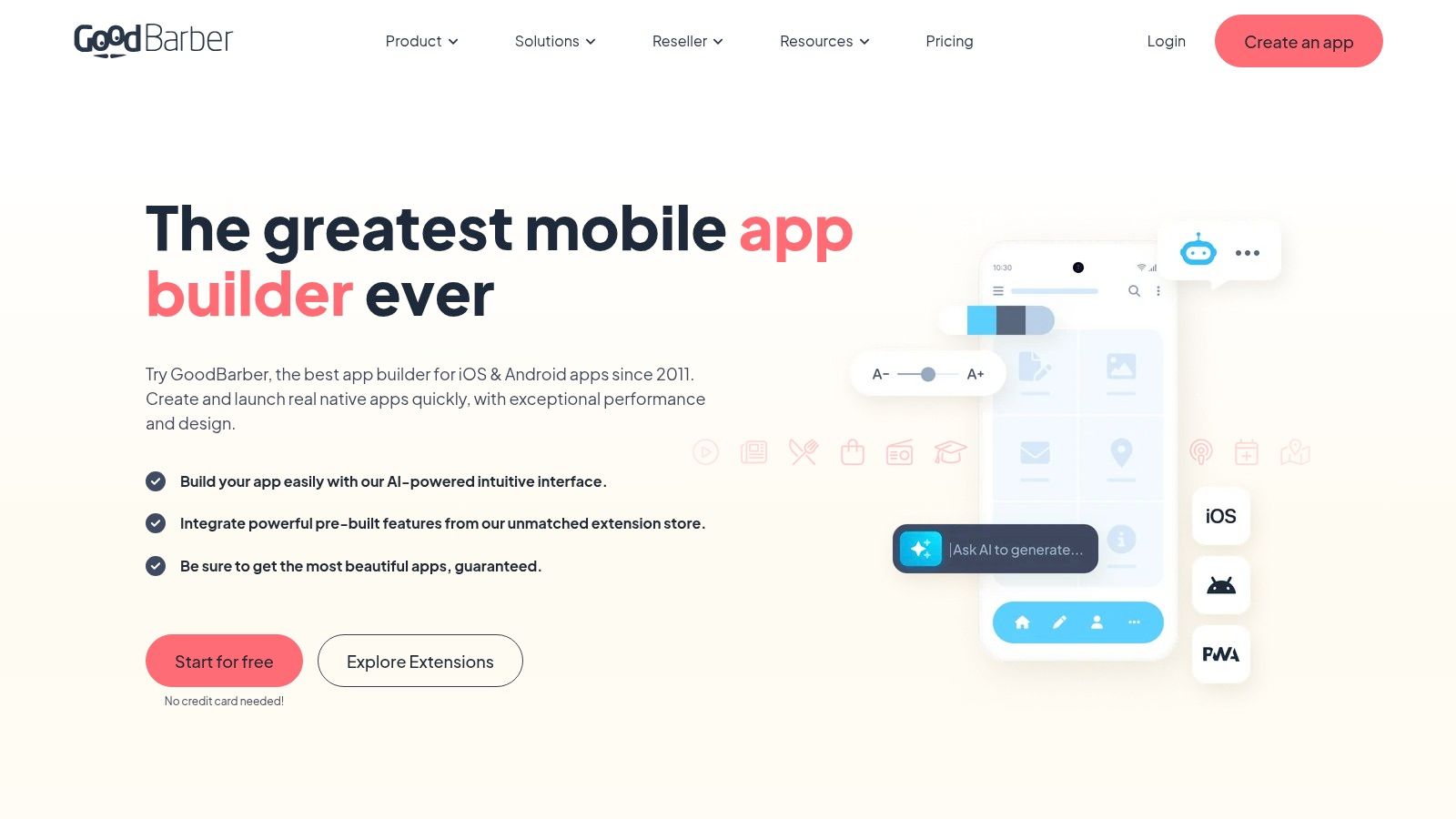
Unlike many website-centric builders, GoodBarber’s toolkit is geared towards mobile-specific functionalities. Merchants can leverage push notifications to drive sales, implement one-click payments for a frictionless checkout, and create loyalty programs with punch cards directly within the app. This makes it an excellent choice for brands aiming to build a dedicated community and foster repeat purchases through their own branded mobile application.
Key Considerations
- Pricing: The pricing model is tiered, starting with plans for PWAs and scaling up for native iOS and Android apps. Keep in mind that submitting apps to the App Store and Google Play involves separate developer account fees.
- Best For: Retailers and brands who want to launch a dedicated shopping app without needing to code. It is particularly effective for businesses that want to build customer loyalty through mobile-centric features like push notifications and rewards.
- Pros: Strong focus on native app creation, user-friendly drag-and-drop interface, and built-in loyalty features.
- Cons: Limited integrations with existing ecommerce platforms and may not be robust enough for businesses with highly complex product catalogs or logistical needs.
Website: https://www.goodbarber.com
7. Mowico
Mowico distinguishes itself as a versatile, DIY no-code ecommerce app builder designed specifically for businesses already operating on established platforms like WooCommerce, Magento, or BigCommerce. Instead of forcing a migration, it seamlessly integrates with your existing store, allowing you to convert your online presence into a native mobile app without writing any code. This unique approach empowers merchants to tap into the mobile commerce market quickly and efficiently.
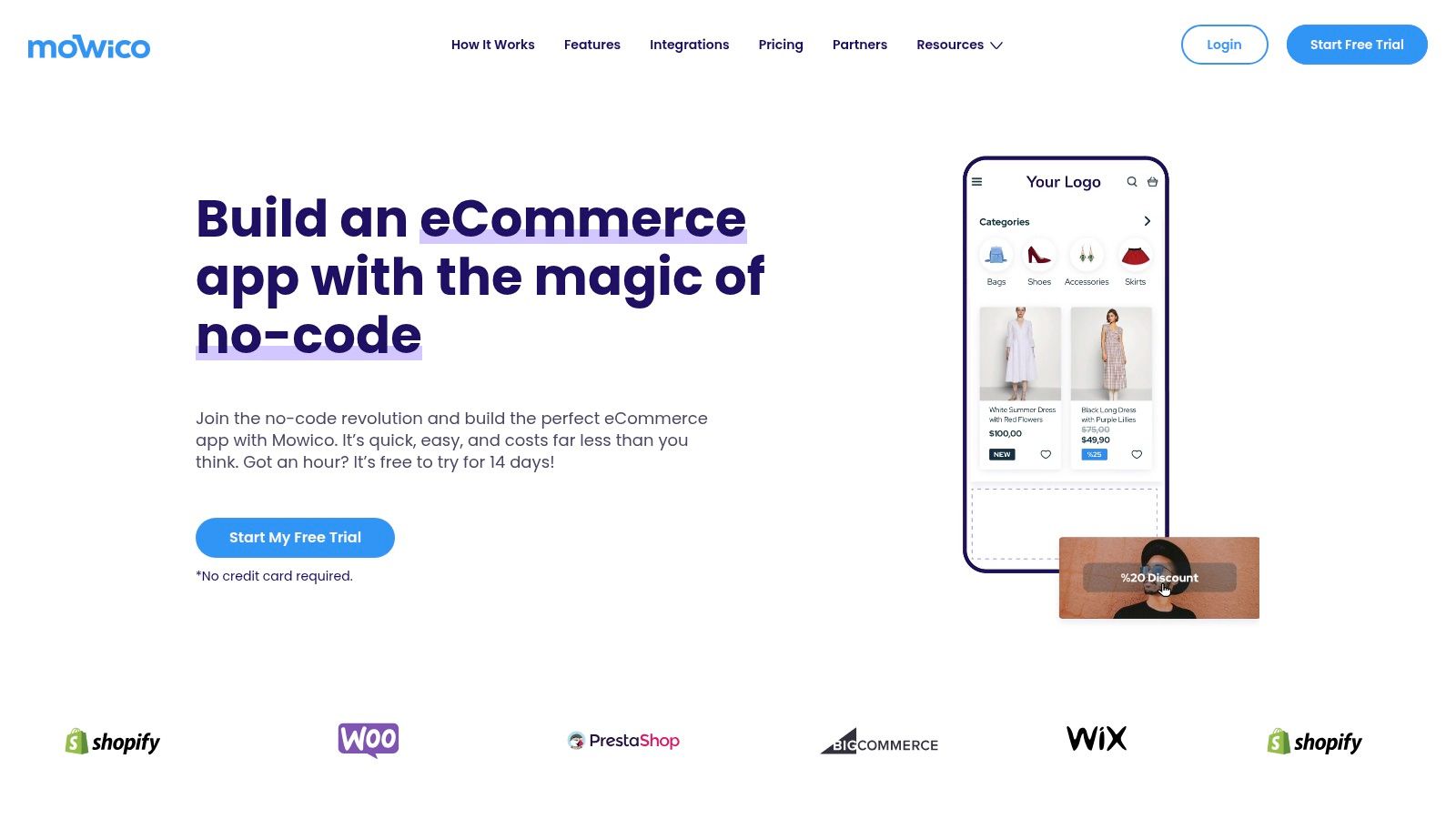
The platform's core is its intuitive drag-and-drop interface, which simplifies the app creation process down to a few steps. You connect your store, customize the design to match your brand, and configure features like push notifications to engage customers directly. This focus on integration makes it an excellent choice for businesses looking to add a mobile sales channel without overhauling their entire operational workflow.
Key Considerations
- Pricing: Mowico offers tiered plans, including a basic option suitable for small businesses looking to test the mobile app waters. More advanced features and capabilities are unlocked with higher-tier subscriptions.
- Best For: E-commerce store owners on WooCommerce, Magento, or BigCommerce who want to launch a mobile app quickly and affordably. It's ideal for those who prioritize speed to market over deep, complex customization.
- Pros: Supports multiple major e-commerce platforms, offers affordable entry plans, and enables rapid app development.
- Cons: The feature set on lower-tier plans can be limited, and users seeking highly advanced or unique functionality might find it basic.
Website: https://www.mowico.com
8. Builder.ai
Builder.ai offers a unique, AI-powered approach to creating a custom ecommerce app builder experience. Instead of a do-it-yourself platform, it provides a managed service that combines artificial intelligence with human expertise to build, launch, and maintain your application. This model is designed for businesses that want a fully tailored solution without needing a technical team.
The process begins by outlining your app idea, after which the platform's AI assembles the core features from a library of reusable components. This hybrid approach significantly speeds up development time and reduces costs compared to traditional app creation. Builder.ai handles everything from design and development to deployment and ongoing maintenance, ensuring your app remains secure and updated.
Key Considerations
- Pricing: The cost is based on the features you choose, making it a more bespoke pricing model. While it is more expensive than standard no-code builders, there are no transaction fees or revenue-sharing models, providing more predictable long-term costs.
- Best For: Businesses that require a highly customized ecommerce app but lack the in-house development resources. It's ideal for those who prefer a hands-off, managed service that includes expert support throughout the entire lifecycle of the application.
- Pros: Expert guidance is provided from start to finish, apps are kept updated and secure through the managed service, and you retain full ownership of the final product.
- Cons: The initial investment is higher than typical DIY platforms, and it is not a free service.
Website: https://www.builder.ai
9. Appy Pie's E-commerce Website Builder
Appy Pie offers a uniquely accessible entry point into the world of ecommerce with its AI-powered platform. It is designed for small business owners and entrepreneurs who need to launch an online store quickly without a steep learning curve or technical background. The platform leverages artificial intelligence to assist with the initial design process, simplifying choices and getting a functional site live in minutes. This focus on speed and simplicity makes it a distinct ecommerce app builder.
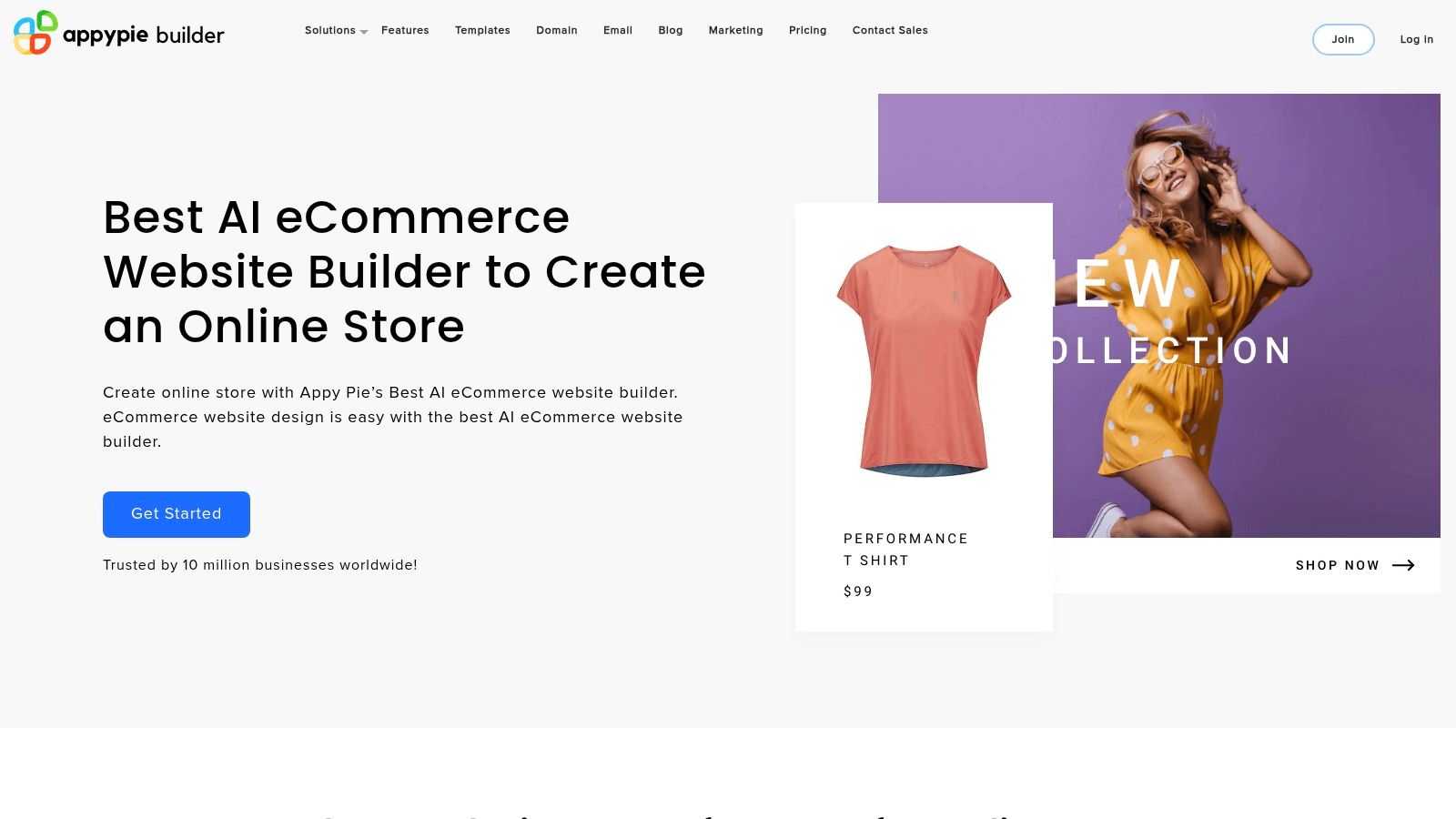
While its drag-and-drop editor is straightforward, Appy Pie integrates essential commerce features directly, such as product catalogs, inventory management, and multi-gateway payment options. This ensures that even novice users can manage a fully operational store from a single dashboard without needing to find and integrate multiple third-party tools for core functions.
Key Considerations
- Pricing: Appy Pie's model is very affordable, with pricing plans that are attractive to new businesses and those with tight budgets. There are no transaction fees, which is a significant plus.
- Best For: Individuals or small businesses looking for the fastest and most straightforward path to creating an online store. It’s ideal for users who prioritize ease of use and AI-assisted setup over deep customization.
- Pros: Extremely fast setup with AI assistance, no coding knowledge required, and budget-friendly pricing plans.
- Cons: Customization options are more limited compared to robust platforms, potentially making it less suitable for large-scale or highly branded enterprises.
Website: https://www.appypie.com/ecommerce-website-builder
10. FlutterFlow
FlutterFlow introduces a powerful, low-code approach to mobile app creation, positioning itself as a highly visual ecommerce app builder. It leverages Google's Flutter framework, enabling you to design and build truly native mobile apps for both iOS and Android from a single project. The platform is engineered for those who prioritize a unique and highly customized user interface without wanting to dive deep into mobile development.
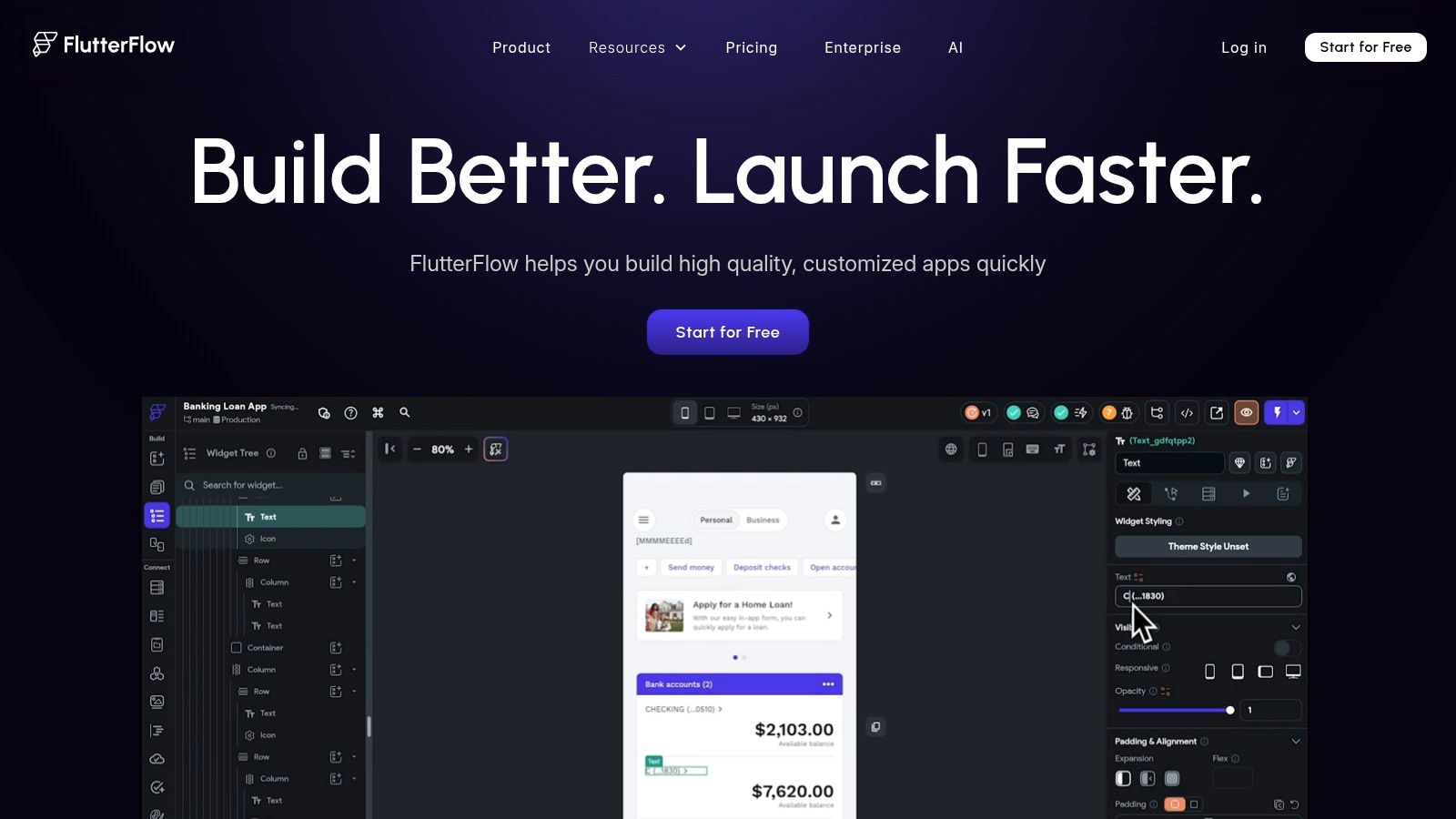
Its core strength is the drag-and-drop interface that gives you granular control over every visual element, animation, and transition. Unlike more template-driven builders, FlutterFlow allows for the creation of complex layouts and bespoke functionalities. It also offers robust backend integration capabilities with services like Firebase, Supabase, and any custom API, making it a viable option for building sophisticated ecommerce storefronts with dynamic data.
Key Considerations
- Pricing: FlutterFlow offers a free tier for learning and basic projects. Paid plans are structured to unlock more advanced features like code download, API integrations, and collaborative tools, scaling up to enterprise needs.
- Best For: Designers, developers, and entrepreneurs who need to build a high-fidelity, custom mobile ecommerce app with speed. It's perfect for those who want visual design freedom without writing all the code from scratch.
- Pros: Exceptional UI/UX flexibility, builds native cross-platform apps, and provides access to clean, exportable code.
- Cons: Has a steeper learning curve than simpler builders and may require some technical understanding for advanced backend integrations.
Website: https://flutterflow.io
11. Adalo
Adalo broadens the definition of an ecommerce app builder by offering a true no-code platform for creating both native mobile and web applications. It empowers entrepreneurs to design, build, and launch fully functional apps without writing any code, making it an excellent choice for those who want a custom mobile presence on the App Store and Google Play alongside a web-based store. Its visual, drag-and-drop interface simplifies the entire development process.
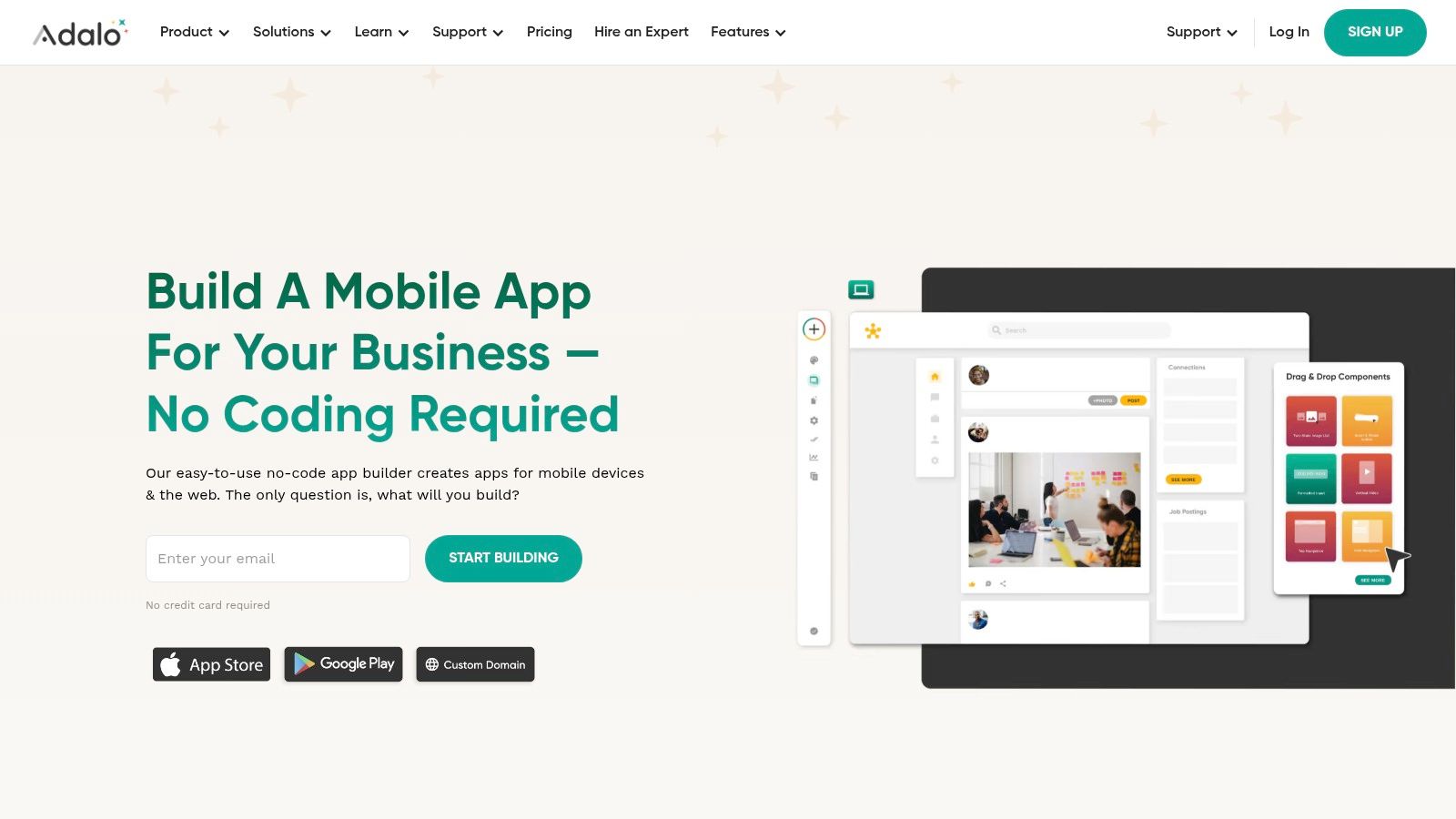
Unlike website-centric builders, Adalo focuses on app logic and database interactions from the ground up. You can build complex features like user profiles, product listings, and checkout flows visually. The platform's strength lies in its ability to connect components to a built-in or external database, giving you complete control over your app's data and functionality for a truly bespoke ecommerce experience.
Key Considerations
- Pricing: Adalo offers a free plan to start building, with paid plans that scale based on features like the number of app editors, app actions, and custom domain capabilities.
- Best For: Entrepreneurs and small businesses wanting to build a custom native mobile ecommerce app for both iOS and Android without hiring developers. It is perfect for testing a unique app idea in the market.
- Pros: Truly no-code platform, flexible design options for both web and mobile apps, and affordable pricing tiers.
- Cons: Not ideal for highly complex, enterprise-level applications due to scalability limitations. Advanced database features may present a learning curve.
Website: https://www.adalo.com
12. Jotform Apps
Jotform Apps offers a unique angle in the ecommerce app builder space, evolving from its roots as a powerful online form builder. It leverages its expertise in data collection to provide a straightforward, no-code platform for creating simple yet functional e-commerce applications. Its primary strength lies in its simplicity and deep integration with payment processing.
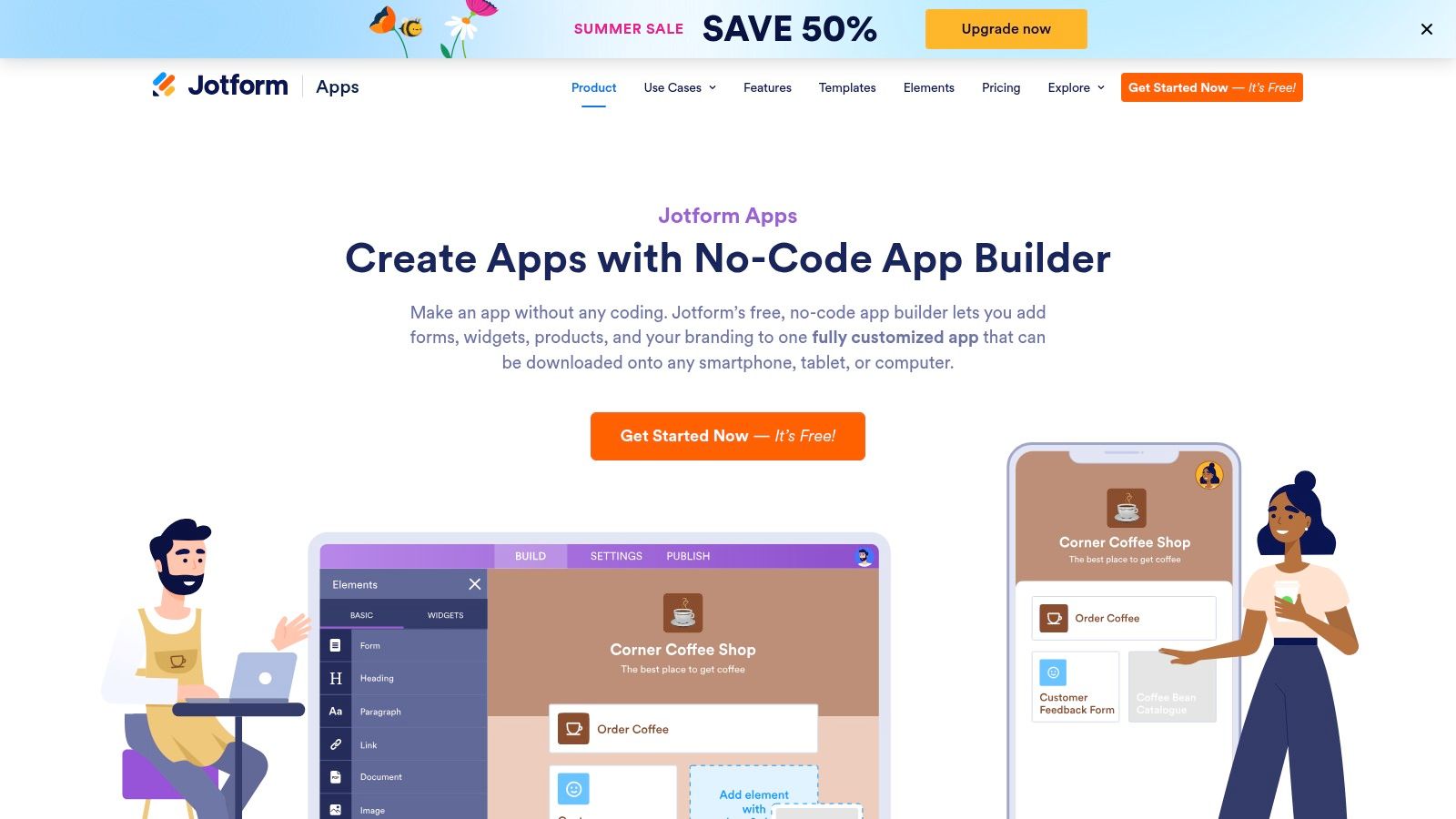
The platform utilizes a drag-and-drop interface and a wide array of customizable templates, making it accessible for users without any technical background. Businesses can quickly build an app, add their products, and connect to over 40 payment gateways, including major players like Stripe, PayPal, and Square. This extensive payment support is a key differentiator for merchants who need flexibility in how they accept payments.
Key Considerations
- Pricing: Jotform offers a generous free plan that includes many core features. Paid plans scale based on the number of forms, submissions, and payment submissions required, making it cost-effective to start.
- Best For: Small businesses, artists, or entrepreneurs who need a quick and easy way to sell a limited number of products or services directly to their audience without the overhead of a complex e-commerce platform. It excels in scenarios like selling event tickets, digital downloads, or merchandise.
- Pros: Very easy to use, a free tier is available to start, and it supports an extensive range of payment methods.
- Cons: Customization options are more limited compared to dedicated e-commerce giants. It may require upgrading to a paid plan to accommodate higher transaction volumes.
Website: https://www.jotform.com/products/apps/
Top 12 Ecommerce App Builders Comparison
| Platform | Core Features/Tools | User Experience & Quality ★ | Value Proposition 💰 | Target Audience 👥 | Unique Selling Points ✨ |
|---|---|---|---|---|---|
| Shopify | Drag-and-drop builder, 8,000+ apps, Payments | ★★★★☆ Scalable, Reliable | 💰 Flexible pricing, may add fees | All business sizes 👥 | 🏆 Extensive app ecosystem, analytics |
| Wix | Drag-and-drop editor, customizable templates, SEO | ★★★☆☆ Intuitive, Design-rich | 💰 Affordable, some features paid | Small to mid businesses 👥 | ✨ No coding, great for creatives |
| BigCommerce | Multi-channel, No transaction fees, SEO tools | ★★★★☆ Robust, Secure | 💰 Scalable, no extra fees | Large businesses 👥 | 🏆 Built-in features, strong security |
| Squarespace | Designer templates, SEO, analytics | ★★★☆☆ Stylish, User-friendly | 💰 Mid-range, all-in-one | Creatives, small biz 👥 | ✨ High-quality design, 24/7 support |
| Appy Pie | No-code app builder, templates, push notifications | ★★★☆☆ Quick & easy | 💰 Budget-friendly | Beginners, SMBs 👥 | ✨ No coding, multi-platform support |
| GoodBarber | Native apps, loyalty cards, push notifications | ★★★★☆ User-friendly | 💰 Affordable | SMBs, loyalty-focused 👥 | ✨ Loyalty system, native app builder |
| Mowico | No-code app builder, supports WooCommerce, Magento | ★★★☆☆ Basic but flexible | 💰 Affordable basic plans | Multi-platform sellers 👥 | ✨ Wide platform support |
| Builder.ai | AI-powered, cross-platform, inventory/order mgmt | ★★★★☆ Expert-driven | 💰 Premium pricing | Enterprise, custom apps 👥 | 🏆 AI & managed service |
| Appy Pie E-comm Website | AI design, drag-and-drop, multi-gateway payments | ★★★☆☆ Easy setup | 💰 Cost-effective | Small to mid businesses 👥 | ✨ AI-powered design, quick launch |
| FlutterFlow | UI/UX customizable, backend integration | ★★★★☆ Powerful, flexible | 💰 Mid-range | Designers, complex apps 👥 | ✨ Flutter-based, high customization |
| Adalo | Drag-and-drop, databases, app store publishing | ★★★☆☆ Flexible but simple | 💰 Affordable | SMBs, indie devs 👥 | ✨ Web & mobile, db integration |
| Jotform Apps | Payment gateways, data mgmt, drag-and-drop | ★★★☆☆ Easy & free start | 💰 Free tier available | Beginners, small stores 👥 | ✨ 40+ payment gateways, data focused |
Choosing Your Path: No-code Builder vs. Expert Development
Navigating the world of ecommerce app builders can feel overwhelming, but making the right choice boils down to a clear assessment of your business's current stage and future ambitions. We've explored a wide spectrum of tools, from accessible platforms like Wix and Appy Pie to powerful ecosystems like Shopify and BigCommerce. Each serves a distinct purpose in the journey of building a mobile commerce presence.
The key takeaway is that there is no single "best" ecommerce app builder for everyone. The ideal solution is the one that aligns with your specific needs, technical comfort level, and long-term strategic goals. Your decision-making process should be guided by a few core questions.
Making the Right Choice for Your Brand
To find your perfect fit, start by evaluating these critical factors:
- Your Budget and Timeline: Are you a startup needing to launch quickly on a tight budget? A template-based builder like GoodBarber or Squarespace offers an affordable and fast path to market. Or, do you have the resources to invest in a more robust, long-term asset?
- Technical Resources: Do you have an in-house team with some technical knowledge, or are you looking for a pure drag-and-drop experience? Platforms like Shopify are user-friendly but have a steeper learning curve for customization, whereas tools like Adalo are designed for non-technical creators.
- Scalability and Future Growth: Consider where you want your business to be in three to five years. While a simple builder might solve today's problems, will it support advanced features like augmented reality, complex loyalty programs, or deep ERP integrations down the line? A platform like BigCommerce is built with scalability at its core.
- Uniqueness and Brand Identity: How important is a unique user experience? Template-based solutions can sometimes lead to a generic look and feel. If a bespoke design and one-of-a-kind customer journey are non-negotiable, a more flexible builder or custom development is the superior path.
For businesses leaning towards a streamlined, DIY approach, it's crucial to understand the full capabilities and potential limitations. When considering the no-code route for your e-commerce app, it's beneficial to delve deeper into what a no-code app builder can offer to ensure it aligns with your vision.
Ultimately, an ecommerce app builder is a powerful tool, but it's just the starting point. The real value comes from how you use it to connect with customers, streamline operations, and drive revenue. Your mobile app should be more than just a digital catalog; it should be a dynamic, engaging, and indispensable part of your brand experience. Whether you choose an all-in-one platform or decide to partner with development experts, the goal remains the same: to build a mobile storefront that not only functions flawlessly but also fosters loyalty and accelerates growth.
Ready to move beyond the limitations of templates and build a high-performance app that truly reflects your brand? The experts at E-commerce Dev Group specialize in custom Shopify app development, transforming your unique vision into a powerful, scalable, and conversion-focused mobile experience. Contact E-commerce Dev Group today to discuss how a bespoke solution can elevate your mobile commerce strategy.
