


Understanding What Makes an Exceptional Shopify Manager
Not all Shopify managers are the same. Some have a basic understanding of the platform, while others possess a strategic mindset that truly elevates a business. This difference often comes down to their approach. Exceptional Shopify managers think like business partners, not just task managers. They see the bigger picture, understanding how every part of the Shopify ecosystem contributes to overall success. This strategic approach guides every decision, from small conversion tweaks to crafting personalized customer experiences.
For example, a skilled Shopify manager will analyze sales data to find underperforming products and create targeted marketing campaigns to boost visibility. They might also find ways to improve the checkout process, reducing abandoned carts and increasing overall revenue. This proactive, strategic thinking is the mark of a truly exceptional Shopify manager.
The Impact of a Strategic Shopify Manager
The right Shopify manager can turn a struggling store into a thriving business. They know that basic store maintenance is just the starting point. Their real value is in growing the business through data-driven decisions and using Shopify's many features. This might mean integrating new apps, optimizing product listings for search engines, or creating personalized email marketing campaigns.
This means a skilled manager isn't just reacting to problems; they're anticipating them and finding solutions proactively. They're always looking for ways to improve the customer journey, increase conversions, and ultimately, drive revenue. Shopify's impressive reach, with over 2 million active merchants as of 2025, shows the growing need for these skilled managers. This platform supports a huge ecosystem, with 90% of Shopify merchants using multiple sales channels. Find more statistics here: Shopify Stores Statistics. You might also be interested in this article: How to Master Shopify Plus Development.
Key Qualities of Top Shopify Managers
What makes exceptional Shopify managers stand out? Beyond technical skills, it's their ability to understand and use the power of the Shopify ecosystem.
- Data-Driven Decision Making: They use data to create strategies, not just to report on past performance.
- Proactive Problem Solving: They anticipate challenges and implement solutions before problems arise.
- Strategic Thinking: They understand how every action affects the overall business goals.
- Customer-Centric Approach: They prioritize the customer experience at every point of contact.
- Continuous Learning: They stay current with the newest Shopify features and best practices.

These qualities, combined with a deep understanding of the platform, are essential for steady growth in today’s competitive e-commerce environment. An exceptional Shopify manager becomes a valuable partner in reaching your business goals. They are not just managing your store; they are helping you build and grow your brand.
Essential Skills That Drive Real Results
Beyond simply adding products and processing orders, a successful Shopify manager needs a specific blend of technical skills and strategic thinking. These skills distinguish competent managers from those who significantly boost your bottom line. This section explores the essential competencies that elevate a good Shopify manager to a game-changer for your business.
Technical Skills For A Shopify Manager
A strong technical foundation is paramount for any Shopify manager. This includes a deep understanding of the platform's features, plus proficiency in areas that allow for customization and optimization.
-
Shopify Platform Expertise: A thorough understanding of Shopify's core functionalities is essential. This includes product management, order fulfillment, and customer service.
-
Liquid Code Proficiency: Familiarity with Liquid, Shopify’s templating language, allows for store customizations. It gives greater control over the storefront's look and functionality. While not always mandatory, it is a valuable asset.
-
Analytics Interpretation: Analyzing data from Shopify's built-in analytics and other tools is crucial for making informed decisions. This data-driven approach guides marketing, inventory, and overall business strategy.
-
App Integration Knowledge: The Shopify App Store offers thousands of apps. A skilled manager can identify, integrate, and manage these apps to optimize store performance. This might include integrating comment management apps for community building and SEO.
Strategic Thinking And Soft Skills
Technical skills are only part of the equation. Strategic thinking and strong soft skills are equally vital for success.
-
Conversion Optimization: Understanding how to improve the customer journey and increase sales is paramount. This involves analyzing user behavior, A/B testing, and continuous optimization.
-
Customer Journey Mapping: An exceptional manager maps the entire customer experience, from initial discovery to post-purchase engagement. This allows for targeted improvements at each touchpoint.
-
Communication and Collaboration: Clear communication is essential for coordinating with different teams, providing updates, and aligning everyone on business objectives. This often involves working with marketing, design, and development teams.
-
Strategic Vision: A truly exceptional Shopify manager possesses the ability to see the bigger picture. They align their actions with overall business goals, ensuring that all efforts contribute to long-term growth.
To help understand the different skills needed at various levels, let's look at the table below. It outlines the technical and strategic skills a Shopify manager should possess, differentiating between essential and advanced proficiencies.
Essential Shopify Manager Skills Assessment Matrix: A comprehensive comparison of technical vs strategic skills with proficiency levels and evaluation methods
| Skill Category | Essential Level | Advanced Level | Evaluation Method | Business Impact |
|---|---|---|---|---|
| Shopify Platform Expertise | Understanding of product listings, order processing, and basic settings | Customizing checkout flows, setting up advanced shipping rules, managing multiple storefronts | Practical tests, scenario-based questions | Efficient store operations, streamlined order fulfillment |
| Liquid Code Proficiency | Basic understanding of Liquid syntax and variables | Creating custom templates, modifying existing themes, developing complex functionalities | Code review, practical application | Enhanced storefront design, unique customer experience |
| Analytics Interpretation | Analyzing sales data, identifying top-selling products, understanding traffic sources | Forecasting sales trends, segmenting customer data for targeted campaigns, implementing data-driven optimizations | Data analysis exercises, case studies | Informed decision-making, optimized marketing ROI |
| App Integration Knowledge | Installing and configuring basic apps | Integrating APIs, automating workflows across multiple apps, customizing app functionalities | Practical demonstrations, portfolio review | Streamlined operations, enhanced store features |
| Conversion Optimization | Implementing basic A/B tests, analyzing website traffic | Developing and executing advanced CRO strategies, utilizing heatmaps and user behavior analytics | Case studies, performance metrics | Improved conversion rates, increased sales |
| Customer Journey Mapping | Understanding basic customer touchpoints | Developing detailed customer journey maps, identifying areas for improvement across all channels | Presentations, scenario planning | Enhanced customer experience, increased customer loyalty |
| Communication and Collaboration | Clear and concise communication with team members | Effectively managing stakeholder expectations, leading cross-functional teams, resolving conflicts | Team exercises, feedback from colleagues | Seamless project execution, improved team performance |
| Strategic Vision | Aligning daily tasks with business objectives | Developing long-term strategic plans, anticipating market trends, identifying new growth opportunities | Strategic planning exercises, presentations | Sustainable business growth, competitive advantage |
This table highlights the key skills needed for a Shopify manager to succeed, showing how different proficiency levels can influence business outcomes. A manager with advanced skills can truly transform a Shopify store.
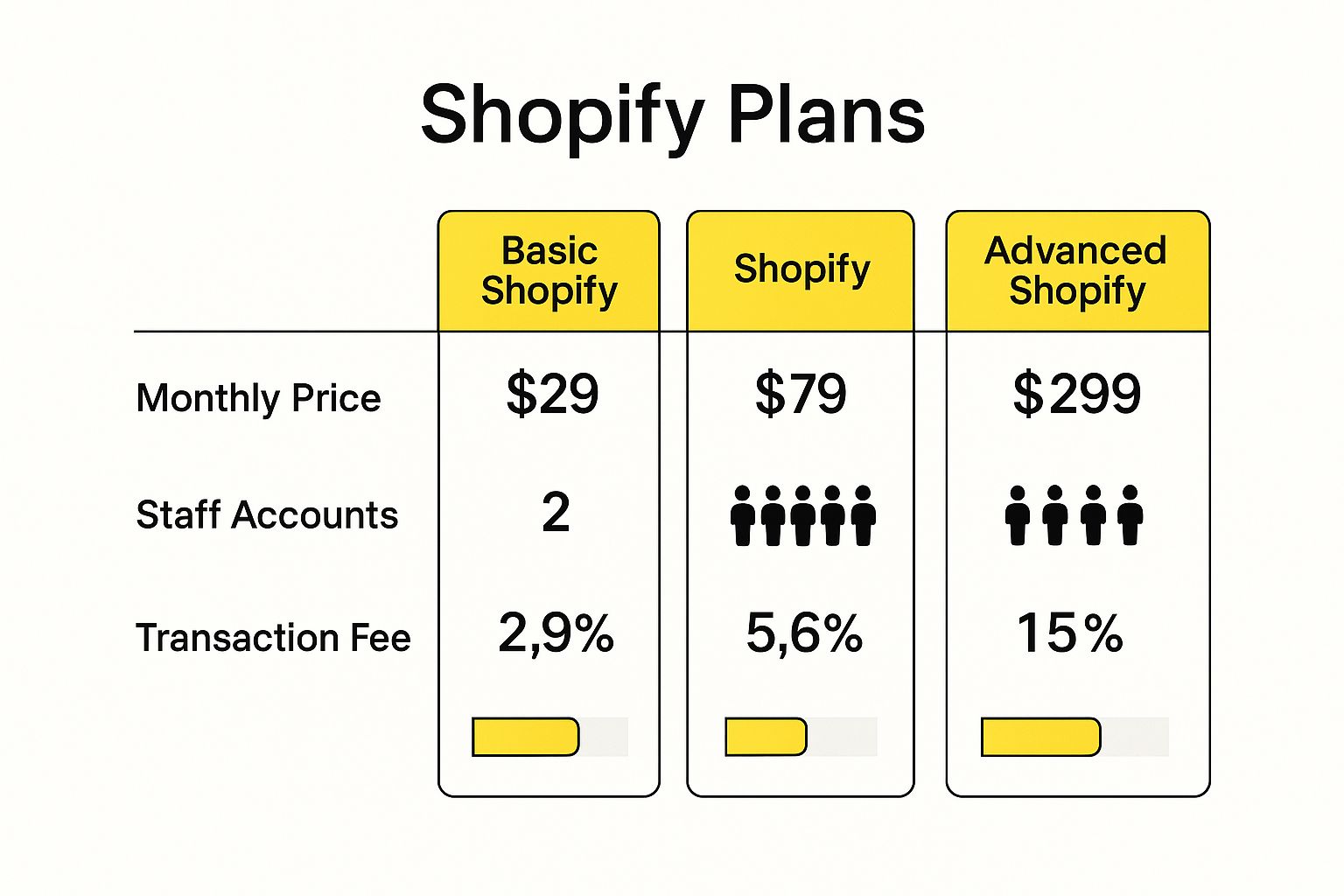
As the infographic shows, the increasing staff accounts and decreasing transaction fees with higher-tier plans reflect Shopify's scalability. This supports larger businesses with more complex operations, often demanding more advanced management skillsets. Your chosen plan affects the resources available to your manager and the scope of their responsibilities.
Identifying And Evaluating Potential Shopify Managers
When hiring, evaluate candidates across these dimensions. Look for demonstrable experience, not just theoretical knowledge. Ask about past successes, challenges, and problem-solving approaches. A skilled manager can articulate their strategies and provide concrete examples of their impact. This thorough evaluation will help you find the right manager to drive your business forward. Identifying the right talent is crucial; a skilled Shopify manager is a true asset, contributing significantly to your store's growth and profitability. Invest the time to find the right fit for long-term rewards.
Where To Find Managers Who Actually Deliver
Finding the right Shopify manager can feel overwhelming. It's easy to get lost in a sea of exaggerated resumes and promises that fall flat. This section offers practical strategies to find candidates with the skills and experience to truly boost your Shopify store's performance.
Sourcing Top Talent
Finding a skilled Shopify manager requires a focused approach. Concentrate your efforts on platforms and communities known for attracting experienced professionals.
-
Specialized Shopify Agencies: These agencies specialize in Shopify, often employing a team of seasoned managers. This focused approach increases your odds of finding someone with the exact expertise you need.
-
Professional Networks: LinkedIn provides access to a broad talent pool. Use precise keywords like "Shopify manager" and "ecommerce expert" to refine your search and connect with the right candidates.
-
Industry Communities: Online forums and Shopify-focused groups can be goldmines for referrals. Participating in these communities also provides valuable insights into industry best practices and helps you connect with potential candidates.
When evaluating potential managers, look for individuals familiar with specific Shopify apps. For example, if your business relies on subscriptions, a manager experienced with the Shopify Subscriptions App would be a major asset.
Crafting Compelling Job Descriptions
Your job description is your first chance to make a positive impression. A well-crafted description attracts qualified candidates and discourages those who aren't a good fit.
-
Clearly Define Responsibilities: Outline the specific duties and expectations of the role. This clarity helps potential applicants understand the position and self-select out if it doesn't match their skillset.
-
Highlight Company Culture: Share your company's values and work environment. This helps attract candidates who are aligned with your vision and more likely to thrive in your company culture.
-
Specify Required Skills: Explicitly list the essential technical and strategic skills you’re looking for. This streamlines the application process and helps you focus on candidates with the necessary qualifications.
Interviewing for Success
The interview process is your opportunity to go beyond the resume and assess a candidate's true capabilities.
-
Behavioral Questions: Ask questions that explore past experiences and problem-solving approaches. This gives you insight into how candidates handle real-world situations and their critical thinking skills.
-
Technical Assessments: Use practical tests or case studies to evaluate Shopify-specific skills. This provides tangible evidence of a candidate's abilities and how they apply their knowledge in practice.

Additionally, consider the global reach of ecommerce. The growing influence of Shopify managers is reflected in the platform's international growth. In the first half of 2024, 30% more global merchants joined Shopify. This emphasizes the importance of finding managers who can navigate diverse markets. Learn more about Shopify's growth here: Shopify Statistics. You might also find this helpful: Shopify Website Managers.
Recognizing Warning Signs
Pay attention to red flags that suggest a candidate may not be the right fit.
-
Vague Answers: Evasive or unclear responses to direct questions could indicate a lack of experience or a poor understanding of key concepts.
-
Inflated Claims: Be cautious of candidates who exaggerate their accomplishments or can't provide concrete examples to support their claims.
-
Poor Communication: Difficulty expressing ideas or responding promptly can be a sign of potential communication issues.
Finding the right Shopify manager requires investment. By following these strategies, you can significantly improve your chances of finding a valuable partner who can truly help your business thrive. This strategic approach will provide long-term benefits and contribute to the growth and success of your Shopify store.
Building Partnerships That Actually Work
Hiring a skilled Shopify manager is just the beginning. The real magic happens when you build a strong working relationship. This section will show you how to create a partnership that truly benefits your business. We'll cover effective onboarding, setting the right performance metrics, and keeping communication clear so your projects stay on track.
Onboarding Your Shopify Manager for Success
Effective onboarding sets the foundation for a successful working relationship. Clearly defined expectations and the right resources are crucial for your manager to excel. A structured onboarding process can help avoid confusion and quickly integrate your new manager into the team.
-
Clear Goals and Expectations: Start by outlining your business goals and how the Shopify manager contributes. Making sure everyone is on the same page from the start is essential for achieving shared objectives.
-
Access and Training: Provide access to all the necessary Shopify accounts, tools, and resources. Offer training on your specific workflows and communication preferences. This empowers your manager to collaborate effectively from day one.
-
Initial Projects: Begin with smaller, clearly defined projects. This allows your manager to learn your store and processes, building their confidence and establishing a good working rhythm.
Setting Performance Metrics and KPIs
Measuring performance helps you track progress and spot areas for improvement. Key Performance Indicators (KPIs) should align directly with your business goals.
-
Sales Growth: Monitor changes in sales revenue, average order value, and conversion rates to assess the manager's impact on revenue generation.
-
Customer Satisfaction: Keep an eye on customer reviews, support tickets, and return rates. This gives you insights into the effectiveness of customer service and experience management.
-
Operational Efficiency: Measure order fulfillment times, shipping costs, and inventory management to evaluate the manager's contributions to streamlining operations.
To help you tailor metrics to your specific business needs, take a look at the following table:
Here’s a table summarizing key metrics and KPIs:
Shopify Manager Performance Metrics and KPIs: Key performance indicators to track manager effectiveness across different business objectives
| Metric Category | KPI | Target Range | Measurement Frequency | Business Impact |
|---|---|---|---|---|
| Sales Growth | Conversion Rate | 2-5% | Weekly/Monthly | Increased Revenue |
| Sales Growth | Average Order Value | Depends on product pricing | Weekly/Monthly | Higher Profitability |
| Customer Satisfaction | Customer Satisfaction Score (CSAT) | 4-5 out of 5 | Monthly/Quarterly | Improved Customer Loyalty |
| Operational Efficiency | Order Fulfillment Time | 1-2 business days | Weekly | Faster Delivery |
This table provides a useful starting point for tracking your Shopify manager’s performance. Remember to adapt these metrics based on your specific business goals.
Maintaining Open Communication and Feedback
Regular communication is essential for a productive partnership. Check-ins and feedback sessions can help catch challenges early and keep everyone aligned.
-
Regular Meetings: Schedule regular meetings to discuss progress, address concerns, and maintain alignment. Consistent communication creates a space for open dialogue.
-
Feedback Loops: Create a system for sharing feedback, both positive and constructive. This encourages continuous improvement and strengthens the working relationship.
-
Documentation: Keep clear records of processes, agreements, and key decisions. This ensures everyone has access to the same information and reduces potential misunderstandings.
When searching for Shopify managers, think outside the box! Expanding your search beyond your local area can greatly increase your talent pool. You can find qualified managers by learning how to apply for jobs abroad.
Addressing Challenges and Scaling the Relationship
As your business grows, so will your needs. It's important to anticipate these changes and adapt the partnership accordingly.
-
Scope Creep: Clearly define project scope and establish a process for handling changes. This helps prevent scope creep and keeps projects on time and within budget.
-
Communication Breakdowns: Address communication issues directly and promptly. Encourage open conversations to improve communication flow.
-
Scaling the Relationship: As your business expands, be ready to adjust the manager's responsibilities and provide necessary resources. This could mean hiring additional team members or restructuring the existing team.
By focusing on these key areas, you can cultivate a strong, successful partnership with your Shopify manager that leads to long-term growth for your store.
Investment Reality: Costs and Returns That Make Sense
Understanding the investment needed for quality Shopify management, and the potential returns, is crucial for making informed decisions. This section breaks down the real costs associated with different management options, from freelancers to full-service agencies. We'll also explore how these costs relate to experience, results, and market factors, giving you a better understanding of what makes financial sense for your business.
Decoding Shopify Manager Pricing
The cost of a Shopify manager varies greatly, depending on a number of factors. Experience, skillset, and the scope of the work required all play a role in determining the price. It’s similar to hiring any other professional. A general contractor will charge less than a specialized architect. Likewise, a Shopify manager handling basic tasks will be more affordable than an expert who optimizes your store for conversions and runs complex marketing campaigns.
-
Freelancers: Typically charge by the hour or by the project. Hourly rates can range from $25 to $150+, depending on experience. Project-based pricing varies based on complexity and scope.
-
Agencies: Offer a wider selection of services and a deeper level of expertise, but come with higher costs. Monthly retainers can run anywhere from $1,000 to $10,000+.
-
In-House Managers: Salaries vary based on experience and location. Annual salaries can range from $50,000 to $150,000+.
Correlating Price With Experience and Results
In general, higher pricing reflects more experience and a track record of success. A seasoned Shopify manager can often generate substantial returns through increased sales and improved operational efficiency. It’s important, though, to assess if the premium cost genuinely translates into value for your specific business. You might find this resource helpful: How to Master Shopify Store Optimization.
Unveiling Hidden Costs
Many business owners don't account for the hidden costs tied to Shopify management. These can include:
- App Subscriptions: The costs of essential Shopify apps can quickly add up.
- Transaction Fees: Remember to consider fees charged by payment gateways like Stripe and PayPal, as well as Shopify's own transaction fees.
- Marketing Expenses: Allocate a budget for advertising and marketing campaigns managed by your Shopify expert.
Factoring these additional costs into your overall budget is key to effective financial planning. A comprehensive understanding of all the costs associated with running your Shopify store is vital for sustainable growth.
Structuring Agreements for Shared Success
Creating agreements that align your Shopify manager’s incentives with your key performance indicators (KPIs) is a smart move. This ensures everyone is working toward common goals. Consider performance-based bonuses or profit-sharing models to motivate your manager and reward their contributions to your profitability. This fosters a genuine partnership, where your manager is actively invested in your growth.
Evaluating Investment Alignment
Finally, carefully consider your business's current stage and future growth objectives when deciding on the best management approach. A startup might initially benefit from a freelancer for basic tasks. As your business expands, a full-service agency or an in-house manager may become a more suitable investment, providing the resources to handle increasing complexity and strategic requirements. This strategic approach ensures that your investments are aligned with both your present needs and your future ambitions.
By understanding the factors that influence pricing and carefully evaluating your options, you can make strategic decisions about your Shopify management investment that will contribute to the long-term success of your business. Careful planning and execution will pave the way for sustainable growth and profitability in the competitive world of ecommerce.
Key Takeaways
This section offers practical steps to find, hire, and get the most out of your partnership with a Shopify manager. These insights will give you the tools and knowledge to make smart decisions, ensuring a successful collaboration that fuels growth for your Shopify store.
Evaluating Potential Managers: A Checklist For Success
Finding the right Shopify manager takes careful evaluation. This checklist highlights key qualities to look for:
-
Proven Shopify Experience: Look for demonstrable experience managing Shopify stores, not just theoretical knowledge. Request case studies or examples of previous work to assess their skills.
-
Technical Proficiency: Evaluate their skills in areas like Liquid code (depending on your needs), analytics interpretation, and app integration. A good understanding of these areas can significantly improve your store's performance.
-
Strategic Thinking: Assess their ability to analyze data, identify opportunities, and create strategies that align with your business goals. Strategic thinking is essential for long-term growth.
-
Communication Skills: Clear and effective communication is vital. A manager who can clearly explain their ideas, provide regular updates, and address concerns proactively is a must.
-
Cultural Fit: Consider whether their personality and work style fit your company culture. A good cultural fit fosters a positive and productive working relationship.
Communication Templates: Structuring Conversations For Clarity
Effective communication is the foundation of any successful partnership. These templates provide a structure for productive conversations:
-
Initial Consultation: Use this template to outline your business goals, discuss your expectations, and learn about the manager's experience: "I'm looking for a Shopify manager to help me achieve [specific business goals]. Can you share your experience in achieving similar outcomes for other clients?"
-
Ongoing Check-Ins: Use this template for regular progress updates and to address any roadblocks: "Let's review the progress on [current projects]. Are there any obstacles we need to address, or resources you need?"
-
Performance Reviews: Use this template to provide feedback and discuss future goals: "Let's discuss your performance over the past [time period]. What are your key accomplishments, and what areas can we focus on for improvement?"
Measuring Success: Key Metrics and Warning Signs
Tracking the right metrics is critical for evaluating your Shopify manager's effectiveness. These key metrics offer valuable insights:
-
Sales Growth: Monitor increases in sales revenue, average order value, and conversion rates.
-
Customer Satisfaction: Track customer reviews, support tickets, and return rates.
-
Operational Efficiency: Measure improvements in order fulfillment times, shipping costs, and inventory management.
Also, watch out for these warning signs:
-
Lack of Communication: Infrequent or unclear communication can indicate potential issues.
-
Missed Deadlines: Consistently missing deadlines may suggest poor time management or unrealistic planning.
-
Declining Performance: A drop in key metrics may signal a need for further investigation and potential strategy adjustments.
Realistic Timelines and Troubleshooting
Understanding realistic timelines for different phases of the relationship is essential for setting expectations.
-
Initial Hiring: The hiring process can take 2-4 weeks, depending on your requirements and the availability of qualified candidates.
-
Onboarding: Set aside 1-2 weeks for onboarding to ensure your manager is fully integrated and familiar with your systems and processes.
-
Full Productivity: It can realistically take 3-6 months for a Shopify manager to reach full productivity and make a significant impact on your business.
If you encounter challenges, consider these troubleshooting steps:
-
Open Communication: Address concerns directly and promote open dialogue to resolve issues quickly.
-
Performance Reviews: Regularly review performance and give constructive feedback to pinpoint areas for improvement.
-
Adjusting Strategies: Be flexible and willing to adjust your strategies based on performance data and market conditions.
Key Takeaways For Maximizing Your Shopify Manager Partnership
By following these key takeaways, you can effectively navigate finding, hiring, and managing a Shopify manager. This structured approach will help you build a strong and productive partnership that drives measurable business growth. Remember, a skilled Shopify manager is a valuable asset to your business, contributing significantly to your e-commerce success.
Are you ready to take your Shopify store to the next level? E-commerce Dev Group offers expert Shopify design, development, and support services tailored to your specific business needs. Learn more about how E-commerce Dev Group can help you scale your Shopify business.
