


The Foundation of Successful Shopify Website Management

Successful Shopify website management isn't just about keeping your online store up and running. It's about creating a system that actively contributes to the growth of your business. Think of it like building a house: a solid foundation is essential before you start adding those impressive features. This foundational strength comes from understanding the core elements of your Shopify store and how they work together. Savvy merchants understand this, treating their Shopify admin dashboard not just as a control panel, but as the central hub of their entire business.
Mastering Your Shopify Dashboard
The Shopify admin dashboard is your command center. From here, you manage everything: products, inventory, customer data, and even marketing campaigns. Effective Shopify website management begins with mastering this dashboard. This means understanding what each section does and developing efficient workflows.
For example, a well-organized product categorization system simplifies managing large inventories. It also improves the customer browsing experience. This streamlined organization helps with other important tasks, such as inventory control and order fulfillment.
Connecting Operations to Growth
A key aspect of successful Shopify website management is connecting operational elements to actual business growth. This involves analyzing data, tracking key performance indicators (KPIs), and adjusting strategies based on real-time insights.
Establishing effective customer relationship management (CRM) workflows is also critical. This might include automating email campaigns for abandoned carts. Or, you could personalize customer interactions based on their purchase history. These efforts can significantly improve customer retention and boost sales.
The Power of Scalability
Shopify's popularity continues to climb. It's estimated that 4.82 million websites were using the platform as of 2025. This represents a 20% increase in just one quarter of 2024, highlighting Shopify’s position as an e-commerce leader. Find more detailed statistics here. Successful Shopify website management means building scalable systems with this growth in mind.
As your business grows, your management processes must adapt seamlessly. This includes automating tasks whenever possible. It also involves developing clear documentation and training materials for your team members. This forward-thinking approach allows your operations to expand efficiently alongside your growing customer base. This solid foundation ensures that the time you invest in managing your Shopify website translates directly into increased efficiency, happier customers, and ultimately, a more profitable business.
Daily Operations That Drive Exceptional Customer Experiences
Running a successful Shopify store goes beyond the initial setup and marketing plans. It's the daily grind where efficient operations directly impact customer satisfaction. This section explores how successful merchants turn routine tasks into competitive advantages.
Streamlining Inventory For Peak Efficiency
Inventory management is essential for e-commerce. It's not simply about tracking stock, but also about anticipating demand, optimizing storage, and preventing stockouts. Successful Shopify merchants use real-time inventory tracking and set clear reorder points. This prevents lost sales from unavailable items and keeps customers happy.
Imagine a clothing store expecting high demand for winter coats during the holidays. By increasing inventory and organizing their warehouse, they can fulfill orders quickly and avoid disappointing customers with delays. This attention to detail ensures a seamless customer journey.
Order Processing: From Click To Delivery
An efficient order processing system is vital for customer satisfaction. This includes order confirmation, payment processing, shipping, and delivery. Top Shopify stores use automation tools to streamline these processes. They also prioritize clear communication, providing tracking information and updates about any delays.
Integrating your Shopify store with shipping providers allows for real-time shipping rates and automated label creation. These small changes can significantly reduce processing time and improve the customer experience. A streamlined process ensures quick delivery and builds customer trust.
Building Customer Loyalty Through Communication
Building a loyal customer base is key for any Shopify business. Effective communication is vital. Successful merchants create customer communication frameworks with personalized interactions. They use automated emails to welcome new subscribers, thank customers for purchases, and offer deals to repeat buyers. This creates a sense of community and appreciation.
The table below compares different ways to manage routine Shopify tasks, showing the time invested and the potential business impact.
Daily Shopify Management Tasks Comparison
| Management Task | Manual Approach Time | Automated Approach Time | Business Impact |
|---|---|---|---|
| Inventory Updates | 30-60 minutes/day | 5-10 minutes/day | Reduced stockouts, increased sales |
| Order Processing | 15-30 minutes/order | 2-5 minutes/order | Faster delivery, improved customer satisfaction |
| Customer Communication | 1-2 hours/day | 15-30 minutes/day | Increased customer loyalty, repeat business |
This table highlights how automation can save significant time and improve key business metrics. Automating routine tasks allows you to focus on growth and customer relationships.
The following infographic shows the average usage of tools employed by successful Shopify merchants:
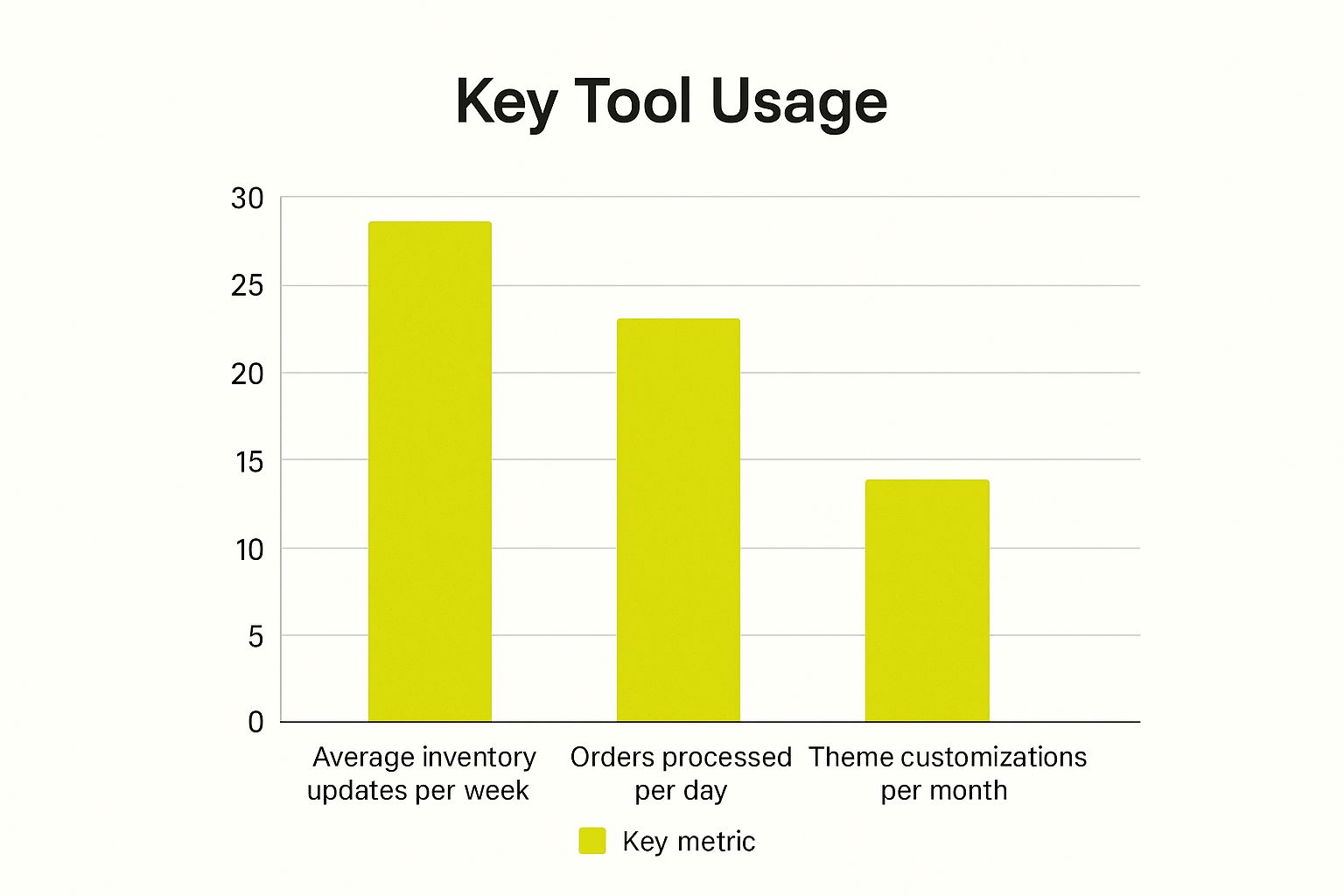
The data shows a focus on frequent inventory updates and consistent order processing. Combined with regular theme customizations, these practices significantly contribute to a thriving online business. This data emphasizes balancing efficiency and customer focus.
Shopify's success reflects the power of e-commerce. In 2024, Shopify’s revenue grew by 21%, reaching $2 billion. Their total revenue surpassed $7 billion in 2023, with a GMV of $235.9 billion. Learn more.
Automating For Growth
Effective Shopify management involves automating repetitive tasks to free up time for growth. This means finding areas where automation can improve efficiency and customer experience, like automated email marketing, inventory updates, and even customer support with chatbots. This allows businesses to scale effectively.
Moving from manual to automated systems lets you focus on strategic initiatives like marketing, product development, and building customer relationships. By optimizing daily operations, Shopify merchants can create exceptional customer experiences that drive repeat business and foster brand loyalty.
Performance Optimization Techniques That Convert Browsers to Buyers

Optimizing your Shopify website’s performance is key to turning casual browsers into paying customers. It's about creating a smooth, enjoyable shopping experience that naturally leads to sales. A slow, clunky website leads to frustration and abandoned carts, which directly impacts your profits.
The Need for Speed: Optimizing Page Load Times
Page load time is a crucial factor for both user experience and SEO. Even a few seconds’ delay can significantly increase your bounce rate. This means potential customers leave before they even see your products. Shopify offers ways to improve page speed without sacrificing your store's visual appeal.
Minimizing large image files and optimizing your store’s theme code can drastically reduce loading times. This creates a better user experience, encouraging visitors to stay longer and browse. Ultimately, this results in higher conversion rates.
Image Optimization: Balancing Quality and Speed
High-quality images are essential for showcasing your products. However, large image files can slow down your site. Effective image optimization means compressing images without losing visual quality.
Techniques like using the right image format (JPEG, PNG, or WebP) and resizing images make a big difference. This balances the need for attractive product photos with fast loading times, crucial for keeping visitors engaged and encouraging purchases.
Checkout Flow: Removing Barriers to Purchase
A smooth checkout is vital for converting browsers into buyers. A complicated or lengthy checkout process often leads to abandoned carts and lost sales. Optimizing your Shopify checkout involves simplifying the process and removing unnecessary steps.
Offering multiple payment options, clear shipping information, and a mobile-friendly checkout experience can dramatically improve conversions. This streamlined approach removes friction and encourages customers to complete their purchases. A smooth checkout is a key element of effective Shopify website management. You might be interested in: How to master Shopify performance optimization.
The Impact of Performance Optimization: Real-World Results
Even small performance improvements can significantly impact your store's conversion rate. Many case studies show how optimizing page speed, image loading, and checkout flow can lead to substantial sales increases.
For example, one study found that a one-second improvement in page load time resulted in a 7% increase in conversions. These real-world results highlight the importance of prioritizing performance optimization for your Shopify store. This means regularly monitoring your website’s speed and making the necessary changes to maintain optimal performance. This proactive approach contributes to long-term success.
Selecting and Leveraging Power Tools for Shopify Management
Running a successful Shopify store often depends on having the right tools. Just like a skilled craftsperson needs the right tools, you need specific apps and software to streamline your online operations. However, choosing the wrong tools can lead to wasted time and money. This section explores how to find and use tools that provide a solid return on investment (ROI) for your Shopify business.
Finding the Right Tools for Your Needs
There are thousands of apps designed for Shopify merchants. This huge selection can be overwhelming. Smart store owners don't just focus on feature lists. They think about setup requirements, ongoing maintenance costs, and how well the tool integrates with their existing systems. This careful approach ensures new tools improve, rather than complicate, their workflow.
For growing businesses, scalability is key. Choosing tools that can handle increasing order volumes, a growing product catalog, and an expanding customer base is essential. This forward-thinking approach avoids costly tool migrations later on.
Essential Shopify Management Apps
Several important app categories can greatly improve your Shopify store management. These include:
-
Inventory Management Systems: These tools automate stock tracking, forecast demand, and optimize warehousing, helping to avoid stockouts and boost sales.
-
Marketing Automation Platforms: These platforms help streamline marketing campaigns, personalize customer interactions, and analyze campaign performance. This data-driven approach optimizes marketing spend for maximum results.
-
Analytics Tools: These tools provide deep insights into customer behavior, sales trends, and website performance. They highlight areas for improvement and inform data-driven decisions.
To further boost your Shopify store conversions, check out this article on Ecommerce Website Optimization.
To help you select the right tools, we've compiled a table of essential apps categorized by their function:
Essential Shopify Management Apps by Category
This table organizes must-have Shopify apps by management category with pricing and key features.
| Category | Recommended Apps | Price Range | Key Features | Best For |
|---|---|---|---|---|
| Inventory Management | Stocky, Sellbrite | $0 – $200/month | Real-time stock tracking, demand forecasting, automated purchase orders | Businesses managing large inventories, multiple sales channels |
| Marketing Automation | Klaviyo, Omnisend | $20 – $200+/month | Email marketing automation, SMS marketing, personalized product recommendations | Stores focused on email & SMS marketing, customer segmentation |
| Analytics Tools | Google Analytics, Shopify Analytics | Free – $Varying | Website traffic analysis, sales performance reports, customer behavior insights | All Shopify stores, data-driven decision-making |
This table provides a starting point for building your Shopify app toolkit. Remember to research each app thoroughly to ensure it meets your specific needs.
Avoiding App Overload
While apps can be extremely helpful, too many apps can create a complicated mess of integrations and features. This "app overload" can slow down your site, overcomplicate workflows, and even create security risks. Successful Shopify merchants strategically select a few key apps that directly address their needs. They prioritize tools that integrate well together and avoid overlapping functions. This focused approach keeps operations simple and efficient.
Building a Powerful Tech Stack
A strong tech stack isn't about having the most apps; it's about having the right ones. Think of it as building with blocks – each piece should have a purpose and fit together seamlessly. This creates a unified and efficient system.
This strategic approach involves reviewing your current workflows, identifying bottlenecks, and finding tools that solve those particular problems. This might involve automating repetitive tasks, improving customer communication, or getting more detailed data through analytics. Ultimately, your tech stack should empower your team and fuel business growth.
Building Management Systems That Scale With Your Success
As your Shopify store expands, the informal management methods that worked when you had just a few orders a day might become completely ineffective as your order volume increases to, say, 100 or more. This means you'll need to develop more structured systems. This section explains how successful Shopify merchants build scalable management systems that can handle significant growth.
Documentation: Your Operational Playbook
Creating thorough documentation is vital. Consider it your store's operational playbook, ensuring consistent procedures regardless of staff changes. Documenting every aspect of your business, from order fulfillment and customer service protocols to internal communications, provides a reliable framework for your team. This minimizes errors and upholds quality standards, even with new hires.
For example, a detailed guide for processing returns, including instructions for issuing refunds and restocking inventory, ensures each customer receives the same level of service. This standardized approach prevents confusion and boosts efficiency.
Responsibility Frameworks: Clear Lines of Accountability
Defining clear responsibility frameworks is equally critical. This means specifying who is responsible for what, creating clear reporting structures, and outlining individual accountabilities. This clarity prevents tasks from being overlooked and promotes a sense of ownership amongst team members. A well-defined organizational structure enables quick identification and resolution of any issues, improving overall responsiveness.
Quality Control: Maintaining Standards During Growth
Implementing quality control measures is paramount as your business grows. Regularly reviewing essential processes, analyzing customer feedback, and proactively addressing potential problems protects your brand's reputation and the overall customer experience. This could involve periodic checks on order accuracy or evaluating customer service response times. Consistent monitoring ensures your store continues to meet customer expectations as it scales. You can learn more helpful tips by reading this article: How to master Shopify store management.
Navigating Critical Transition Points
Business growth often occurs in phases. Understanding the common breaking points in management strategies helps you anticipate challenges and proactively implement solutions. For example, as your team expands, communication can become more complex. Implementing project management software or scheduling regular team meetings can address these complexities and keep everyone informed.
Leveraging the right tools is also key for efficient Shopify management. For subscription-based businesses, consider a dedicated app like the Shopify Subscriptions App. This facilitates automated billing and subscription management, freeing up valuable time for other tasks.
Building Systems, Not Dependencies
The objective is to establish systems that reduce reliance on specific individuals. While individual expertise is important, over-dependence on one person creates vulnerability. By documenting processes and cross-training team members, you ensure business continuity, even if a key employee leaves. This fosters a more resilient and adaptable organization.
Preserving Your Unique Advantage
As you build scalable systems, don't forget to maintain the elements that make your store special. Your brand’s personality, customer service philosophy, and curated product selection are your key differentiators. Reinforce these elements in your documentation and training programs. This ensures that as you scale, you don't lose the personal touch that initially attracted your customers. Scaling successfully means balancing standardized procedures with the unique aspects of your brand. This allows you to handle increased order volumes while preserving the core values that define your store's identity and enhance the customer experience.
Protecting Your Shopify Business With Strategic Security Measures

Security is crucial for every online business. For Shopify merchants, neglecting security can undo years of hard work. This section offers a practical guide to securing your Shopify store without impacting your day-to-day operations. This means putting preventative measures in place, as well as planning for recovery.
Staff Permissions: Limiting Vulnerability, Not Productivity
A well-structured staff permission system is your first line of defense. This means giving staff access only to the information and functions they need for their specific roles. This limits the potential damage from accidental mistakes or intentional harm.
For example, customer service reps need access to order details and customer information. They don't necessarily need access to financial reports or app settings. This targeted approach minimizes risk without impacting team efficiency.
Payment Handling: Safeguarding Sensitive Data
Protecting sensitive data is critical. This involves setting up secure payment handling protocols. Make sure your store follows Payment Card Industry Data Security Standard (PCI DSS) rules. This includes using secure payment gateways like Stripe or PayPal, encrypting customer data, and keeping your Shopify software up to date. These practices protect both your business and your customers.
Be aware of phishing scams, and train your staff to spot and avoid them. A strong password policy requiring complex and regularly changed passwords is also essential. Combining technical safeguards with staff training significantly reduces your vulnerability.
Fraud Prevention: Calibrating to Your Business
A fraud prevention system tailored to your specific business is key. This could involve using fraud detection apps, setting up address verification systems (AVS), and watching transactions for anything suspicious. The level of security you need depends on what your store sells and how many transactions you process.
A high-volume store selling expensive items will likely need stronger fraud prevention than a small store selling low-cost digital products. This tailored approach ensures your security is most effective.
Security Audits: Proactive Protection
Regular security audits help you find weaknesses before they become problems. You don't need to be a tech expert to do these. Shopify offers built-in security features and tools to help. You might also want to research other resources like articles on improving your Shopify store security. Regular checks help your security measures stay effective against new threats.
Reviewing your store's security settings, checking app permissions, and staying informed about the latest security best practices will help keep your business protected. It's also essential to have a clear plan for what to do if a data breach or other security incident occurs. This preparation minimizes potential harm and ensures you can recover quickly.
By taking a proactive approach to security, you protect your business, build customer trust, and ensure the long-term success of your Shopify store. This comprehensive approach creates a resilient business, ready for any challenges.
Measuring What Matters: Shopify Management Metrics That Drive Growth
Effective Shopify website management isn't about making random changes and hoping for the best. It's about using data-driven decisions based on the metrics that truly impact your business. This means looking past less important metrics like simple website visits and focusing on the numbers that actually predict business success.
Beyond Vanity: Identifying Key Performance Indicators (KPIs)
While total website traffic is important, it's only one piece of the puzzle. Key Performance Indicators (KPIs) offer a more complete understanding of your store's performance. For Shopify businesses, some crucial KPIs include conversion rate, average order value (AOV), customer lifetime value (CLTV), and customer acquisition cost (CAC).
Imagine a fishing boat with a large net. It might catch many fish, but if they are mostly too small to sell, the catch isn't profitable. Similarly, high website traffic without conversions won't improve your bottom line.
Setting Benchmarks and Tracking Progress
After identifying your key KPIs, set realistic benchmarks based on your business model and industry. Tracking these metrics over time offers valuable insights into how effective your Shopify management strategies are.
Tools like Shopify Analytics and Google Analytics become invaluable for this process. They provide the data needed to monitor progress, identify trends, and make informed decisions. This data-driven approach ensures you're always optimizing for growth and profitability.
Actionable Insights: Turning Data Into Decisions
Data without action is useless. Your tracking system should offer actionable insights, not just raw numbers. This means connecting operational changes to financial results.
For example, if your cart abandonment rate is high, examine the checkout process for problems. Perhaps simplifying the form or offering more payment options could improve conversions.
This direct link between data and action is what sets successful Shopify management apart. It’s about continually analyzing, adjusting, and improving based on real-time feedback.
The Power of Customer Feedback
Customer feedback is incredibly valuable for improving your management approach. This means more than just handling complaints.
Actively seek feedback through surveys, reviews, and social media monitoring. This provides valuable insight into customer preferences, pain points, and areas for improvement. Successful merchants use this information to identify and address issues before they impact sales.
This proactive approach allows for small, ongoing improvements that add up over time, creating a continuous improvement cycle for your Shopify management strategy. For instance, if customers consistently complain about slow shipping, you might explore different shipping providers or optimize your fulfillment process.
Building a Personalized Measurement Framework
The key to successful Shopify management is creating a personalized system for measuring your results. This includes choosing the right KPIs for your business goals, developing a tracking system that gives you actionable information, and using customer feedback to improve your strategy.
This framework becomes your guide, showing you growth opportunities and warning you of potential problems. It allows you to steer your Shopify store towards lasting success and adapt to changing market conditions. This personalized approach helps you optimize your efforts for maximum impact.
Ready to improve your Shopify store's performance? E-commerce Dev Group offers expert Shopify website management services to boost sales and simplify operations. Visit us at https://scaleshopify.com to learn how we can help you reach your e-commerce goals.
