


Mastering The Fundamentals of Ecommerce Competitive Analysis
Ecommerce competitive analysis is essential for not just thriving, but surviving in today's online marketplace. It's no longer a periodic activity, but a continuous process of evaluating the competitive landscape. With so many competitors and ever-changing online consumer behavior, staying informed about rival strategies is key to smart decision-making and sustained growth.
Defining Ecommerce Competitive Analysis
Ecommerce competitive analysis means systematically researching and evaluating competitors. You'll learn about their strengths, weaknesses, and overall business approach. The goal is to get useful insights that can guide your own business decisions and improve your competitive advantage. For example, by studying a competitor's pricing, you could adjust your own for better profits. Understanding their marketing could help you discover new customer groups. It's more than just knowing who your competitors are—it's about understanding how they work and why they succeed (or don't).
Understanding your competition allows you to identify opportunities and threats, adapt to market changes, and ultimately, make better decisions for your own business. It's about gaining a clear picture of where you stand in the market and how you can improve your position.
Core Components of Ecommerce Competitive Analysis
A thorough competitive analysis covers several key areas. Using a structured approach helps you create a clearer understanding of the competitive environment. The table below details the core components of a robust ecommerce competitive analysis.
To understand the key aspects of a solid competitive analysis, let's look at the table below. It breaks down the key components, questions, data sources, and the potential impact on your business.
| Analysis Component | Key Questions to Answer | Data Sources | Business Impact |
|---|---|---|---|
| Product Strategy | What products do they offer? What are their unique selling points? What is their pricing strategy? | Competitor websites, product reviews, market research reports | Informs product development, pricing decisions, and marketing messaging |
| Marketing Channels | Where do they advertise? What's their social media presence like? What kind of content do they create? | Competitor websites, social media platforms, SEO tools | Guides marketing channel selection and content strategy |
| Customer Experience | What is their website experience like? How is their customer service? What are their shipping and return policies? | Competitor websites, customer reviews, social media feedback | Informs website design, customer service protocols, and overall brand experience |
| Operations | What is their fulfillment process? What technology do they use? Where are they located? | Company websites, industry reports, news articles | Provides insights into efficiency, scalability, and potential vulnerabilities |
This table highlights the key areas you need to examine when analyzing your competitors. By systematically answering these questions and gathering data from the listed sources, you can gain a deep understanding of their operations and how they impact your business.
The Growing Importance of Ecommerce Competitive Analysis
The growth of global retail ecommerce underscores the need for effective competitive analysis. The market reached approximately $6 trillion in sales in 2024 and is expected to surpass $7.4 trillion by 2025. Find more detailed statistics here. This enormous growth creates intense competition. Businesses must understand their rivals and find ways to stand out. Staying ahead requires constant observation of the competitive landscape and proactively adapting to market changes.
Mapping Your True Competitive Landscape
Identifying your direct competitors is just the starting point of a solid ecommerce competitive analysis. Beyond these familiar rivals is a complex ecosystem influencing your market share. This means you need to strategically map the competitive landscape to uncover hidden competitors who might be taking your customers. This section explores practical techniques for categorizing and prioritizing your analysis efforts.
Categorizing Competitors
Effective ecommerce competitive analysis involves segmenting competitors based on several key factors: business model, threat level, and market position. For example, a direct competitor might sell similar products at a similar price point, presenting a high threat. However, a company with a different business model—like a subscription service versus a one-time purchase—might be an indirect competitor but still affect your market share. Categorizing competitors helps you focus your analysis on the most relevant threats and opportunities.
Identifying Emerging Threats
Successful ecommerce businesses don't just react to existing competition; they proactively track emerging threats. This means looking beyond current market players to identify potential disruptors. For example, international brands expanding into new markets can significantly change the competitive landscape. Similarly, new companies in related categories can quickly become major rivals. This requires continuous monitoring of market trends and industry news.
Monitoring Category Adjacencies
New competition often appears unexpectedly from category adjacencies. These are product or service categories related to your own, but not directly competing. Think of it like this: if you sell high-end coffee beans, a company selling premium coffee brewing equipment isn't a direct competitor. But they operate in a related space and could eventually expand into your core offering. Monitoring these adjacent categories provides early warnings of potential future competition. Understanding the technical landscape is crucial; for more on this, read about ecommerce platform integration.
Building a Dynamic Competitor Identification System
The number of ecommerce businesses is growing rapidly. As of 2025, there are approximately 30.7 million active ecommerce websites worldwide, a 27% increase from pre-pandemic levels. Find more detailed statistics here. This market growth, fueled by platforms like Shopify, Etsy, and Amazon FBA, makes a static competitor list quickly outdated. Instead, successful retailers cultivate a dynamic competitor identification system, constantly updating their analysis based on market changes and emerging trends. This ongoing assessment ensures your competitive intelligence stays relevant and actionable. You might be interested in: How to master Shopify store audits.

Decoding Competitor Product and Pricing Strategies
Product strategy sits at the heart of ecommerce success. Understanding how your competitors design, price, and position their products is essential for gaining a competitive edge. Through ecommerce competitive analysis, you can unearth valuable insights to refine your own offerings and effectively capture market share.
Analyzing Competitor Product Lines
Effective ecommerce competitive analysis goes beyond simply cataloging competitor products. It requires a structured framework to gain actionable insights. For instance, analyze product categories, unique features, and target customer segments.
This analysis reveals important patterns in competitor strategies, helping you pinpoint potential gaps in the market. Also, keep track of product launches and discontinuations. These moves often signal shifts in a competitor's overall strategy.
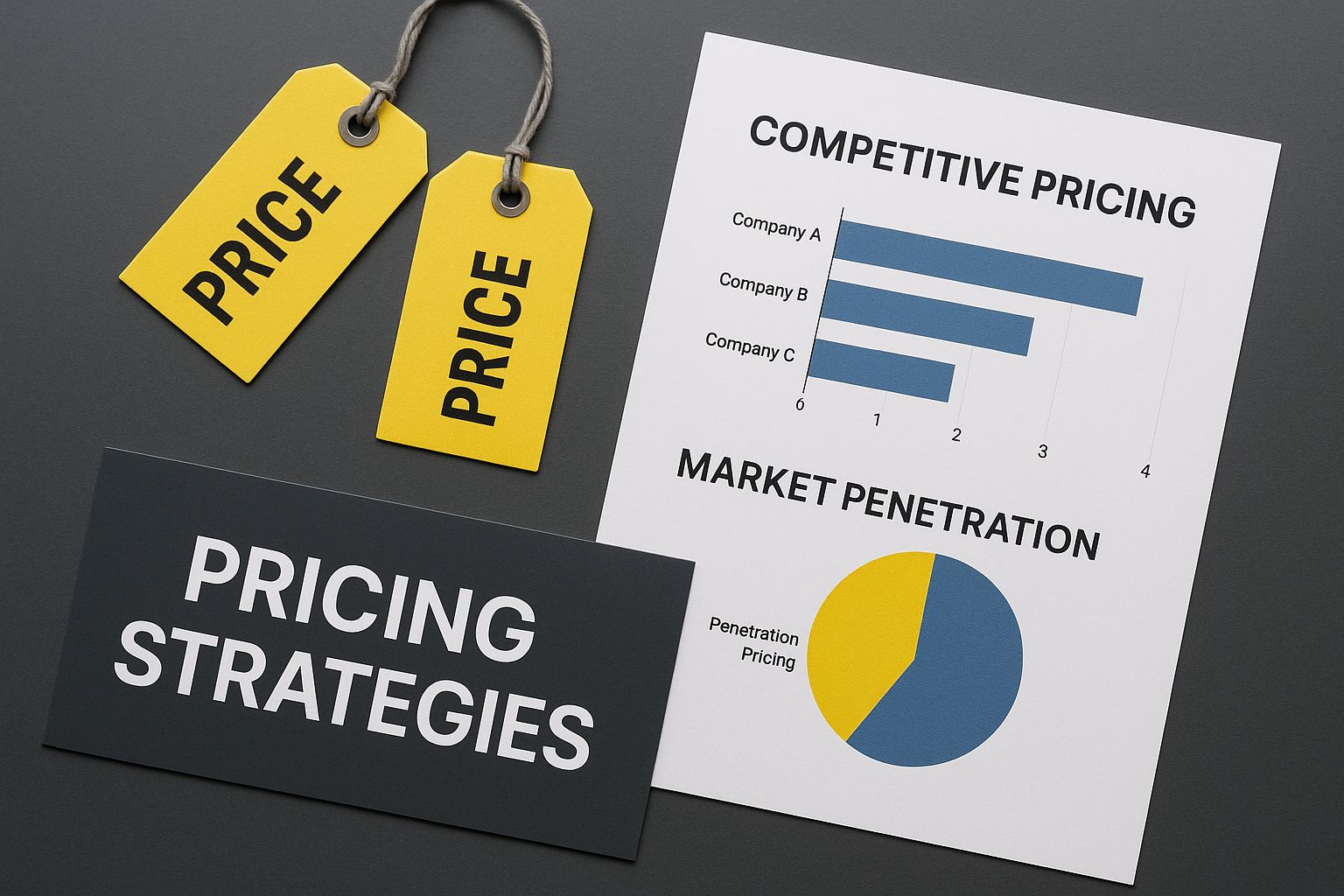
This infographic visually represents various competitor pricing strategies using metaphors of price tags and lists. It highlights the importance of understanding different pricing models, such as premium pricing, competitive pricing, and value pricing. Identifying these models helps you develop a pricing strategy aligned with your brand and target audience.
To help you analyze your competitors, let's look at a helpful framework. The table below outlines key factors to consider when comparing your product strategy to your competitors.
Competitor Product Strategy Comparison Framework: A structured method to compare and evaluate competitor product offerings against your own
| Analysis Factor | Your Business | Competitor A | Competitor B | Competitor C | Opportunity Gap |
|---|---|---|---|---|---|
| Product Categories | Clothing, Accessories, Home Goods | Clothing, Accessories | Clothing | Clothing, Shoes, Accessories | Home Goods (potential expansion for Competitors A, B, and C) |
| Unique Features | Sustainable Materials, Personalized Recommendations | Fast Fashion, Trend-Setting Designs | Basic Apparel, Low Prices | Wide Selection, International Shipping | Focus on ethical and personalized offerings differentiates "Your Business" |
| Target Customer | Environmentally Conscious, Millennial/Gen Z | Fashion-Forward, Younger Demographics | Budget-Conscious Shoppers | Global Customer Base | "Your Business" caters to a niche market |
| Pricing Strategy | Premium Pricing | Competitive Pricing | Value Pricing | Competitive Pricing | "Your Business" justifies higher prices through sustainability |
This comparison highlights potential areas where "Your Business" can capitalize on market gaps. For example, while competitors focus on fast fashion or low prices, "Your Business" can emphasize its unique selling proposition of sustainable materials and personalized recommendations.
Identifying Untapped Market Opportunities
One of the most valuable outcomes of competitive analysis is uncovering untapped market opportunities. Analyzing gaps in competitor offerings reveals unmet customer needs. This allows you to develop products or services that address these needs and set your business apart.
For example, if none of your competitors offer eco-friendly packaging, this could be a significant differentiator for your brand. This targeted approach allows you to strategically position your products and connect with a specific customer base.
Evaluating Pricing and Promotional Tactics
Grasping competitor pricing is crucial for creating your own pricing strategy. This involves monitoring not only base product prices, but also discounts, bundles, and other promotional tactics.
How often do competitors run sales? Do they offer free shipping? Analyzing these tactics offers insights into competitor margins and their overall customer acquisition strategy. This analysis allows you to fine-tune your own pricing and promotions to stay competitive. You can explore Shopify performance optimization at Scale.
Turning Competitive Research Into Revenue Growth
The ultimate goal of ecommerce competitive analysis is converting insights into revenue growth. By analyzing bundling approaches, promotional calendars, and product positioning, you can identify opportunities to enhance your own strategies.
For example, if a competitor successfully uses product bundles to boost average order value, consider a similar tactic. This adaptable approach keeps you ahead of market changes and the competition. In turn, this strengthens your market presence and fuels revenue growth.
Reverse-Engineering Winning Digital Experiences
Your competitors' websites offer a wealth of information. Effective ecommerce competitive analysis goes beyond simply browsing their pages. Smart retailers dig deep to understand what really drives conversions. This involves carefully examining user journeys, conversion funnels, and the essential mobile experience.
Evaluating User Experience (UX)
Successful ecommerce businesses know a pretty website isn't enough. They focus on the UX elements that directly impact sales. This means analyzing navigation patterns. Can customers easily find what they need? Are product pages clear, concise, and persuasive? Most importantly, is the checkout process smooth and easy? Analyzing these factors helps optimize your site for sales, not just visits.
Deconstructing Conversion Funnels
A conversion funnel represents the steps a customer takes, from first discovering your product to making a purchase. Analyzing competitor funnels can reveal bottlenecks and areas for improvement in your own sales process. For example, a high cart abandonment rate might indicate checkout problems. This provides valuable insights for streamlining your own funnel and boosting conversions. Understanding different pricing models, like ecommerce subscription models, can also be beneficial.
Mobile-First Approach
Most online shopping happens on mobile devices. A seamless mobile experience is essential. When analyzing competitors, examine their mobile sites closely. Is navigation optimized for small screens? Do images load quickly? Is the checkout process mobile-friendly? Prioritizing mobile usability can significantly impact your conversion rates and revenue. This is especially important given the projected growth of ecommerce. The global market is expected to reach about $4.32 trillion by 2025, growing at a CAGR of 8.02% between 2025 and 2029. Learn more about ecommerce growth.
Mapping Content Strategy
Content is key for engaging customers. Analyzing competitor content strategies helps you understand what works for your target audience. What kind of content are they creating—blog posts, videos, or infographics? Where are they sharing it—social media or email? Understanding these elements helps you create a content strategy that attracts, engages, and converts your target customers. This ensures your content drives results.
Cracking the Code on Competitor Acquisition Channels

Understanding how competitors acquire customers is vital for ecommerce competitive analysis. This helps you discover patterns and opportunities to improve your own customer acquisition strategies. Let's explore how successful online retailers track and analyze their competitors.
Analyzing SEO Positioning and Content Strategies
Search Engine Optimization (SEO) is fundamental for organic customer acquisition. Examining competitor SEO strategies offers valuable insights. This includes analyzing their keyword targeting, backlink profiles, and how well their content performs.
Tools like SEMrush and Ahrefs can help with this research. Evaluating their content marketing, such as blog posts, articles, and videos, reveals what connects with their audience and how they build authority in their industry.
Evaluating Paid Advertising Approaches
Paid advertising is a key component of many ecommerce strategies. Analyzing competitor paid campaigns across platforms like Google Ads and social media offers important data.
This includes understanding the types of ads they use, who they target, and their estimated ad spend. Knowing how competitors invest their advertising budget allows you to benchmark your own efforts and spot potential opportunities. For instance, a competitor's significant investment in YouTube video ads could indicate a winning strategy.
Estimating Competitor Marketing Spend and Channel Focus
Pinpointing a competitor's exact marketing budget is difficult. However, careful analysis helps develop reasonable estimates. Examining the frequency and reach of their advertising campaigns informs these estimations.
This analysis also reveals competitor channel focus. Are they emphasizing social media, paid search, or email marketing? Understanding their focus helps benchmark your own strategies and identify potentially underutilized channels.
Monitoring Email Campaigns, Social Strategies, and Influencer Partnerships
Beyond SEO and paid advertising, successful ecommerce businesses leverage email marketing, social media, and influencer partnerships. Monitoring these channels reveals crucial information.
Consider how often competitors send emails, their social media engagement levels, and the influencers they work with. Analyzing these tactics uncovers what drives traffic and conversions for competitors, helping you refine your approach.
Identifying Underutilized Channels and Blind Spots
One of the most valuable outcomes of competitive analysis is identifying underutilized channels. Mapping competitor activity reveals areas where they underperform or are inactive. This represents a significant opportunity.
For example, if competitors aren't active on a particular social media platform or neglect email marketing, you can capitalize on these blind spots to reach new customers.
By consistently analyzing competitor acquisition channels, you gain a comprehensive understanding of the competitive landscape. This knowledge allows you to refine your strategies, optimize resource allocation, and drive more effective customer acquisition. Remember, competitive analysis is ongoing and should be part of your overall marketing strategy. You can learn more about Shopify analytics for marketing ROI to further improve your efforts.
Building Your Competitive Intelligence Tech Stack
The right tools can transform ecommerce competitive analysis from a tedious chore into a wellspring of valuable insights. Instead of endless manual checks, successful retailers use technology to automate their monitoring and maintain a competitive edge. This section explores practical tech solutions for a range of budgets and needs, helping you build a competitive intelligence system tailored to your business.
Automating Your Competitive Monitoring
Manually tracking every competitor change is inefficient and simply doesn't scale. This is where automated monitoring systems become essential. These tools constantly scan the web for changes in competitor websites, pricing, product offerings, and marketing campaigns. You receive alerts about important updates, eliminating the need for constant manual checks. For example, you'll receive a notification when a competitor launches a new product or adjusts their pricing. This real-time information empowers you to react swiftly to market shifts and stay ahead of the competition.
Specialized Tools for Ecommerce Competitive Analysis
Several tools are designed specifically for ecommerce competitive analysis, offering in-depth data on competitor pricing strategies, product launches, and promotional calendars. They offer a structured approach to competitive monitoring, preventing data overload. Some tools even analyze competitor advertising campaigns and SEO strategies, providing a comprehensive view of their marketing efforts. This detailed insight is invaluable for informed decision-making about your own product development, marketing, and pricing.
-
Pricing Trackers: These tools monitor competitor pricing, allowing you to identify trends and optimize your own pricing accordingly. They provide data on price fluctuations, enabling you to react to market changes and maintain competitive prices.
-
Product Monitoring Tools: Stay up-to-date on new product releases and changes from your competitors. These tools track updates to product descriptions, images, and availability, giving you a critical edge.
-
Promotional Calendar Trackers: Gain insights into competitor promotional strategies by tracking their sales, discounts, and special offers. These tools allow you to anticipate promotional periods and effectively plan your own marketing campaigns.
Integrating Competitive Intelligence Into Your Workflow
Leading brands don't treat competitive intelligence as a separate activity. They weave it directly into their decision-making processes. This means product teams, marketing teams, and sales teams all have easy access to competitor insights. This collaborative approach ensures everyone in the organization is working with the same information, leading to better decisions. This integration breaks down information silos and allows teams to respond effectively to competitive pressures. Check out our guide on How to master Shopify performance optimization.
Building Sustainable Competitive Monitoring
The ultimate goal is a sustainable competitive monitoring system that delivers valuable insights without consuming excessive time or resources. This requires selecting the right tools and seamlessly integrating them into your existing workflows. Start by clearly identifying your specific needs and budget. Then, choose tools that meet those needs without overwhelming your team with unnecessary data. By implementing a sustainable system, competitive intelligence becomes an integral part of your business strategy, driving continuous improvement and growth.
Turning Competitive Insights Into Revenue Growth
Collecting competitor data is only valuable when it fuels business growth. This means translating ecommerce competitive analysis into strategic advantages that directly impact your bottom line. This section explores proven frameworks for prioritizing insights based on revenue potential and how to implement them effectively.
Prioritizing Insights for Maximum Impact
Not all competitive insights are created equal. Some offer greater potential for revenue growth than others. Prioritization is key. Focus on insights that align with your business goals and have the highest likelihood of boosting revenue.
For example, if a large segment of your target market shops on mobile, discovering a competitor's weakness in mobile optimization presents a significant opportunity. This focused approach maximizes the return on your analysis efforts.
Additionally, consider the feasibility of implementing changes based on your insights. A brilliant strategy is useless without the resources to execute it. Prioritize changes you can realistically implement within your budget and timeframe.
Developing Response Strategies to Competitor Moves
Ecommerce is a dynamic environment. Competitors constantly adjust their price positioning, product innovation, and marketing tactics. Successful retailers develop flexible response strategies to counter these moves.
This might involve matching a competitor's price drop on a key product, launching a new feature to counter a competitor's innovation, or increasing marketing spend where a competitor is gaining traction. This proactive approach helps maintain your competitive edge and adapt to market changes quickly.
Learning From Success Stories
Examining case studies of brands that have capitalized on competitor weaknesses offers valuable lessons. For example, a brand might have noticed a competitor neglecting a specific customer segment. They then successfully targeted that segment with tailored products and marketing.
These real-world examples illustrate how systematic competitive analysis drives sustainable growth. They demonstrate how to turn competitive intelligence into actionable strategies, not just theoretical exercises.
Integrating Competitive Intelligence Into Decision-Making
To maximize the value of ecommerce competitive analysis, integrate it into core business processes. This includes product development, marketing planning, and pricing decisions.
For example, use competitor pricing data to inform your own pricing strategy. Use competitor marketing channel insights to guide your marketing efforts. Learn more in our article about How to master Shopify analytics for marketing ROI.
This integration ensures that competitive intelligence informs every aspect of your business, leading to more effective decisions and, ultimately, measurable business impact. By consistently applying these principles, you can transform competitive insights into a powerful engine for revenue growth and long-term success.
Ready to take your Shopify store to the next level? E-commerce Dev Group offers expert Shopify design, development, and support services tailored to your business needs. From store design and app integration to performance optimization and 24/7 support, we help you thrive in the competitive ecommerce landscape. Visit https://scaleshopify.com today to learn more and unlock your online store’s full potential.
