


Ecommerce Platform Showdown: Finding Your Perfect Match
Choosing the right ecommerce platform is crucial for online success. This comparison of the top 5 platforms, including Shopify vs Wix for ecommerce, helps you make the right choice for 2025. We'll cover Shopify, Wix, BigCommerce, Squarespace, and WooCommerce, outlining the key features, pros, and cons of each to simplify your decision, whether you're launching a new store or migrating an existing one. Find the best platform for your budget and specific business needs.
1. Shopify
When comparing Shopify vs Wix for ecommerce, Shopify consistently emerges as a top contender. It's a leading all-in-one ecommerce platform explicitly designed for online selling, offering a complete solution for building, managing, and scaling your online store. Whether you're a seasoned entrepreneur or just starting out, Shopify provides robust features for inventory management, payment processing, and shipping, catering to businesses of all sizes with tiered pricing plans, numerous integration options, and a vast app marketplace to extend functionality. Shopify is renowned for its user-friendly interface, powerful commerce features, excellent customer support, and mobile-responsive themes.

For established Shopify merchants, Shopify Plus offers enterprise-grade solutions for high-volume businesses. E-commerce and IT managers will appreciate the platform's stability and security, while marketing and brand managers can leverage the built-in marketing tools, including SEO features, discount codes, and abandoned cart recovery. Business owners and entrepreneurs benefit from the streamlined setup and ease of use, allowing them to focus on growing their business. Learn more about Shopify and explore the extensive resources available.
Shopify's comprehensive inventory management system allows you to easily manage product variants, track stock levels, and fulfill orders efficiently. Its extensive app store, boasting over 6,000 integrations, enables you to connect with various third-party tools and services, enhancing your store's functionality and automating key processes. You can also sell across multiple sales channels, including social media platforms and online marketplaces, expanding your reach and maximizing your sales potential. This multi-channel approach is particularly beneficial for scaling businesses and enterprise clients seeking Shopify Plus solutions.
Features:
- Dedicated ecommerce platform with over 100 professional themes
- Comprehensive inventory management system with product variants
- Built-in marketing tools including SEO features, discount codes, and abandoned cart recovery
- Extensive app store with 6,000+ integrations
- Multiple sales channels including social media and marketplaces
Pros:
- Purpose-built for ecommerce with advanced selling features, making it a strong choice in the Shopify vs Wix for ecommerce debate.
- Excellent scalability for growing businesses, particularly appealing to enterprise clients considering Shopify Plus.
- 24/7 customer support via chat, email, and phone.
- Secure, reliable hosting with 99.99% uptime.
Cons:
- Higher monthly costs compared to some competitors (starting at $29/month).
- Transaction fees unless using Shopify Payments.
- Limited customization on basic plans without coding knowledge.
- Content management features not as robust as dedicated CMS platforms, a point to consider when evaluating Shopify vs Wix for ecommerce, as Wix excels in this area.
Website: https://www.shopify.com/
Shopify earns its place on this list due to its robust ecommerce features, scalability, and dedicated support. While it may have higher upfront costs, the platform's powerful tools and focus on online selling make it a worthwhile investment for businesses serious about ecommerce success. When considering Shopify vs Wix for ecommerce, remember that Shopify’s strength lies in its dedicated approach to online selling. This focus makes it an excellent choice for businesses prioritizing growth and scalability in the competitive ecommerce landscape.
2. Wix
When comparing Shopify vs Wix for ecommerce, Wix stands out as a beginner-friendly option. It's primarily a website builder that has evolved to encompass ecommerce functionality, making it easy to create visually appealing online stores without needing coding skills. Wix eCommerce provides all the essential selling tools, including inventory management, secure checkout, and a variety of payment options. This platform is particularly well-suited for small businesses and entrepreneurs seeking attractive storefronts, simpler ecommerce needs, creative control, and lower initial costs. For established Shopify merchants considering a simpler secondary site or a quick launch for a new brand, Wix might be an appealing option. Learn more about Wix
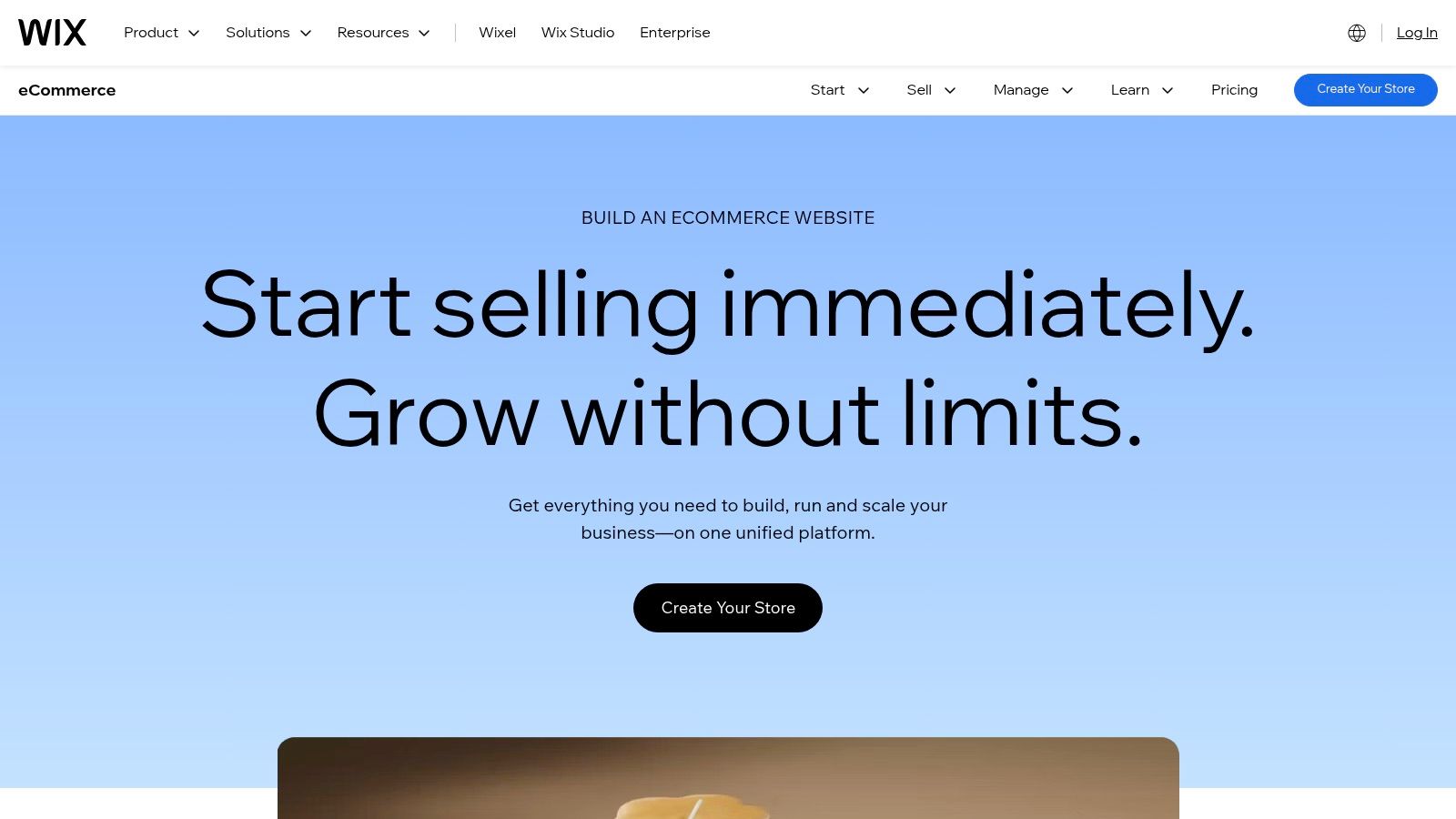
Wix's drag-and-drop interface, coupled with over 800 designer templates, simplifies store setup significantly. Its AI-powered Wix ADI (Artificial Design Intelligence) can even generate a basic store framework in minutes, further accelerating the launch process. Built-in SEO tools and marketing features help drive traffic to your store, while mobile optimization ensures a seamless shopping experience across all devices. Furthermore, the Wix App Market offers hundreds of integrations to extend functionality, though the selection of specialized ecommerce apps is less extensive than Shopify’s.
For entrepreneurs and smaller businesses, Wix's affordability is a key advantage. Ecommerce plans start at $23/month, presenting a lower barrier to entry compared to Shopify. This makes Wix a potentially attractive option for businesses exploring ecommerce or those operating on a tighter budget. The platform also boasts no transaction fees on any plan, maximizing your profit margins. For brand managers and marketing teams, the intuitive visual editor allows for superior design flexibility, enabling the creation of highly branded and engaging online experiences.
However, Wix's simplicity comes with trade-offs. Compared to dedicated ecommerce platforms like Shopify, Wix offers fewer advanced ecommerce features, making it less suitable for high-volume stores or businesses with complex requirements. Its scalability is also more limited, which could become an issue as your business grows. A significant limitation to consider, particularly for established Shopify merchants accustomed to platform flexibility, is the inability to change templates after the site has been created. This requires careful planning from the outset and potentially limits long-term design evolution. Finally, while the app market offers numerous integrations, the selection of specialized ecommerce tools is less extensive than Shopify’s, which may limit options for enterprise clients seeking Shopify Plus level solutions. E-commerce and IT managers should carefully evaluate these limitations against their current and future needs when considering Wix as a platform.
3. BigCommerce
When comparing Shopify vs Wix for ecommerce, BigCommerce often emerges as a powerful alternative, particularly for medium to large businesses seeking a robust and scalable solution. While Shopify and Wix cater to a broader range of users, including beginners, BigCommerce focuses on delivering enterprise-grade features without the enterprise-level price tag. This platform stands out for its comprehensive built-in functionality, minimizing the need for third-party apps that can complicate your tech stack and increase costs. Learn more about BigCommerce as a potential alternative for scaling your existing Shopify store.
BigCommerce excels in several key areas that make it a strong contender in the Shopify vs Wix for ecommerce debate, especially for established businesses. Its powerful multi-channel selling capabilities allow you to seamlessly integrate and manage sales across various marketplaces and social platforms, maximizing your reach and revenue potential. Furthermore, its robust B2B and wholesale features provide tools specifically designed for complex pricing structures, customer groups, and order management, something often lacking in more basic platforms like Wix. If you're looking for a platform ready to handle the complexities of international commerce, BigCommerce offers built-in multi-currency support and compatibility with numerous international payment gateways.
One of BigCommerce's biggest advantages is the wealth of features included in all its plans. Features like product ratings and reviews, faceted search, and advanced SEO tools are available from the start, providing immediate value and reducing the need for costly add-ons. This focus on built-in functionality translates into a more streamlined experience and potentially lower overall costs compared to relying heavily on third-party apps within Shopify or Wix. This also extends to unlimited products, file storage, and bandwidth across all plans, allowing for significant growth without incurring additional fees in these crucial areas.
For technically inclined users, BigCommerce shines with its exceptional API capabilities and developer tools. This provides immense flexibility for customizations, integrations, and building headless commerce experiences. This is a critical consideration for established Shopify merchants and enterprise clients seeking a highly customizable and scalable solution.
Pros:
- More built-in features than competitors: Reduces reliance on apps and simplifies store management.
- No transaction fees on any plan: A significant cost saving, especially for high-volume businesses.
- Superior B2B and wholesale capabilities: Catered to complex business needs and high-value transactions.
- Excellent API capabilities and developer tools: Offers flexibility for customization and headless commerce.
Cons:
- Steeper learning curve for beginners: The extensive feature set can be overwhelming for new users.
- Fewer theme options than Shopify: While BigCommerce offers around 12 free themes and 100+ premium themes, the selection is smaller than Shopify's.
- Annual sales thresholds may force plan upgrades: Rapid growth can trigger automatic upgrades to higher-priced plans.
- Less intuitive interface compared to Wix or Shopify: Navigating the platform may require more time and effort.
Website: https://www.bigcommerce.com/
While BigCommerce may present a steeper learning curve compared to the more user-friendly interfaces of Shopify or Wix, its powerful features, comprehensive built-in functionality, and focus on scalability make it a compelling choice for businesses looking to grow and manage complex ecommerce operations. This platform is particularly well-suited for those prioritizing B2B functionality, multi-channel selling, and international expansion. Therefore, when evaluating Shopify vs Wix for ecommerce, particularly from the perspective of an established Shopify merchant looking to scale or an enterprise-level client, BigCommerce definitely deserves serious consideration.
4. Squarespace
When comparing Shopify vs Wix for ecommerce, Squarespace often emerges as a compelling alternative, particularly for businesses prioritizing aesthetics and a seamless brand experience. While not as robust in pure ecommerce features as Shopify or as flexible as Wix, Squarespace shines in its ability to create visually stunning online stores with minimal effort. It offers a streamlined, all-in-one platform ideal for creative professionals, artists, and small businesses with limited product catalogs or a strong focus on content marketing alongside commerce. Think of it as the elegant, design-focused cousin in the ecommerce platform family.

Squarespace's award-winning designer templates are optimized for mobile and require no coding knowledge to customize. This makes setting up a professional-looking online store incredibly fast and straightforward, even for beginners. Built-in features like a tax calculator, shipping rate configurator, integrated email marketing, and social media tools further simplify the process of running your online business. For businesses with a physical presence, Squarespace also offers a Point of Sale (POS) system, facilitating seamless integration between online and offline sales.
For established Shopify merchants considering a platform switch, understanding the key differences is crucial. While Shopify excels in its extensive app ecosystem and robust ecommerce functionalities catering to complex businesses, Squarespace prioritizes simplicity and design. If your business prioritizes brand image and a clean, modern aesthetic, and you're not dealing with a vast and complex inventory, migrating to Squarespace could be a viable option. For businesses already using Wix, Squarespace offers a more curated and polished design experience, though with less flexibility in customization.
Features:
- Award-winning designer templates optimized for mobile
- Built-in tax calculator and shipping rate configurator
- Integrated email marketing and social media tools
- Point of Sale (POS) system for in-person selling
- Content-focused features including blogging and portfolios
Pros:
- Superior design aesthetics and visual presentation
- All-in-one solution with no need for plugins
- Strong content marketing capabilities alongside commerce
- Simplified pricing structure with no transaction fees
Cons:
- More limited ecommerce features compared to dedicated platforms like Shopify
- Fewer payment gateway options (primarily Stripe and PayPal)
- Less customization flexibility than Wix's drag-and-drop system
- More challenging for complex stores with large inventories
Website: https://www.squarespace.com/ecommerce-website
Squarespace earns its place on this list by offering a distinct value proposition: uncompromising design and streamlined simplicity. While it might not be the ideal solution for every ecommerce business, particularly those with complex needs or large inventories, Squarespace provides a compelling alternative for businesses prioritizing aesthetics and ease of use in their online presence. Especially when evaluating Shopify vs Wix for ecommerce, considering Squarespace broadens the perspective and offers a solution tailored to specific business needs and priorities.
5. WooCommerce
When comparing Shopify vs Wix for ecommerce, WooCommerce often emerges as a powerful alternative, especially for those prioritizing control and flexibility. WooCommerce is an open-source ecommerce plugin for WordPress that transforms any existing or new WordPress website into a fully functional online store. Unlike hosted solutions like Shopify and Wix, WooCommerce gives you complete ownership and customization control. This power, however, comes with the responsibility of managing your own hosting, security, and maintenance. Powering approximately 28% of all online stores, WooCommerce offers extensive flexibility through thousands of extensions and themes, making it a compelling option for specific business needs. It’s ideal for businesses already leveraging WordPress, those requiring unique customizations beyond the scope of Shopify or Wix, or merchants who prioritize ownership and control over the convenience of a fully hosted platform.
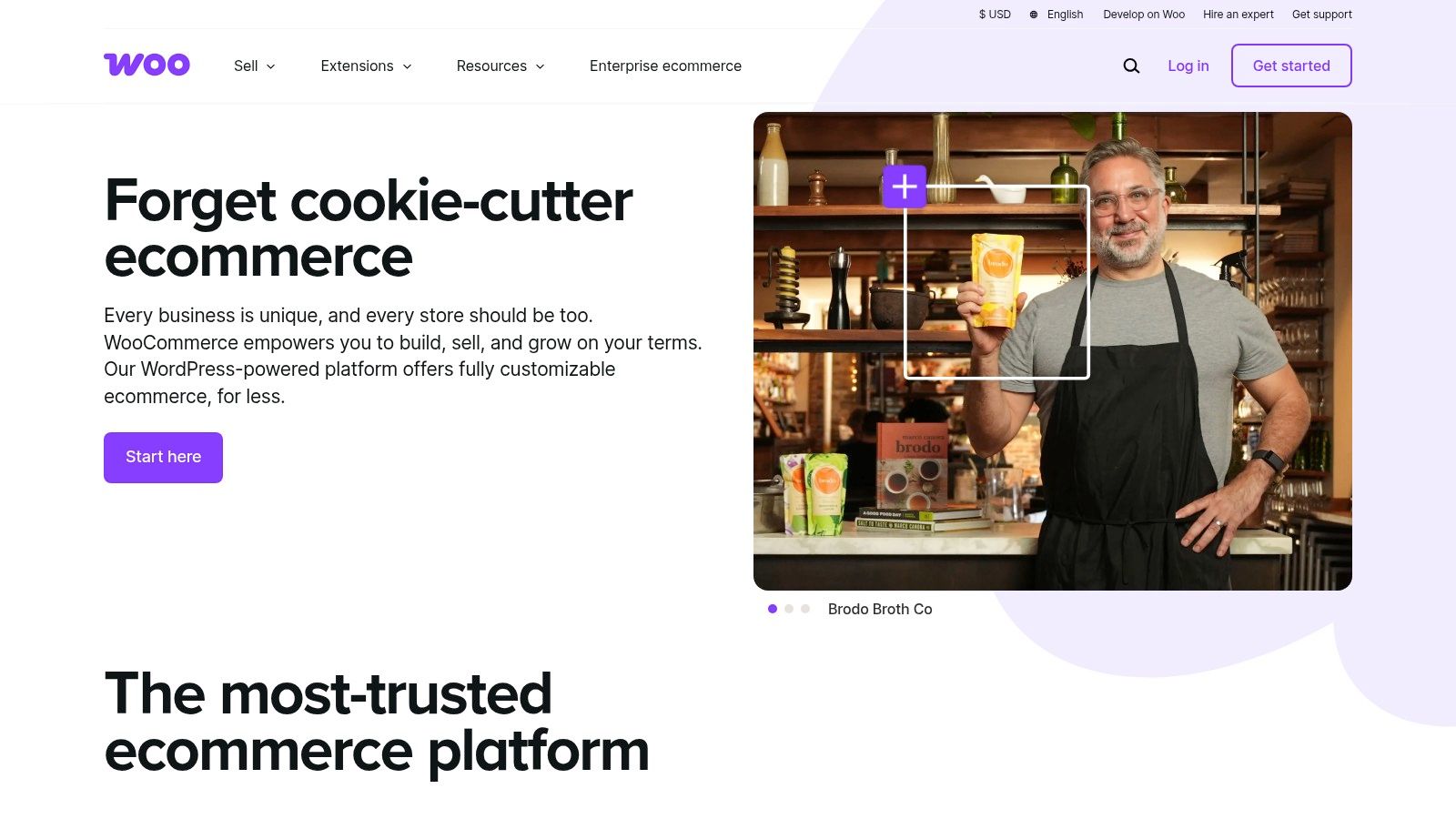
For established Shopify merchants considering a migration, WooCommerce presents a compelling case for increased control, though it requires a more hands-on approach. While Shopify offers a streamlined, all-in-one experience, WooCommerce allows for granular control over every aspect of your store, from design and functionality to data management. This granular control can be particularly attractive to e-commerce and IT managers seeking greater flexibility and customization options. For businesses already invested in the WordPress ecosystem, integrating WooCommerce is a natural progression for expanding into online sales. It leverages the familiar WordPress interface and integrates seamlessly with existing content marketing efforts.
WooCommerce offers a unique pricing model. There are no mandatory monthly fees like Shopify or Wix. Instead, you’ll need to budget for web hosting (ranging from a few dollars to hundreds per month depending on your needs), a domain name (around $10-20 annually), and any premium extensions or themes you choose to utilize. While the core WooCommerce plugin is free, many advanced features are offered via paid extensions, which can add to the overall cost. This makes WooCommerce potentially the most cost-effective solution for technically savvy users who can manage the technical aspects themselves, minimizing the need for expensive developer support. However, for non-technical users, the cost of hiring developers for customization and maintenance can potentially exceed the monthly fees of hosted platforms like Shopify or Wix.
Features:
- Complete Customization: Access to the source code allows for limitless customization.
- Extensive Extensions: Thousands of extensions and WordPress themes provide unparalleled functionality.
- Product Variety: Supports physical products, digital downloads, and subscriptions.
- WordPress Integration: Seamless integration with the WordPress content management system for enhanced content marketing capabilities.
- No Mandatory Fees: No monthly fees for the core platform, only hosting and optional extensions.
Pros:
- Cost-Effective (Potentially): Can be the most affordable solution for technical users.
- Unmatched Flexibility: Offers unparalleled customization and control.
- Full Ownership: You own your store and data.
- Seamless WordPress Integration: Leverages the power and flexibility of the WordPress ecosystem.
Cons:
- Technical Expertise Required: Requires technical knowledge or hiring developers.
- Self-Hosting Responsibilities: You are responsible for security, backups, and updates.
- Potential for Higher Long-Term Costs: Extensions and developer fees can add up.
- Decentralized Support: Relies on community and developer support rather than a centralized system.
Website: https://woocommerce.com/
For enterprise clients and Shopify Plus users evaluating platforms, WooCommerce presents a viable alternative for those seeking maximum control and customization. However, the increased technical requirements and the need for ongoing maintenance should be carefully considered against the convenience and comprehensive support offered by Shopify Plus. If you prioritize ownership, flexibility, and deep integration with WordPress, WooCommerce offers a compelling alternative in the Shopify vs Wix for ecommerce debate.
Ecommerce Platform Feature Comparison
| Platform | Core Features / Unique Selling Points ✨ | User Experience / Quality ★★★★☆ | Value Proposition 💰 | Target Audience 👥 | Price Point 💰 |
|---|---|---|---|---|---|
| Shopify | 100+ themes, 6,000+ app integrations, multi-channel selling 🏆 | Easy to use, 24/7 support, mobile-ready | Scalable, robust features for all business sizes | Growing businesses, pros 👥 | From $29/mo, transaction fees |
| Wix | Drag & drop builder, AI design, strong website tools ✨ | Intuitive, flexible design, no transaction fees | Affordable, best for simple stores | Small biz, beginners, creatives 👥 | From $23/mo, no fees |
| BigCommerce | Built-in B2B, multi-currency, unlimited products 🏆 | Powerful but steeper learning curve | Feature-rich, no transaction fees | Medium-large businesses, devs 👥 | Tiered, no transaction fees |
| Squarespace | Award-winning design, POS, content marketing focus ✨ | Visually stunning, simple UI | All-in-one, no transaction fees | Creatives, small stores, artists 👥 | Flat pricing, no fees |
| WooCommerce | Open-source, full custom control, thousands of extensions ✨ | Flexible but requires tech skills | Low cost for tech-savvy, full store ownership | WordPress users, developers 👥 | Free plugin, hosting costs |
Ready to Launch? Making the Final Decision
Choosing the right platform between Shopify vs Wix for ecommerce, or even considering alternatives like BigCommerce, Squarespace, and WooCommerce, can feel overwhelming. We've explored the key features of each, highlighting their strengths and weaknesses to help you make an informed decision. Remember, the best platform depends entirely on your specific business requirements. Think about factors like scalability, budget, technical expertise, and the level of customization you need.
Setting up your store is a crucial first step. For a comprehensive guide on launching your Shopify store, check out this helpful resource: how to launch a Shopify store from Wand Websites, How to Launch Shopify Store: The Complete Success Blueprint.
Choosing between Shopify vs Wix for ecommerce often comes down to balancing ease of use with advanced functionality. Wix excels in simplicity, making it ideal for beginners. However, Shopify’s robust features and app ecosystem cater to businesses anticipating significant growth. No matter your choice, meticulous planning and research will set you up for success.
Your ecommerce journey is just beginning, and the right platform is your launchpad. For expert guidance on maximizing your Shopify store's potential, consider partnering with E-commerce Dev Group. Their specialized Shopify design, development, and support services can help you navigate the complexities of Shopify vs Wix for ecommerce and build a thriving online business.
