


Why Link Building Matters for Your Ecommerce Success
For ecommerce businesses, link building is essential. It's more than just an SEO tactic; it's a core component of overall success. A solid link building strategy can significantly impact your organic traffic, build customer trust, and ultimately, boost conversions. This translates to a healthier bottom line for your business.
How Backlinks Influence Customer Behavior
Quality backlinks from authoritative websites serve as valuable endorsements for your online store. It's similar to a friend recommending a product they love. These endorsements increase brand credibility, making potential customers more likely to trust your brand and make a purchase. Strong backlinks also improve your search engine rankings, increasing online visibility and driving more organic traffic to your product pages.
The Measurable Impact of Strategic Backlinks
The positive impact of link building is measurable in several key ways. Increased organic traffic often leads to reduced customer acquisition costs. By attracting customers through organic search instead of paid advertising, you'll save money on marketing. Improved brand trust fosters customer loyalty, leading to a higher customer lifetime value. Loyal customers are more likely to make repeat purchases, generating greater revenue over the long term. For more about site structure, check out this resource on how to master your Shopify store's site structure.
Tailored Approaches for Different Ecommerce Models
Different ecommerce business models require different link building strategies. A niche retailer might focus on building relationships with bloggers in their specific industry. A larger marketplace might prioritize getting links from major publications. No matter your business model, a strategic approach to link building is essential for sustainable growth. If you’re just starting out, here's a helpful introduction to link building for ecommerce.
Debunking the Myths and Setting Realistic Expectations
One common myth about link building is that it's a quick fix. Building a strong backlink profile takes consistent time and effort. It’s become a crucial and often expensive endeavor for ecommerce websites. Around 46% of SEO experts spend about $10,000 annually on link building, while 22% spend between $1,000 and $2,500 each year. Acquiring a single high-value link can cost $1,000 or more, reflecting the increasing value placed on quality links. This rising cost is reflected in the fact that more than 61% of digital marketers believe link building is getting more expensive. Creating high-quality content that naturally attracts links is an effective long-term strategy, particularly for ecommerce sites looking to boost online visibility and credibility. For more statistics, see this resource on link building stats. Setting realistic expectations and focusing on acquiring high-quality links will provide the greatest long-term benefits.
Decoding Your Current Backlink Landscape

Before starting any new link-building initiatives for your ecommerce website, it's essential to understand your current backlink profile. It's like checking your map before a road trip. This overview will guide you through a practical audit process, offering specific insights for ecommerce businesses.
Identifying and Addressing Toxic Backlinks
Just as a few bad apples can spoil the whole barrel, toxic backlinks can damage your website's reputation and search engine rankings. These are typically low-quality links from spammy or irrelevant websites. Identifying them requires using backlink analysis tools like Ahrefs or SEMrush to review your link profile. This helps pinpoint any harmful links that might be holding you back.
Once identified, you can disavow these toxic backlinks through Google Search Console. This tells Google you don't endorse these links and protects your website from potential penalties.
Discovering Your Most Valuable Link Sources
Not all backlinks are equal. Some hold more weight and authority than others. Discovering your most valuable links means analyzing metrics like Domain Authority (DA) and referring domain traffic. These metrics reveal the strength and influence of the linking website. High DA links from relevant, high-traffic websites can significantly boost your own site's authority.
By identifying these top-tier links, you can focus on similar partnerships with other authoritative sites in your industry.
Benchmarking Against Competitors
Examining your competitors' backlink profiles is vital for successful link building. This helps you uncover potential opportunities and track your progress. Analyzing their backlinks shows which sites link to them, allowing you to explore similar links for your site.
This might include reaching out to websites linking to multiple competitors, indicating a strong interest in your niche. If many of your competitors receive links from a specific industry blog, that blog might also be interested in your content.
Conducting a Comprehensive Backlink Audit
A thorough backlink audit is a systematic process that analyzes your link profile, identifying both valuable and toxic links, and reveals actionable opportunities. Use tools like Ahrefs or SEMrush to gather in-depth data on your backlink profile. Export and categorize this data based on quality, relevance, and source.
To help you better understand which metrics to track, we’ve put together a table outlining the key backlink profile metrics ecommerce site owners should monitor regularly.
Essential Link Profile Metrics for Ecommerce Sites
| Metric | What It Measures | Ideal Range for Ecommerce | How to Improve |
|---|---|---|---|
| Domain Authority (DA) | Strength and authority of a website | 50+ | Earn high-quality backlinks from authoritative websites |
| Referring Domain Traffic | Amount of traffic a referring domain receives | High traffic volume | Build links from websites with significant organic traffic |
| Toxic Backlinks | Harmful backlinks from spammy or irrelevant websites | As close to zero as possible | Disavow toxic backlinks through Google Search Console |
| Anchor Text Distribution | Diversity of anchor text used in backlinks | Natural mix of branded, generic, and keyword-rich anchors | Diversify anchor text when building new backlinks |
This table highlights the importance of monitoring several key metrics, including DA, referring domain traffic, toxic backlinks, and anchor text distribution. By regularly analyzing and improving these metrics, ecommerce businesses can strengthen their backlink profile and improve their search engine rankings.
Analyzing key metrics like these gives you a solid understanding of your backlink landscape. From there, you can take action to improve your profile by focusing on high-value links and disavowing toxic ones, ultimately building a strong foundation for your ecommerce website.
Investing Wisely: Budgeting for Ecommerce Link Acquisition
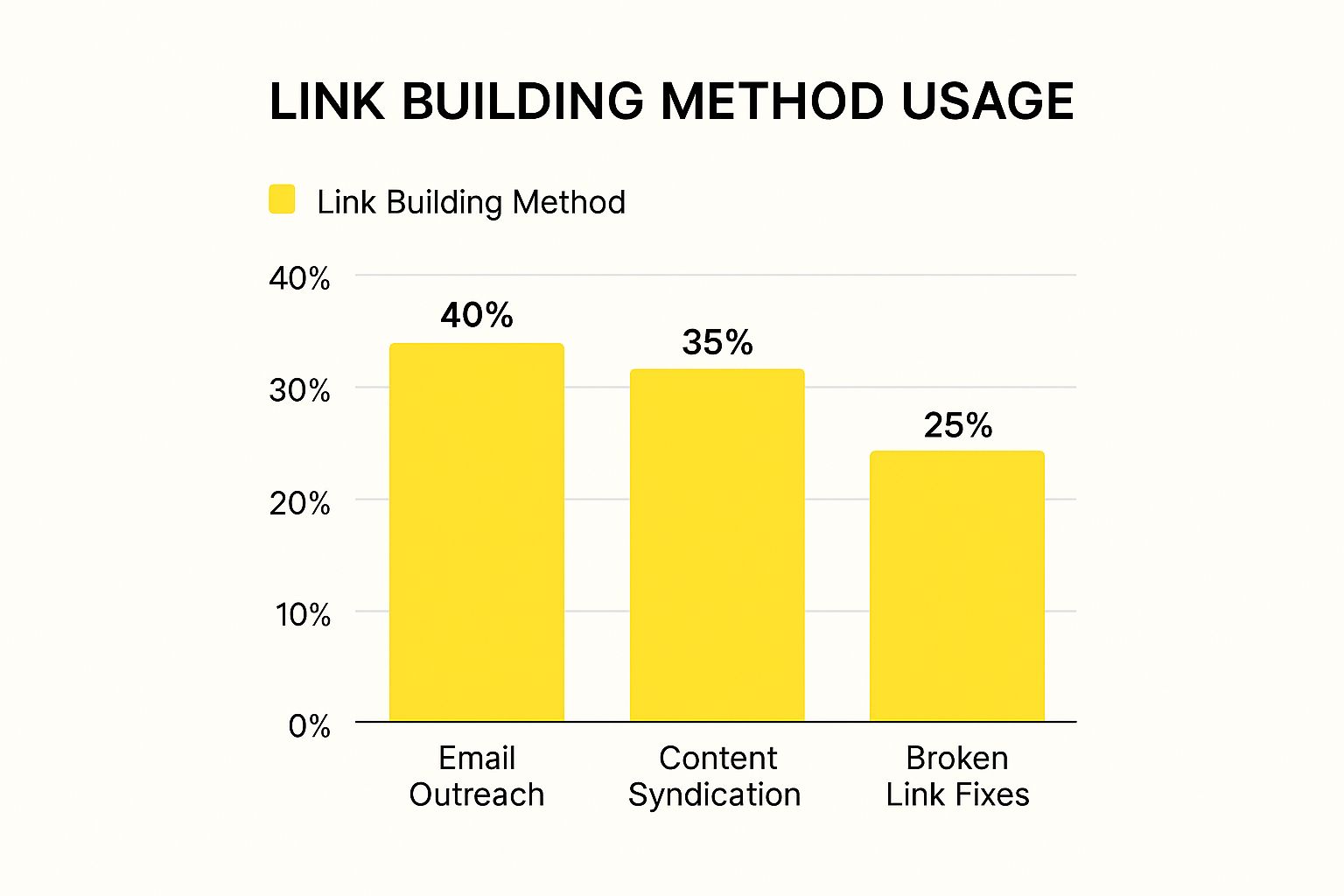
After understanding the importance of link building for ecommerce websites and assessing your current backlink profile, budgeting is the next critical step. This section explores the financial side of link acquisition to help you make smart investment decisions.
Determining Your Investment Level
How much you invest in link building should align with your overall business goals, your niche's competitiveness, and your product margins. A small ecommerce business with lower margins might allocate a smaller budget percentage to link building than a larger enterprise.
A business with high-profit margins might invest more aggressively. The return on each sale can justify a higher link building spend. However, even small businesses should prioritize link building. It's a long-term investment that pays off over time.
Calculating Potential ROI
Calculating potential ROI from link building involves estimating the increase in organic traffic, conversions, and revenue that backlinks can generate. This requires analyzing your website's current performance. You also need realistic projections of how better search rankings will impact your profits.
For example, imagine a high-quality backlink leads to a 5% increase in organic traffic. If your average order value is $100, you can estimate the potential revenue from that link. This helps justify the link's cost and demonstrates link building's value.
Balancing In-House vs. Agency Partnerships
You can manage link building in-house, outsource to an agency, or use a hybrid approach. In-house teams offer more control but require specialized skills and resources. Agencies provide expertise and scale, but can be more expensive.
A hybrid approach, combining in-house strategy with agency execution, is often the most effective. This is especially helpful for mid-sized businesses with in-house marketing teams. An agency can handle some of the more tedious link building tasks.
Recognizing Warning Signs and Adjusting Your Strategy
Continuously monitor your link building efforts and adjust your strategy as needed. A sudden drop in rankings or referral traffic could signal a problem with your backlink profile or a search engine algorithm change. This requires a thorough analysis and potential tactical adjustments.
For instance, if you rely heavily on guest posting and see declining results, diversify your approach. Explore methods like broken link building or outreach to industry influencers. Regarding budget and future projections, link building is a significant investment for ecommerce businesses. On average, about 28% of SEO budgets go to link building, with 46.5% of businesses spending between $5,000 and $10,000 monthly. Looking ahead, over 40% of businesses expect link building costs to increase. More than 85% of marketers agree that link building will remain crucial for SEO success in the coming years, making it a long-term strategy. Learn more at LoopEx Digital.
Visualizing Budget Allocation: A Data Chart
The following data chart shows how different-sized ecommerce businesses typically allocate their link building budgets.
| Activity | Small Stores (<$1M annual revenue) | Mid-sized Stores ($1M-$10M) | Enterprise Ecommerce (>$10M) |
|---|---|---|---|
| Content Creation | 50% | 40% | 30% |
| Outreach & Relationship Building | 30% | 35% | 40% |
| Tool & Software | 10% | 15% | 20% |
| Other (e.g., sponsored posts) | 10% | 10% | 10% |
This data chart reveals a shift in priorities as ecommerce businesses grow. Smaller stores focus on content creation, while larger enterprises invest more in outreach and tools like Semrush or Ahrefs. As your business grows, investing in more advanced tools becomes essential. This might include premium SEO software for competitor analysis, outreach automation, or backlink monitoring.
Creating Link-Worthy Content That Sells

Attracting high-quality backlinks is essential for strong ecommerce SEO. But your content shouldn't just attract links—it needs to drive sales, too. This means developing content that seamlessly integrates with your products and guides customers towards purchasing. This section explores content formats proven to earn backlinks and boost sales simultaneously.
Content Formats That Attract Backlinks and Drive Conversions
Smart online retailers know that link-worthy content is also a powerful sales tool. Here are a few effective content types to consider:
-
Interactive Buying Guides: These guides offer real value by helping customers make informed decisions. Imagine a furniture retailer creating an interactive guide to help customers choose the perfect sofa based on their room size and style. This kind of tool naturally attracts links from design blogs and home improvement sites while guiding customers toward specific product categories.
-
Original Research and Data-Driven Content: Original research provides unique insights that journalists and bloggers are always looking for. Publishing data-driven content positions your brand as an industry authority, attracting valuable backlinks and increasing customer trust. This makes your site a go-to resource, boosting both traffic and credibility.
-
Visual Content Showcasing Products in Context: High-quality images and videos that showcase your products in real-life settings can be incredibly engaging and shareable. This type of content can earn backlinks from design blogs, social media influencers, and other ecommerce sites. Plus, showing products in context helps customers visualize how those items fit into their own lives, encouraging them to buy.
You might be interested in: How to master your Shopify store's category structure.
Developing Dual-Purpose Content
The key to impactful content is creating assets that serve two purposes: attracting links and driving sales. Think of it as a two-sided coin. One side builds authority through backlinks, while the other converts visitors into paying customers.
For instance, a clothing retailer could publish a blog post about the latest fashion trends. Within the post, they can seamlessly link to product pages featuring items that match those trends. This not only provides valuable content that could attract links from fashion blogs, but also directly encourages potential customers to make a purchase.
Content Ideation, Production, and Promotion
A solid content strategy is essential for success. This includes:
-
Ideation: Brainstorm content topics that are relevant to both your products and your target audience. Focus on formats that resonate within your niche. Keyword research can help identify topics with high search volume and low competition.
-
Production: Create top-notch content with engaging visuals and clear calls to action that guide users towards your products. This might involve collaborating with designers, writers, and videographers.
-
Promotion: Promote your content across different channels, including social media, email marketing, and outreach to relevant publications and influencers. This helps broaden your reach and attract backlinks from authoritative sources.
By focusing on dual-purpose content, you can leverage link building to boost both your search rankings and your bottom line. This ensures your content investments build authority and contribute directly to your ecommerce success.
Outreach That Works: Building Relationships That Matter
Creating top-notch content is essential for link building, especially for ecommerce sites. But even the best content needs a strategy to get noticed. This is where outreach comes in – the process of connecting with relevant partners and building real relationships. It's not about spamming; it’s about mutually beneficial collaboration.
Crafting Personalized Pitches That Resonate
Generic outreach emails often go unread. The key to effective outreach is personalization. Think about it: you're much more likely to respond to an email that clearly understands your work and presents a specific, relevant opportunity. This targeted approach significantly improves your success rate. It means researching each potential partner and understanding their audience, content style, and previous partnerships.
Your pitch should emphasize the value for both parties. Explain how your content benefits their audience and offers something unique. Maybe you have exclusive data on a trending topic in their niche. Or perhaps you offer a fresh perspective on a challenge their readers face.
Addressing Ecommerce Outreach Concerns
Ecommerce outreach can encounter unique challenges. Some partners might hesitate to link to commercial websites, worried it seems promotional. Others may be reluctant to collaborate with even indirect competitors. Addressing these concerns head-on in your pitch builds trust. Emphasize the educational value of your content, showcasing practical advice and actionable insights, not just product promotion.
For instance, if you're contacting a review site, offer a sample product for an unbiased review. Reaching out to an industry blogger? Propose a guest post that answers a common reader question or provides helpful tips related to your product category.
Using Your Assets to Your Advantage
Ecommerce businesses have unique assets that can make outreach more compelling. Consider product access, exclusive data, customer insights, and special offers. These are resources many content creators lack.
Leverage these assets! Offering a free product trial to an influencer for review or sharing proprietary data with a journalist can greatly increase your chances of a backlink. This exclusive access positions your brand as a valuable partner, making your outreach more effective. Learn more in our article about how to master your Shopify store's blogs.
Building Long-Term Relationships
Outreach isn't just about a single backlink. It's about building lasting relationships with key players in your industry. This might involve regular communication, offering exclusive previews of new content, or providing ongoing product access for reviews and features. These interactions create a foundation for future collaborations and opportunities beyond link building.
Furthermore, strong relationships with publishers, influencers, and review sites can provide valuable feedback on your products and marketing strategies. This outside perspective helps identify areas for improvement and refine your approach to better serve your target audience. Ultimately, these relationships contribute not only to SEO, but also to the overall growth and success of your ecommerce business.
Technical Link Opportunities Only Ecommerce Sites Can Leverage
Ecommerce websites have a distinct advantage in link building. They can use technical strategies not available to other types of businesses, going beyond typical content marketing and outreach. Let's explore how to maximize these technical advantages to create a strong backlink profile for your online store.
Optimizing Product Feeds for Affiliate Programs
Product feeds, crucial for displaying your products on various platforms, also offer a valuable link building opportunity. Optimizing these feeds for affiliate programs makes it easy for affiliate marketers to link back to your product pages.
Providing clear product images, detailed descriptions, and competitive pricing within your feed encourages affiliates to promote your products. This naturally generates backlinks, expands your reach, and drives qualified traffic directly to your product pages.
Leveraging Structured Data for Enhanced Link Visibility
Structured data, a standardized format for providing information about a page, can significantly boost your link visibility. By using schema markup specifically for products, offers, and reviews, you give search engines like Google a clearer understanding of your content.
This can lead to rich snippets in search results, making your listings more attractive and increasing click-through rates. This indirectly contributes to higher rankings and attracts more organic backlinks.
Strategic Partnerships with Complementary Product Providers
Partnering with businesses that offer complementary products creates mutually beneficial link building opportunities. This involves finding businesses that serve the same target audience but don't directly compete with you.
For example, a furniture store could partner with a home decor business. Both can link to each other's websites, expanding their reach and building relevant backlinks. This cross-promotion introduces your brand to a broader, relevant audience and strengthens industry connections.
Utilizing Ecommerce-Specific Platforms
Ecommerce platforms offer unique backlink opportunities. These range from comparison shopping engines to online marketplaces. Here are some strategies:
-
Comparison Sites: Listing your products on sites like Google Shopping or PriceRunner automatically generates backlinks to your product pages. These links from trusted platforms signal authority to search engines and can boost your rankings.
-
Marketplaces: Platforms like Amazon, eBay, and Etsy offer backlink opportunities. Setting up storefronts often includes a link back to your main website, providing a valuable backlink and potentially driving significant traffic.
-
Review Aggregators: Encouraging customer reviews on platforms like Trustpilot or Yelp can also contribute to link building. Many of these platforms allow businesses to include a website link in their profile.
Preserving Link Equity Through Technical SEO
Maintaining a technically sound website is crucial for preserving link equity, especially for ecommerce sites with frequent product changes and seasonal offerings. Proper URL structure, internal linking architecture, and 301 redirect implementation become even more critical.
For instance, if a product is discontinued, a 301 redirect to a similar product page prevents broken links and preserves the SEO value of the original link.
Through these technical strategies, ecommerce sites can capitalize on their unique position to build a strong backlink profile and boost their online visibility. These opportunities offer a competitive edge, particularly for businesses looking to expand their reach and brand recognition.
Measuring What Matters: Tracking Link Building ROI
Building links for your ecommerce website takes significant time and resources. Accurately tracking your return on investment (ROI) is therefore essential. This section offers a framework for measuring the true business impact of link building, going beyond superficial metrics like link counts and domain authority.
Key Metrics for Ecommerce Link Building ROI
For online retailers, some metrics are more revealing than others. While Domain Authority (DA) and Referring Domains offer a general idea of your site's authority, they don't tell the whole story. Focus instead on metrics directly connected to revenue.
-
Organic Traffic to Product Pages: Monitor the rise in organic traffic specifically to your product pages. This shows whether your link building is attracting relevant traffic, crucial for connecting your efforts to sales.
-
Referral Traffic and Conversion Rates: Track referral traffic from acquired links. Critically, analyze its conversion rates. High conversion rates from referrals mean your links attract qualified leads. For instance, if a link from a review site brings 100 visitors and 10 buy something, that's a 10% conversion rate, proving its worth.
-
Revenue Generated from Specific Links: Connect revenue growth to specific link building activities. Use analytics platforms like Google Analytics to track conversions from different referral sources. This detailed method pinpoints which link types attract the most valuable customers.
Attributing Revenue to Link Building Efforts
Attributing revenue to link building can be tricky, but it's key to demonstrating ROI. Use proper tracking in your analytics platform. This could be tagging links with unique IDs or setting up conversion goals tied to specific referrals. This precise tracking directly correlates revenue with specific links and outreach campaigns.
Identifying High-Performing Links
Links aren't all equal. Some drive significant traffic and conversions, others contribute little. Identifying high-performers lets you repeat successful tactics. Analyze the data mentioned above to see which links consistently outperform others regarding traffic and conversions.
Improving Efficiency and Scaling Successful Tactics
Once you know which link building strategies deliver the highest ROI, scale those efforts systematically. This could mean more outreach to similar websites, creating content in proven formats, or expanding partnerships. This focused approach maximizes your link building investment by allocating resources where they generate the best return.
Adapting to Algorithm Changes While Maintaining Link Quality
Search engine algorithms change constantly. Regularly check your backlink profile and adapt your strategies. Stay up-to-date on algorithm updates and ensure your link building follows best practices. This proactive approach protects your site from penalties and maintains the long-term value of your links, ensuring your strategy stays effective despite evolving search landscapes.
Reporting and Demonstrating ROI to Stakeholders
Clear reporting is vital for showing the value of your link building. Create dashboards and reports that visualize key metrics and demonstrate the connection between link building and revenue. Show the impact on organic traffic, referral traffic, conversions, and ultimately, sales. This clear communication secures support for future link building investments and aligns with broader business goals.
Need help scaling your Shopify store with strong link building? E-commerce Dev Group provides expert Shopify design, development, and support to empower online businesses. Contact us to learn more about our solutions.
