


Why Most Ecommerce Sites Fail at SEO (And How to Win)
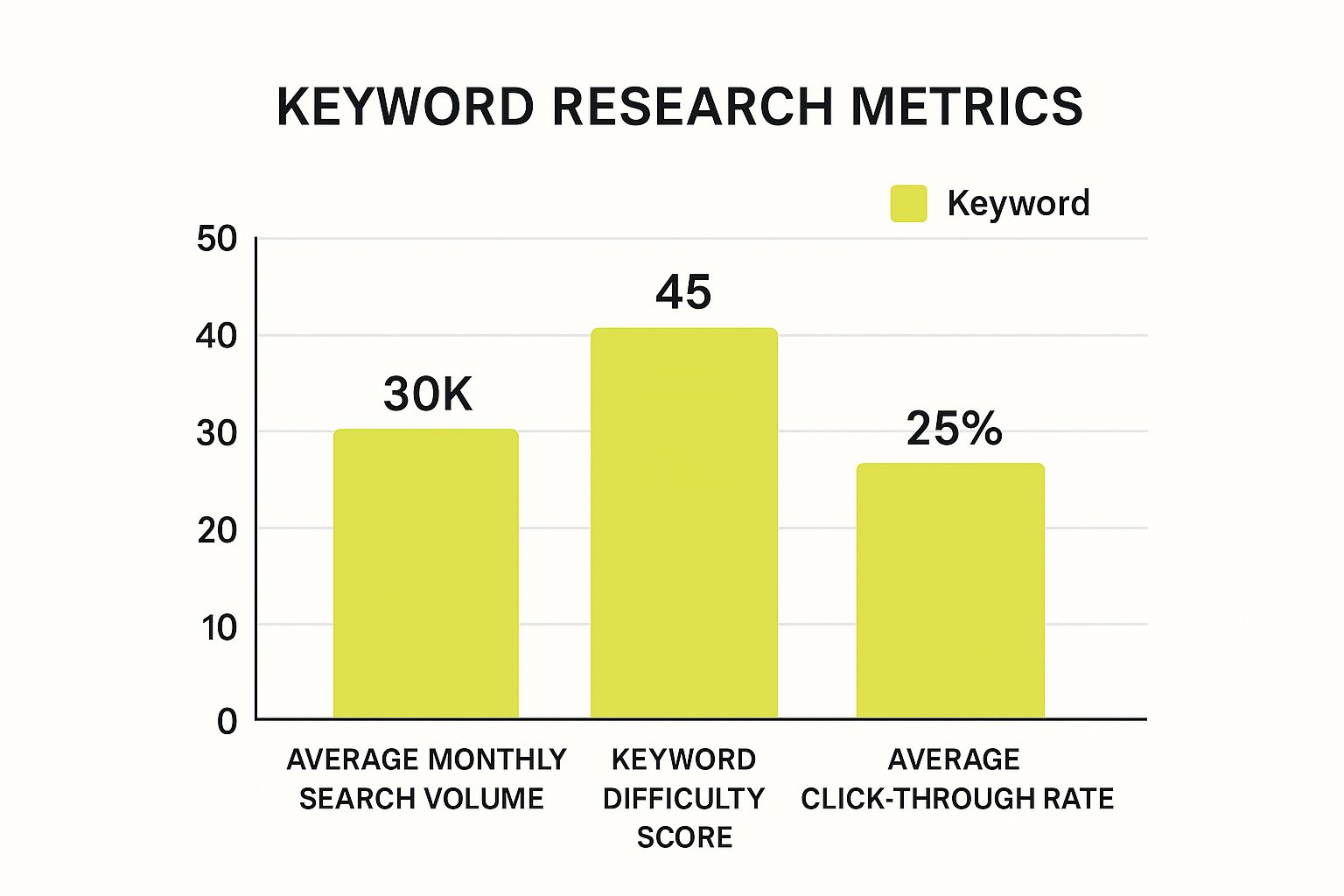
Ecommerce SEO can feel overwhelming. Many online stores struggle, while others thrive. This difference often comes down to understanding what really drives organic search success. Effective SEO for your ecommerce website requires a well-defined strategy, not random tactics.
The Common Pitfalls of Ecommerce SEO
Many ecommerce businesses make the mistake of treating SEO as an afterthought. They prioritize flashy designs and paid ads, overlooking the sustainable power of organic search. For example, ignoring keyword research for specific product categories can significantly limit visibility to potential customers.
Poor site architecture, like confusing navigation, hinders both user experience and search engine crawlers. This can hurt your rankings and make it hard for customers to find products.
Another major mistake is neglecting optimized product pages. Simply uploading product images and generic descriptions isn't enough. Each product page needs unique, compelling content targeting relevant keywords and answering customer questions. Think carefully crafted product titles, detailed descriptions, and high-quality images with descriptive alt text.
Even with optimized product pages, neglecting technical SEO can sabotage your efforts. Slow loading times, broken links, and mobile incompatibility can severely impact search visibility and conversion rates.
How to Win at Ecommerce SEO
Successful ecommerce SEO requires a holistic approach, starting with thorough keyword research. Identify the terms your target customers use and optimize your product pages and category pages accordingly. This means naturally incorporating relevant keywords into your content, not keyword stuffing.
For example, if you sell dog food, optimizing for specific breeds, dietary needs, or age ranges can attract highly qualified leads.
Beyond keywords, focus on a user-friendly website architecture that search engines can easily crawl. A clear, logical structure with categories and subcategories helps both users and search engines navigate your site.
Optimize product pages with high-quality images, detailed descriptions, and unique content that answers customer questions. This improves your site’s relevance for search engines and enhances the user experience, leading to higher conversion rates.
In 2024, global ecommerce revenue reached $4.12 trillion. SEO organic traffic directly influenced 23.6% of all online orders. This highlights the importance of search engine visibility for market share, especially with retail ecommerce sales projected to reach $6.33 trillion the same year—an 8.76% year-over-year increase. Find more statistics here: Exploding Topics SEO Statistics
This data emphasizes the need for a strong SEO strategy for ecommerce success. The following data chart visualizes the contribution of various traffic sources to ecommerce revenue:
[INFOGRAPHIC WILL BE PLACED HERE]
(This data chart shows the percentage each traffic source contributes to overall ecommerce revenue, including Organic Search, Paid Ads, Social Media, Email Marketing, and Referrals. It highlights the substantial role organic search plays, often outperforming other channels.)
This chart reveals a clear pattern: organic search consistently drives a significant portion of ecommerce revenue, although other channels contribute. This underscores the long-term benefits of investing in robust ecommerce SEO. This brings us to the next critical aspect: technical optimization.
Let's take a closer look at how different traffic sources impact revenue. The table below compares their contribution, conversion rate, and acquisition cost.
Impact of SEO on Ecommerce Revenue
| Traffic Source | Contribution to Revenue | Conversion Rate | Acquisition Cost |
|---|---|---|---|
| Organic Search | High | Medium | Low |
| Paid Ads | Medium | High | High |
| Social Media | Low | Low | Medium |
| Email Marketing | Medium | High | Low |
| Referrals | Low | Medium | Low |
This table summarizes the varying impact of different traffic sources. While paid ads can deliver high conversion rates, their high acquisition cost can impact profitability. Organic search offers a high contribution to revenue at a low acquisition cost, making it a valuable long-term strategy.
Technical SEO Foundations That Actually Move the Needle

Beyond keyword research and content creation, technical SEO is the backbone of any successful ecommerce website. It's the underlying infrastructure that supports all your other SEO efforts. Think of it as the foundation of a house: a weak foundation means everything else is unstable. Technical SEO involves optimizing your website’s architecture, server performance, and other technical elements to make it easier for search engines to find and understand.
Site Architecture: Creating a Seamless User Experience
A well-organized site architecture is essential for both user experience (UX) and SEO. It’s like a roadmap for both your customers and search engine crawlers. A clear structure allows search engines to easily crawl and index your product pages, while also helping customers quickly find what they’re looking for.
A logical hierarchy, with clear categories and subcategories, is key. Organize your products intuitively, much like a well-organized department store. Your goal should be a structure where users can find any product within a few clicks from the homepage. This not only improves UX but also signals the importance of different sections to search engines.
Read also: How to master site architecture
Page Speed: The Need for Speed in Ecommerce
Page speed is critical. A slow website leads to higher bounce rates, impacting conversions and revenue. This is especially important for ecommerce, where customers expect a quick and easy shopping experience.
Optimize your images, minimize HTTP requests, and use browser caching. Think of it like streamlining a checkout line: the faster the process, the more likely customers are to complete their purchase. Websites with faster load times have significantly higher conversion rates.
By 2025, it's predicted that over 99% of searchers will stay on Google's first page. Learn more: DesignRush SEO Statistics. This makes on-page SEO, including page speed, incredibly important. In 2024, sites with faster load times saw 3x higher conversion rates while product pages using schema markup saw a 30% increase in rich snippet appearances.
Mobile Optimization: Catering to the On-the-Go Shopper
With the growth of mobile commerce, a mobile-friendly website isn't optional – it's a requirement. Google uses mobile-first indexing, meaning it primarily uses the mobile version of your website for ranking.
Use responsive design that adapts to different screen sizes. Ensure readability on smaller screens and optimize images for mobile devices. It's like tailoring a suit: it needs to fit perfectly on different body types.
Structured Data: Speaking Google's Language
Structured data, also known as schema markup, helps search engines understand your product page content. It provides context about your products, like pricing and availability. It’s like translating your product information into a language Google understands.
This can result in rich snippets, which enhance your search results with extra information like star ratings and prices, making them more attractive to potential customers. This increased visibility leads to higher click-through rates and more traffic. Implementing structured data is like adding clear labels to products in a store, making it easier for shoppers to find what they want and buy.
Through these technical optimizations, you can create a smooth and efficient online shopping experience that boosts visibility and drives conversions. This strong technical foundation is crucial for any ecommerce business looking for sustainable growth in the competitive online market.
Transforming Product Pages into Conversion Machines
Your product pages are essential for your ecommerce success. They need to attract search engines and turn visitors into customers. This requires a strategic approach to product page SEO. It's about understanding what search engines need and what online shoppers want.
Crafting Compelling Product Titles
Product titles are the first thing potential customers see. They need to be clear, concise, and informative. Include relevant keywords while also making them attractive to shoppers.
For example, instead of "Blue Shirt," try "Men's Slim-Fit Blue Dress Shirt – 100% Cotton." This provides more detail and includes keywords like "men's," "slim-fit," and "dress shirt."
Also, think about adding benefits. Something like "Wrinkle-Free" or "Moisture-Wicking" can make the title even better. This approach grabs attention on search results pages and provides valuable information.
Writing Persuasive Product Descriptions
Keywords are important, but product descriptions should focus on the customer. Highlight the key features and benefits. Use persuasive language that connects with their needs and desires. Explain how the product solves a problem or makes their life better.
Instead of just listing specifications, explain how those features benefit the user. Focus on the why. Why should someone buy this particular blue shirt? Is it comfortable? Durable? Stylish? Answering these questions in your descriptions can significantly improve conversion rates.
Optimizing Metadata for Search and Click-Through Rates
Metadata, including title tags and meta descriptions, is vital for SEO. Title tags are the clickable headlines in search results. Meta descriptions summarize the page content. Both should use relevant keywords and encourage clicks.
Think of your meta description as an ad for your product page. It's your chance to get users to click and learn more. A well-written meta description can greatly improve your click-through rate (CTR).
Scaling Optimization Across Your Catalog
Optimizing every product page can be a big job, especially with large catalogs. Create a system using templates and guidelines. This ensures consistency and quality across all your product pages. You might find this interesting: How to master sitemaps for your ecommerce website. This helps you maintain a high level of SEO while still allowing for unique content for each product.
Advanced Techniques for Enhanced Visibility and Conversions
Beyond the basics, use user-generated content like reviews and testimonials. This builds trust and social proof. Schema markup helps search engines understand your product data, leading to rich snippets and better visibility.
Use high-intent keywords that show strong buying intent. Keywords like "buy blue dress shirt online" are more likely to convert than "blue shirts." This targeted approach attracts customers ready to buy, maximizing your SEO investment.
To help you get started, here’s a handy checklist:
Product Page SEO Checklist: This checklist highlights the key elements you should optimize on your product pages for both search engines and conversions.
| Optimization Element | SEO Impact | Implementation Priority | Optimization Tips |
|---|---|---|---|
| Product Title | High | High | Include relevant keywords, benefits, and unique selling propositions |
| Product Description | High | High | Focus on customer benefits, use persuasive language, and highlight key features |
| Metadata | High | High | Optimize title tags and meta descriptions for keywords and click-through rates |
| Images | Medium | High | Use descriptive file names and alt text |
| User-Generated Content | Medium | Medium | Encourage reviews and testimonials |
| Schema Markup | Medium | Medium | Implement product schema for rich snippets |
| High-Intent Keywords | High | High | Target keywords that indicate purchase intent |
By focusing on these elements, you can improve your product pages for both search engines and conversions, ultimately boosting your sales.
Category Pages: Your Secret Weapon for Competitive Terms
Product pages are great for showcasing individual items. However, category pages give you the chance to rank for broader, more competitive keywords related to SEO for your ecommerce website. These pages act as central hubs for groups of products, letting you target customers searching for more general terms. Think of them like departments in a large store, guiding shoppers to specific product selections.
Optimizing Category Page Content for SEO
Don't treat category pages as just simple product listings. Instead, optimize them with unique and informative content. This approach improves their relevance for search engines like Google and provides real value to your users.
For instance, a category page for "running shoes" could include helpful information on different shoe types, tips for choosing the right fit, and even advice on running shoe care. Content like this attracts customers who are still early in their buying journey.
Balancing SEO and User Experience on Category Pages
The most effective category pages strike a balance between SEO requirements and a positive user experience. Here are some key elements to consider:
- Clear and Concise Titles: Use category names that accurately describe the products within the category, incorporating relevant keywords where appropriate.
- Detailed Descriptions: Provide a brief overview of the category and the products offered, using natural language and relevant keywords.
- High-Quality Images: Show off a selection of products from the category with attractive visuals.
- Easy Navigation: Implement clear filters and sorting options to help customers refine their search within the category.
- Internal Linking: Link to related subcategories and individual product pages. This guides users deeper into your site and distributes authority throughout your website. Check out our helpful guide on How to master site architecture.
Adding Value Without Disrupting the Shopping Experience
You can enhance category pages with valuable content that won't interfere with browsing. Consider incorporating elements like these:
- Buying guides: Offer expert tips to help customers make the best choices within a category.
- Comparison charts: Enable quick comparisons of different products based on key features.
- FAQ sections: Answer common questions about the products in the category.
This additional content boosts SEO by showing your expertise and relevance to search engines. At the same time, it helps customers make smart decisions. Organic traffic makes up 58% of average monthly website visits. And pages that rank first on Google have a 39.8% click-through rate, almost twice the 18.7% click-through rate of the second position. You can see more detailed statistics here: SERanking SEO Statistics. These numbers clearly demonstrate the importance of optimizing category pages for the right keywords.
Strategic Internal Linking
Smart internal linking within category pages spreads authority throughout your site, further improving your SEO. Here’s where to link from your category pages:
- Relevant subcategories: Help users narrow down their choices to more specific product groups.
- Individual product pages: Feature best-selling items or highlight specific products within the category.
- Related blog posts: Offer additional insights or buying advice connected to the category.
By using these strategies, you can elevate your category pages from simple product listings to powerful SEO tools. This drives traffic, improves the user experience, and boosts conversions. It's the best way to capture valuable search traffic and turn those visitors into loyal customers.
Content Marketing That Actually Drives Ecommerce Sales
Effective content marketing for ecommerce isn't just about writing blog posts. It's about turning readers into buyers. This means understanding your customer's journey and meeting their needs at every step. Think of your content as a helpful guide, leading potential customers towards purchasing.
Identifying High-Value Content Opportunities
Success in ecommerce content marketing hinges on identifying high-value content opportunities. These are topics that match your products and answer questions your target audience is actively searching for. It's about knowing what information your customers need at each stage of buying.
For example, if you sell outdoor gear, create content like "Choosing the Right Hiking Boots" or "Essential Camping Equipment for Beginners." This attracts potential customers already researching those products.
Creating Content That Converts
After identifying valuable topics, focus on creating content that converts. Go beyond simple product descriptions and offer genuine value. Think about the information that empowers informed purchasing decisions.
- Buying guides: These offer detailed information on specific product categories, explaining available options.
- Comparison articles: Comparing similar products helps customers select the best fit for their needs.
- Solution-focused content: This content concentrates on solving a customer's problem, presenting your products as the solution.
For example, an article like "How to Choose the Right Hiking Boots for Your Next Adventure" could compare different boot types, highlighting their features and benefits. This empowers customers and naturally encourages them to buy.
Mining Customer Insights for Content Ideas
A powerful way to generate content ideas is by mining customer insights. Look at customer questions, reviews, and support interactions. This reveals their pain points and desired information.
This is direct market research with your customer base. By understanding their questions and concerns, you can create content that specifically addresses their needs.
For instance, if you notice frequent questions about product sizing, create a detailed sizing guide or video demonstrating accurate measurements. This proactively solves a common issue and improves the customer experience.
Integrating Content With Email Marketing and Social Commerce
To maximize content impact, integrate it with other marketing efforts. Email marketing is a great way to share content with subscribers and drive website traffic. Sharing content on social media platforms expands your reach and attracts new customers.
This integrated approach ensures your content reaches the right people at the right time. It's like a multi-channel marketing campaign, amplifying your message across platforms.
For example, promote a new buying guide through your email newsletter, directing traffic to your website. Share excerpts on social media to increase reach and engagement.
By creating valuable, customer-focused content, you can use SEO for your ecommerce website to attract more visitors and increase sales. This approach boosts search engine rankings and positions your brand as a trusted industry resource.
Building Backlinks That Actually Matter for Online Stores
Building backlinks is crucial for SEO for e-commerce websites. However, not all backlinks are created equal. Instead of chasing any link, focus on quality backlinks that build authority and drive relevant traffic. Think of backlinks as votes of confidence from other websites. The more reputable the site linking to you, the more valuable the vote.
Leveraging Supplier Relationships for Backlinks
Many e-commerce businesses overlook a readily available source of backlinks: their suppliers. If you sell products from other brands, reach out and ask to be listed on their "Where to Buy" or "Retailers" page. This secures a valuable backlink and can also drive referral traffic from their website. It’s mutually beneficial, promoting both your business and the supplier’s products.
Creating Link-Worthy Content Assets
Content marketing is a powerful way to attract backlinks naturally. Creating high-quality, informative content relevant to your industry attracts links from other websites. Think of it as building a resource hub others want to share.
- Detailed Buying Guides: Compare different products or explain how to choose the right one for specific needs.
- Original Research and Data: Sharing unique data or insights can attract links from industry publications and blogs.
- Case Studies: Showcase your successes by highlighting how your products have helped customers achieve their goals.
Competitive Link Analysis: Finding Untapped Opportunities
Analyzing your competitors’ backlinks reveals valuable opportunities. Identify websites linking to your competitors but not to you. These sites may be receptive to linking to your website as well. Tools like Semrush's Backlink Gap tool can streamline this process. It’s like scouting your competition to identify their strengths and weaknesses.
Content-Driven Link Building Strategies for E-commerce
Content and link building go hand-in-hand in effective SEO for e-commerce websites. By creating compelling content, you attract backlinks organically. Here are some strategies that work particularly well for online stores:
- Product Reviews and Comparisons: Reach out to bloggers and influencers in your niche and offer them free products for review. These reviews often include backlinks to your product pages.
- Guest Blogging: Contribute high-quality articles to relevant industry blogs and publications. This establishes you as an authority and provides opportunities for backlinks.
- Broken Link Building: Identify broken links on relevant websites and offer your content as a replacement. This is a win-win, helping the website owner and providing you with a backlink.
Outreach Techniques for Building Relationships and Backlinks
Effective outreach is key to securing backlinks. Personalize your outreach emails and explain the value your content offers. Focus on building genuine relationships with industry publishers and complementary businesses. Don’t just ask for a link; offer something in return, whether it’s valuable content, a free product, or a collaboration opportunity. For example, you could offer an exclusive discount code to their audience.
By focusing on these strategies, you can build high-quality backlinks that improve your website's authority, drive targeted traffic, and ultimately boost your e-commerce sales. It’s about creating a network of connections that benefit both your business and your online partners.
Measuring What Matters: Beyond Rankings to Revenue
While rankings and traffic are important indicators, the ultimate goal of SEO for your e-commerce website is to drive revenue. Successful e-commerce operations understand this and connect their SEO efforts directly to business outcomes. This means shifting focus from vanity metrics like keyword rankings to tangible results like sales and customer lifetime value.
Implementing Robust Tracking and Analytics
To measure the impact of your SEO strategy on revenue, implement comprehensive tracking and analytics. Tools like Google Analytics Google Analytics and Google Search Console Google Search Console provide valuable data on website traffic, user behavior, and conversions. This data reveals which optimization efforts are truly driving growth, not just increasing traffic.
For example, you can track which keywords lead to actual purchases. This allows you to focus on optimizing for those high-converting keywords. Think of it like analyzing sales data in a physical store. Understanding which products sell best allows you to adjust inventory and marketing accordingly.
Monitoring Performance at Different Levels
Monitor your SEO performance at various levels for a complete picture. Track individual product page performance to identify top sellers and areas for improvement. Analyze category page performance to understand which product groups are driving the most revenue.
Additionally, monitor your overall site visibility to track your progress in search engine rankings and identify opportunities to improve your overall SEO strategy. This multi-level approach gives you different perspectives on your business, helping you see the complete picture.
Using Insights to Refine Your Strategy
Data-driven insights should guide your SEO strategy. Regularly analyze your tracking data and identify areas for improvement. For example, if certain product pages have high traffic but low conversion rates, investigate the reasons. Perhaps the product descriptions are unclear, or the images are low quality. This continuous refinement is crucial for staying on course and adapting to changes.
Scaling Your SEO as Your Product Catalog Grows
As your e-commerce business grows, scaling your SEO efforts becomes crucial. Develop efficient processes for optimizing new product pages and updating existing content. Consider creating templates and style guides to ensure consistency and quality across all your product and category pages. This structured approach is especially important for large catalogs, allowing you to manage growth effectively.
Resource Allocation Strategies for Maximum Return
Effectively allocate your resources to maximize your SEO return on investment. Prioritize tasks with the biggest impact on revenue, such as optimizing high-value product pages and building high-quality backlinks.
Also, consider outsourcing certain tasks, such as content creation or technical SEO. This frees up your internal team to focus on strategic initiatives. This strategic resource allocation helps you maximize your potential gains.
Scale your Shopify store's success with E-commerce Dev Group, your dedicated Shopify design, development, and support partner. We empower online businesses with customized solutions tailored to your unique needs. From store design and theme customization to app integration and performance optimization, we've got you covered. Visit us today at E-commerce Dev Group and let us help you dominate your market.
