


Mastering Shopify Design System Fundamentals
The Shopify Design System (Polaris) provides a robust framework for building compelling and consistent online stores. Think of it as a blueprint, offering pre-built components and guidelines that streamline development. This system allows developers to focus on crafting unique brand experiences instead of starting from scratch with basic elements. This means a faster time to market and a more polished final product.
Understanding the Building Blocks of Polaris
Polaris isn't just about aesthetics; it focuses on the core principles of user experience (UX) and accessibility. By adhering to established patterns for navigation, product displays, and checkout processes, merchants can create an intuitive shopping journey. This fosters customer trust and encourages conversions. For example, consistent button styles and form layouts minimize confusion and improve usability.
Additionally, Polaris simplifies design handovers between teams. With clear documentation and standardized components, developers and designers can collaborate more effectively. This reduces miscommunication and ensures a cohesive final product, contributing to a more efficient workflow and reducing the risk of design inconsistencies.
Leveraging Shopify Themes for Consistent Design
A key aspect of the Shopify Design System is its seamless integration with Shopify’s extensive theme library. This library provides a wide range of starting points, allowing merchants to quickly establish a visually appealing storefront. Furthermore, Polaris ensures that themes adhere to the system’s core principles, guaranteeing a consistent and high-quality user experience regardless of the chosen theme.
Shopify’s design system is deeply integrated with its extensive theme library, which includes over 100 free and paid themes. The Dawn theme is the most popular, used by about 25.2% of Shopify stores. The Debut theme follows closely, used by about 7.5% of stores. Find more detailed statistics here.

Accessibility and Inclusivity with Polaris
Polaris also prioritizes accessibility, making it easier for merchants to create stores that cater to a wider audience. The system includes built-in features and guidelines that align with accessibility standards. These include proper color contrast, keyboard navigation, and alternative text for images. This not only enhances the shopping experience for users with disabilities but also demonstrates a commitment to inclusivity, strengthening brand reputation.
By mastering these Shopify Design System fundamentals, merchants can build online stores that are not only visually appealing but also performant, user-friendly, and accessible to all. This lays the groundwork for a successful online business, fostering customer loyalty and driving growth.
Essential Components That Drive Purchase Decisions
Beyond aesthetics, the Shopify design system offers crucial building blocks that influence buyer behavior. Think of your online store as a well-organized supermarket. Strategic product placement encourages purchases. Similarly, Shopify's component library guides customers toward conversion. This involves everything from eye-catching product cards to a smooth checkout experience. Let's break down these crucial elements.
The Psychology of Product Presentation
Effective product cards are essential. They are the first point of contact between a customer and your merchandise. Clear, high-quality images combined with concise descriptions are vital. Much like a shop window displays its most enticing items, product cards should highlight key features and benefits. This immediately grabs attention and informs potential buyers.
Streamlining The Path to Purchase
A smooth checkout process is essential to minimizing cart abandonment. A complicated checkout flow can quickly deter a customer, just like long lines at a physical store. Shopify’s design system offers streamlined checkout components that reduce friction and encourage completion. For instance, clear progress indicators and guest checkout options simplify the process, reducing frustration and boosting conversions.
Typography, Color, and Spacing: The Subtle Influencers
Even seemingly minor details in the Shopify design system impact purchase decisions. Typography choices, for example, influence perceived trustworthiness. A clear, legible font inspires confidence, while a poorly chosen one can appear unprofessional. Similarly, color palettes evoke emotional responses, influencing how customers perceive your brand. Warm colors might create excitement, while cool colors project tranquility.
Spacing guidelines also play a crucial role. Just as a well-arranged store display is more appealing than a cluttered one, strategic spacing in your online store creates a visual hierarchy. This guides the customer’s eye, highlighting key information and calls to action. These elements work together to create a cohesive and compelling shopping experience. Learn more in our article about navigating Shopify's site structure.
Key Components to Prioritize
Several components within the Shopify design system deserve special attention and customization. To make the most of your store's design, consider these key elements:
- Product Filtering and Sorting: Enabling customers to quickly find what they need improves their shopping experience.
- High-Quality Product Photography: Attractive visuals significantly influence buying decisions.
- Prominent Call-to-Action Buttons: Clear calls to action guide customers towards the desired actions.
- Mobile-First Design: Optimizing for mobile devices is essential in today’s e-commerce world.
The table below summarizes the core components of the Shopify design system, highlighting their functions, customization options, and ideal use cases. This will help you understand how these elements work together to create a successful online store.
To help you better understand these crucial components, let's take a closer look at a comparison table:
Core Components of Shopify Design System: A comparison of essential design components and their functions within the Shopify ecosystem
| Component Type | Function | Customization Options | Best For |
|---|---|---|---|
| Product Cards | Display product information (image, title, price) | Image size, text styles, button styles | Showcasing individual products |
| Checkout Flow | Guide users through the purchase process | Progress indicators, payment options, form fields | Simplifying and securing transactions |
| Typography | Set the visual tone and readability | Font families, sizes, weights, and colors | Branding and accessibility |
| Color Palette | Evoke emotion and brand recognition | Primary and secondary colors, accent colors | Creating a consistent brand identity |
| Spacing & Layout | Organize content and create visual hierarchy | Margins, padding, grid system | Improving readability and user experience |
| Product Filtering & Sorting | Allow users to refine product listings | Filter criteria, sorting options | Large product catalogs |
| Call-to-Action Buttons | Encourage specific user actions (e.g., "Add to Cart," "Buy Now") | Button size, color, placement, text | Driving conversions |
As shown in the table above, each component plays a distinct role in shaping the user experience. By customizing these components, you can tailor your store to your specific needs and target audience.

By focusing on these essential components and understanding buyer psychology, you can create a Shopify store that is not only visually appealing but also drives conversions. This careful approach to design directly translates to increased sales and business growth.
Implementing Design Systems That Actually Convert

A Shopify design system is more than just a pretty face. It's a powerful tool for driving sales and creating a shopping experience that truly resonates with customers. Implementing one effectively requires a strategic approach focused on measurable results.
Case Studies: Learning From Success
Looking at successful Shopify stores offers valuable lessons. These case studies showcase how practical applications of the Shopify design system can directly boost sales. Top performers understand the importance of balancing unique brand expression with conversion-focused design.
They leverage the system's flexibility while adhering to its core principles. For instance, many successful stores incorporate custom branding elements, like distinctive typography or color schemes. At the same time, they maintain the familiar layout and navigation patterns that customers find easy to use.
Implementation Sequence for Maximum Impact
The order in which you implement elements of the design system matters. A strategic implementation sequence can minimize development time and maximize impact. Begin with the core elements like product display and checkout flows. This builds a solid foundation.
Then, layer in brand-specific customizations to create a distinct identity. A phased approach also allows for testing and refinement along the way. This ensures each element contributes to conversion optimization. Prioritizing core functionality lets you launch quickly, then refine the brand experience over time.
Avoiding Common Pitfalls
Certain design choices can negatively impact your store, leading to increased abandoned carts and bounce rates. A cluttered layout, confusing navigation, or a lengthy checkout process can quickly deter potential customers.
However, careful planning and attention to detail can prevent these issues. Clear calls to action, a streamlined checkout, and mobile responsiveness are just a few examples of improvements that can make a big difference. Shopify's design system and development ecosystem are key to driving sales and revenue. In fact, Shopify stores have collectively generated over $1 trillion in global online sales, with $4.2 million in sales per minute on Black Friday. Find more detailed statistics here.
Expert Solutions for Conversion Challenges
Even with the best planning, challenges can still arise. Luckily, solutions exist for many common conversion roadblocks. A/B testing different design elements can pinpoint areas for improvement.
Analyzing user behavior through tools like heatmaps and scroll tracking reveals how customers interact with your store. These data-driven insights provide a clear path to optimizing your Shopify design for maximum conversions. This analytical approach empowers you to make informed decisions based on real user data, ultimately driving sales and revenue. By learning from successful merchants, prioritizing key components, and addressing potential challenges, you can create a Shopify store that truly converts, transforming your online presence into a powerful sales engine.
Creating Brand Distinction Without Breaking the System
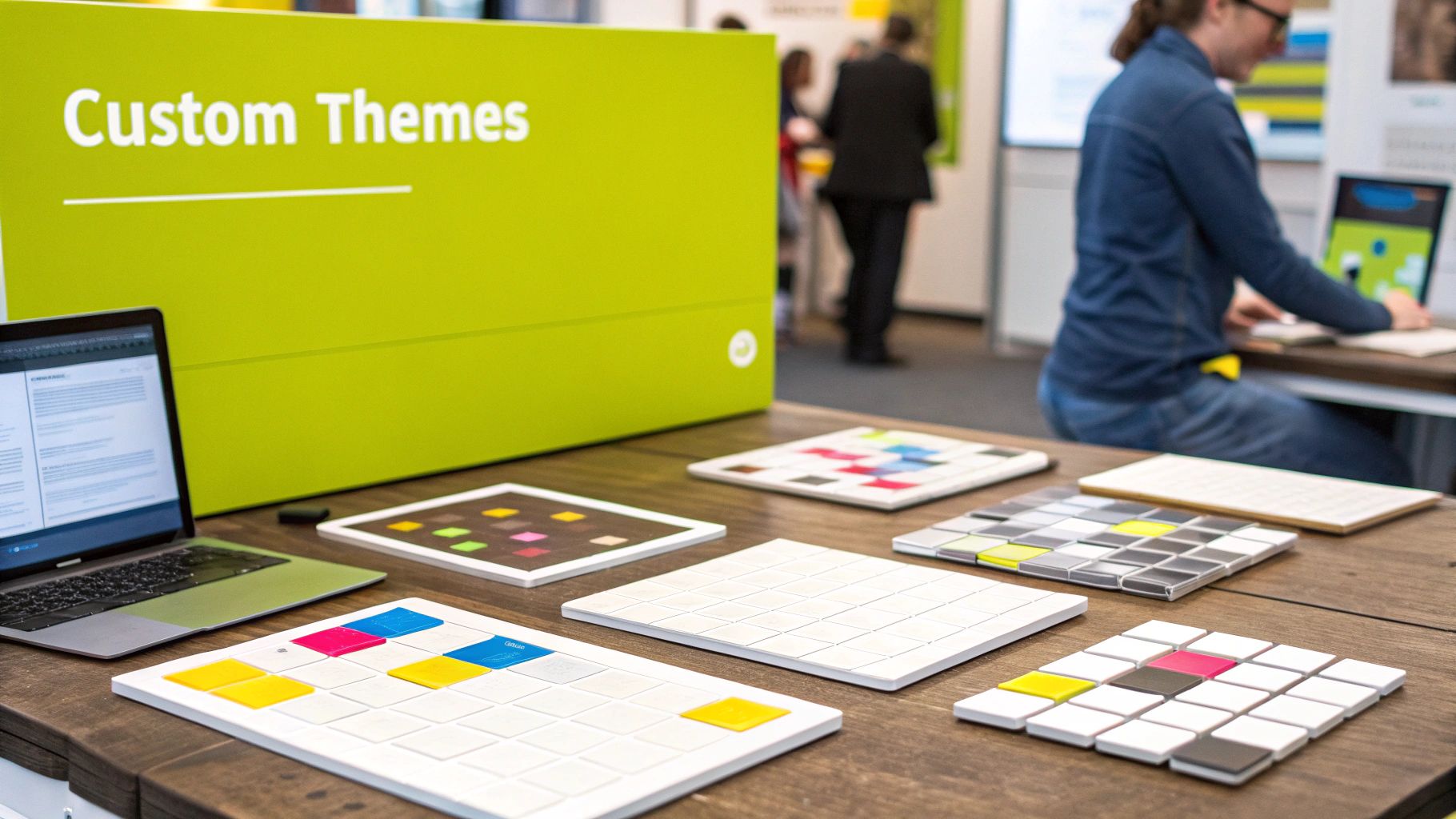
Successful Shopify stores understand a core principle: work with the platform, not against it. True brand distinction comes from leveraging the strengths of the Shopify design system. This allows you to build a unique and memorable shopping experience while retaining the ease of use customers appreciate.
Strategic Customization for Maximum ROI
Not all customizations are equally effective. Some deliver a much higher return on investment. Focus on areas where customization truly elevates your brand and sets you apart. For instance, high-quality product photography and compelling brand storytelling can have a significant impact. This is how you infuse your personality and values into your store, making it truly shine. You might also want to check out this helpful resource on Shopify category structure.
However, some elements, like the checkout process, are often best left untouched. Shopify's system already provides a smooth, familiar checkout experience. This minimizes friction and maximizes conversions. Changing these established patterns can disrupt the user experience and lead to abandoned carts.
Expressing Brand Personality Through Design and Content
Strategic design choices are vital for expressing your brand's personality. Think carefully about your color palette, typography, and overall visual aesthetic. These elements should align with your brand values and resonate with your target audience. A vibrant color scheme might work for a youthful brand, while a muted palette suits a more sophisticated one.
Your content voice also plays a critical role in brand differentiation. The language, tone, and stories you share should all reflect your brand's unique character. Maintaining a consistent voice across every touchpoint, from product descriptions to emails, strengthens your brand identity and builds a strong connection with your audience. It's the personality that comes through in every interaction, making your brand recognizable and memorable.
Balancing Customization with User Experience
While customization is important, preserving a user-friendly shopping experience is crucial. The Shopify design system offers a strong foundation for this, providing familiar navigation and intuitive interfaces. The key is striking the right balance. Too much customization can confuse customers, while too little can make your store feel generic.
Practical Techniques for Brand Differentiation
Here are some practical ways to make your brand stand out on Shopify:
- Invest in high-quality product photography and videography: Visuals are essential for e-commerce success.
- Craft compelling product descriptions and brand storytelling: Captivate your audience with engaging narratives.
- Develop a unique brand voice and tone: Let your brand's personality shine through your content.
- Customize your theme's colors, fonts, and layout: Create a visually appealing and consistent brand experience.
- Use apps to extend functionality and personalize the customer journey: Enhance the shopping experience with tailored features.
By using these strategies, you can build a Shopify store that not only looks fantastic but also effectively communicates your brand's unique identity. This approach helps you stand out from the competition while providing a seamless and enjoyable shopping experience. This builds customer loyalty, drives conversions, and ultimately contributes to your store's success.
Performance Optimization: Speed, Conversion, and Growth
The Shopify design system isn't just about making your store look good. It's also a powerful tool for improving performance. Understanding how design choices affect speed, conversions, and growth can unlock your store's full potential.
Speed: The Need For Velocity
In the fast-paced world of online shopping, speed is everything. Slow loading times mean higher bounce rates, frustrated customers, and lost sales. The Shopify design system, used correctly, can dramatically improve your store's page speed. Its lightweight components and optimized code keep things running smoothly, ensuring a quick and responsive experience for your customers. Think of it like fine-tuning a race car, stripping away any unnecessary weight for maximum speed and agility.
Conversion: Turning Visitors Into Buyers
Having an attractive store is only half the battle. You also need to turn those visitors into paying customers. The Shopify design system is designed to do just that. By using its built-in features and following best practices, you can guide customers smoothly through the buying process. Clear calls to action, streamlined checkout flows, and easy-to-use navigation are just a few elements that can lead to higher conversion percentages. It's like designing a well-planned airport, guiding travelers effortlessly from arrival to departure.
Mobile-First: Reaching Customers On The Go
Most online shopping now happens on mobile devices, so a mobile-first design is essential. The Shopify design system is inherently mobile-responsive, meaning your store will look and perform great on any device. This expands your reach and allows you to connect with the growing number of mobile shoppers. For more on Shopify navigation, check out this resource: How to master Shopify’s navigation and optimize your sitemap.
Performance Benchmarks And Optimization Strategies
Understanding industry benchmarks helps you identify areas for improvement. Analyzing real performance data from successful stores can highlight common issues and reveal effective optimization strategies. This data-driven approach enables continuous improvement, keeping your store ahead of the curve.
Measuring The Impact Of Design
Data-driven decisions are key to maximizing your store's performance. The Shopify design system lets you measure how design changes affect key metrics. By tracking bounce rates, conversion rates, and page load times, you can fine-tune your design for the best results. This feedback loop helps you understand what works for your audience and what needs adjusting.
To better understand the impact of specific design elements, let's look at the following table:
Performance Impact of Shopify Design System Elements
Statistical breakdown of how different design elements affect key store performance metrics
| Design Element | Impact on Load Time | Impact on Conversion Rate | Mobile vs. Desktop Performance |
|---|---|---|---|
| Optimized Images | Significant Decrease | Slight Increase | Improved Mobile Performance |
| Streamlined Checkout | Negligible Impact | Significant Increase | Similar Performance |
| Mobile-First Design | Negligible Impact | Moderate Increase | Improved Mobile Performance |
| Minimal HTTP Requests | Significant Decrease | Slight Increase | Similar Performance |
This table demonstrates how optimizing elements like images and the checkout process can greatly affect both load times and conversion rates. Mobile-first design is crucial for enhanced mobile performance.
Actionable Optimization Strategies
Here are some practical tips to boost your store's performance:
- Optimize images: Compress images without losing quality to reduce loading times.
- Minimize HTTP requests: Reduce the number of elements on a page to speed up loading.
- Leverage browser caching: Store frequently used files locally for faster access.
- Use a content delivery network (CDN): Distribute your content across multiple servers for faster delivery.
These strategies not only improve technical performance but also create a better shopping experience, leading to higher conversions and growth.
Future-Proofing Your Store With Emerging Design Trends
The e-commerce landscape is ever-changing. Your Shopify store needs to keep up to stay competitive. Forward-thinking merchants are already anticipating the next evolution of the Shopify design system. This means not just understanding how it works now, but also the emerging trends shaping its future.
AI-Powered Personalization: The Next Frontier
One key trend is AI-powered personalization. Imagine a store that curates product recommendations based on each customer's unique preferences. This can significantly boost sales and cultivate customer loyalty. It's like having a dedicated personal shopper for every visitor, making their shopping experience more engaging. Shopify is steadily incorporating more AI capabilities, making these features more accessible to merchants.
Augmented Reality (AR): Bridging the Physical and Digital
Augmented Reality (AR) is another exciting development. AR lets customers visualize products in their own space before they buy. Imagine a furniture store using AR to let customers "place" a virtual sofa in their living room, all through their smartphone. This closes the gap between online and in-person shopping, leading to a more immersive and confident purchasing experience.
Implementation Timing: Striking the Right Balance
These technologies offer amazing possibilities, but timing is critical. Adopting every new trend prematurely can be expensive and ineffective. Focus on understanding which trends fit your business needs and target audience. AR might be perfect for a furniture store, but less relevant for a clothing retailer. Careful planning and strategic consideration are essential.
Integrating Innovation Without Disruption
The goal is to add innovative elements without disrupting the core shopping experience. Changes should improve, not complicate, the customer journey. Personalized recommendations are helpful, but they shouldn't overwhelm the customer or make navigation difficult. The key is balancing innovation and usability.
Strategic Approaches for Staying Relevant
Staying competitive requires constant adaptation. This means keeping current with Shopify updates, experimenting with new features, and continually optimizing your store based on data. This proactive approach helps ensure you're always offering the best possible experience, attracting and retaining customers in a dynamic market. By understanding and strategically implementing these emerging trends, you can future-proof your Shopify store for long-term success.
